
Fairy-Tales of England: A JanuaryA Story by Abishai100 Essay/review presentation of the placement-value of English fairy-tales/folklore/oral-tradition for an Earth-record of things knowledge.
I'm injecting this 'cool' review-essay presentation (to interrupt my Goldilocks adaptation trilogy!) on fairy-tales of English origin/feel for a comprehension-reading image of what's made that 'area' of storytelling a thing of human 'know' for wonder/review. Happy Holidays,
---- ==== A 'fairy-tale' often invokes images of non-human specters maybe interacting with human ones and creating worlds of wonder and may mix with messages of warning or morality or caution-considerations or even exploration-adventurism concepts. The fairy-tale presents strange creatures, humanoids, or animals who speak/think/act and may vary in setting (forests, mountains, cities, underwater). We think of the richness of fairy-tales across history and story-image of fantastic characters with messages of weight and maybe whimsy and may note cross-culture strings of such imagination from areas as varied as Ancient Rome and old Arabia and then through the developments/rise of modernizing Europe and into the Americas. Fairy-tales of strange 'beings' come from Germany, India, and even Native-American 'concept' oral traditions and here we focus on the peculiarity of the English tradition to cast fictional or even historical characters through lenses of complete romanticization, darkness, or flights from Realism, as in say stories of Camelot-kingdom (historical) to the (fictional) woods-tale of Goldilocks and her encounter with the Three-Bears family in the forest. From fairy-tale 'language' we get canonization of wild/iconic and sometimes 'famous' beings/specters like the Giant from Jack and the Beanstalk (etc., etc.). 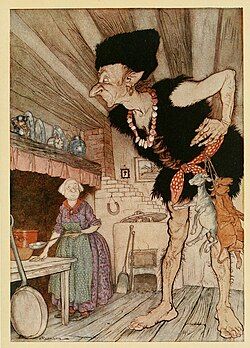 Fairy-tales blended into a more conspiracy-theories presentation of storytelling and experiments with neo-Realism to sometimes post-Orwellian (American) dystopian lore for ideas about lofty architecture of civilization and messages of warning/adventurism for structure/experience. The classical fairy-tale of course includes non-human fantastic creatures and animals of intelligence and winged flying tiny humanoid 'fairies' with offerings of illumination or mysteries of even laughter (or sometimes fear). The English fairy-tales may be likened to image-representations of ideas about ethics and values and superstitions and fears passed-down through generations for iconography of 'education' in an absolute-value sort of sense, which is somewhat contrasted to mythic/fantastic tales from, say old-Arabia or France, where emphasis is less-placed on Realism-applications to lifestyle-value (or customs!). The English fairy-tale almost welcomes the reader/critic/fan to tie-in modernizing Earth 'intelligence' for experimental forays into the accessible realities making borders between fiction and history (or life and immortality), a subject nicely-explored in a recent film-adaptation of the folk-'real' gossip story of the Cottingley Fairies (of England). 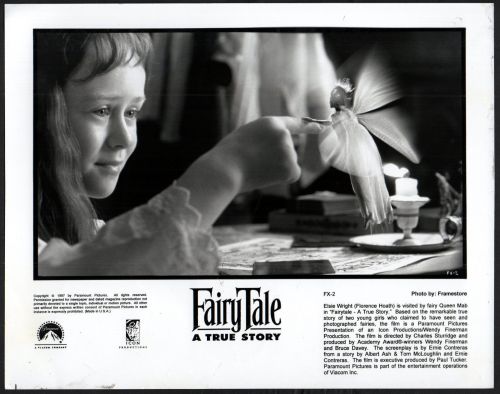 It is of note-of-value to think how the English fairy-tale 'tradition' may be somehow-wedded to ideas/images/concepts for oral-tradition 'evolution' to facilitate a sort of classroom-'feel' for likening Realism translated into lifestyle-review(s). We find this in 'fantastic' interpretations of the stories/campfires of King Arthur's great/folkloric kingdom of Camelot and may draw some nifty parallels to developing Western (American) iconography of religious/cultural festivities bordering on real-life understanding (or wisdom), as in, say modern urban re-envisioning of traditional Euro-American Xmas-lyricism (e.g., Elf). Of course, America is a 'descendant' of England, no? 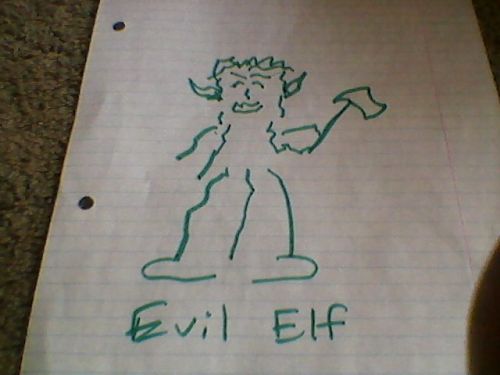 By same standards of comparative literary understanding goals, we'll draw stark-contrast between street-pluralism colors of American cultural 'events' like Mardi Gras in New Orleans to more traditions/customs placed-and-based English/England standards of history and Realism-linked human 'fantasy' storytelling (e.g., Camelot kingdom invention tales). The English fairy-tale, therefore, offers us a nice blackboard for placing the development or 'evolution' of fantasy-imagery and non-Realism 'thinking' for evaluating the civilization progression of lifestyle-mirrors and even everyday culture/festivity 'translation' Selfie-representation. The English folklore tradition bridged from parlors/towns storytelling into public theater presentations/plays and offers us a nice modernization 'intelligence' for diagramming customs/expectations and 'structured' distances from Realism for leviathan/uncertainty. Of course, you might have your own fairy-tale of note (from different parts of Earth) to celebrate and liken to something modernizing (Facebook-like), like Mother Goose, Jack and the Beanstalk, Little Red Riding Hood, The Little Mermaid, and The Gift of the Magi. The English fairy-tale is a nice 'book-mark' for the Earth-lyrics and record of things developmental for fiction (or escapism!).  "Doing well is the result of doing good. That's what capitalism is all about" (Ralph Waldo Emerson). ==== "Money is everything" (Ecclesiastes) © 2025 Abishai100 |
Stats
30 Views
Added on November 28, 2025 Last Updated on November 28, 2025 Author
Abishai100NJAboutStudent/Minister; Hobbies: Comic Books, Culinary Arts, Music; Religion: Catholic; Education: Dartmouth College more.. |

 Share This
 Email
Email Facebook
 Twitter
 Read Request
 My Library
 Subscribe
 Flag Writing