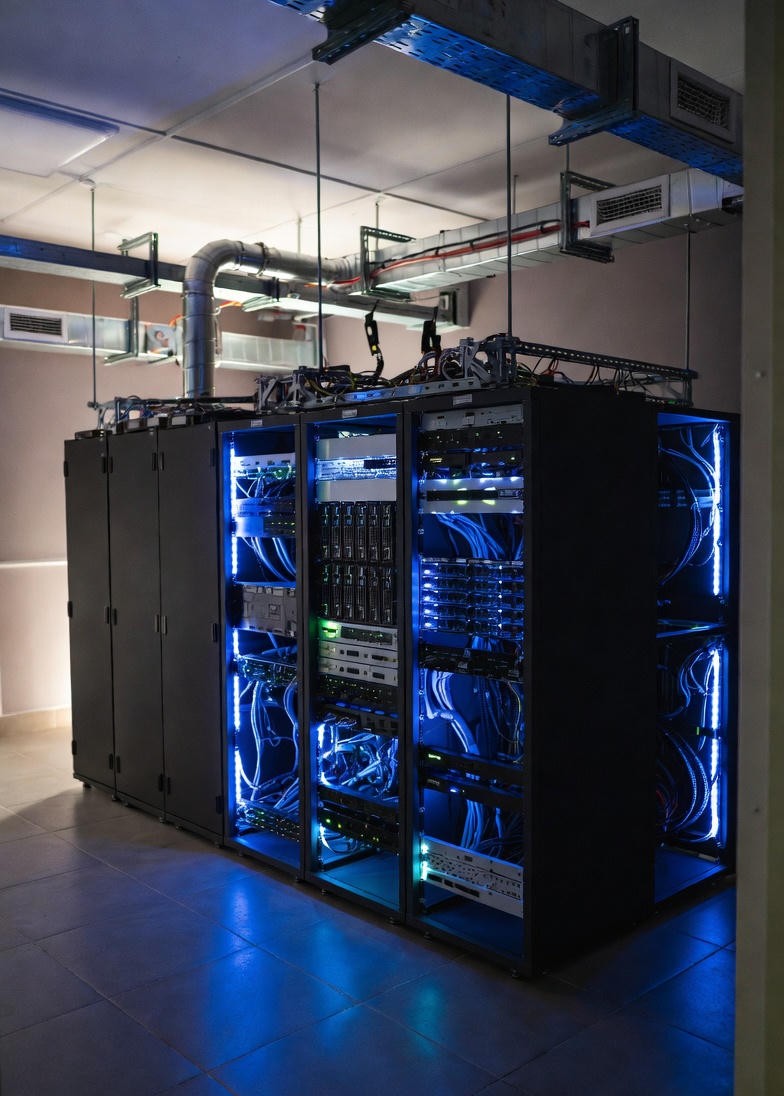
The Rise of Sustainable Data Centers: A Global Shift Toward Green TechnologyA Story by Pujitha Reddy The green data center revolution is not just about reducing environmental impact—it's about reimagining how we build and operate the digital infrastructure that powers modern life. The digital revolution has brought unprecedented connectivity and convenience, but it comes with an environmental cost. Data centers, the backbone of our internet-driven world, consume massive amounts of energy. However, a transformation is underway as the industry pivots toward sustainability, driven by climate concerns and innovative technology. Leading the Green RevolutionThree major regions are spearheading the movement toward environmentally responsible data infrastructure. The Asia-Pacific region, Europe, and North America have emerged as frontrunners in implementing eco-friendly practices within their data facilities. This shift isn't merely aspirational�"governments and operators in these areas are actively pursuing renewable energy integration and sustainable operational methods. Major cloud computing companies have become powerful catalysts for change. Tech giants are pouring resources into sustainable initiatives and forming strategic alliances with renewable energy suppliers. These partnerships focus on securing long-term energy agreements that guarantee clean power for their operations. Setting New Standards for EfficiencyData center providers specializing in colocation and wholesale services across the Asia-Pacific region have set ambitious targets for operational efficiency. Many aim to achieve Power Usage Effectiveness ratings below 1.5�"a metric that measures how efficiently a facility uses energy. They're reaching these goals through a combination of renewable power sources, natural cooling methods, and optimized hardware configurations. The renewable energy mix powering these facilities has evolved considerably. Solar and wind installations currently dominate, though hydroelectric, geothermal, and biomass sources are gaining traction. Energy companies are diversifying their portfolios by investing in new clean energy projects and establishing agreements with data center operators. Geothermal energy, in particular, has seen increased adoption recently. A notable example includes a billion-dollar investment in a geothermal-powered facility in Kenya, designed to eventually reach one gigawatt of capacity�"demonstrating the scale at which sustainable infrastructure is being deployed. Technological Innovation Driving ChangeThe industry is witnessing remarkable innovations in power generation and backup systems. Several prominent operators have begun transitioning away from traditional diesel generators toward alternative fuels derived from vegetable oils and hydrogen fuel cells. These sustainable alternatives significantly reduce carbon emissions during backup power operations. One pioneering project involves using hydrogen produced as a byproduct from industrial processes to power fuel-cell generators at a data facility. Such initiatives, though currently limited by higher costs and availability challenges, represent the future direction of the industry. Operators are collaborating to increase market support and drive down costs for these cleaner alternatives. Even operational management is being reimagined through technology. Autonomous robots equipped with facial recognition capabilities are being tested to assist with facility operations, showcasing how innovation extends beyond energy systems. Government Support and RegulationPolicymakers worldwide are implementing frameworks to accelerate the transition toward sustainable operations. The European Union has established regulations requiring facilities above certain power thresholds to report energy consumption metrics and renewable energy usage. These measures aim to improve overall efficiency while reducing dependence on fossil fuels. Environmental challenges, particularly water scarcity, have prompted some governments to require redesigns of planned facilities. Projects are being reimagined with air-based cooling systems and sustainable building materials to address climate-related concerns about resource consumption. International cooperation is also strengthening clean energy supply chains. Cross-border partnerships worth billions of dollars are being established to boost production of critical green technologies, including solar panels and wind turbines, with benefits extending to multiple continents. China has implemented comprehensive standards mandating specific efficiency ratios and water consumption limits for data facilities. Singapore has unveiled a specialized testing facility designed for tropical climates, advancing research into climate-appropriate sustainable technologies. Infrastructure TransformationElectrical Systems EvolutionThe electrical infrastructure supporting data centers is undergoing fundamental changes. Operators are forming partnerships to produce alternative fuels for backup generators. Acquisitions and new divisions focused on power system distribution and maintenance reflect the industry's commitment to reliable, efficient electrical infrastructure. Innovative partnerships are bringing geothermal power projects online to supply clean energy directly to electrical grids. Some companies are even exploring small nuclear reactors as potential power sources for cloud operations. The transition to alternative fuels for backup systems is accelerating across entire regions, with operators replacing traditional options with cleaner alternatives. Emerging battery technologies, including liquid metal, sodium-ion, and nickel-zinc variants, promise to revolutionize energy storage for data facilities in the coming years. Cooling System InnovationThe growing deployment of artificial intelligence and machine learning workloads is driving adoption of advanced cooling technologies. Liquid immersion and chip-level cooling systems are becoming increasingly common, helping operators achieve superior efficiency ratings. Facilities are implementing sophisticated cooling strategies that combine containment systems with evaporative techniques. Some utilize water-based systems with built-in redundancy, supported by natural cooling methods. Companies are even experimenting with plant-based immersion cooling fluids. Strategic partnerships are forming to supply integrated cooling and heat recovery systems, with artificial intelligence being employed to optimize performance. The industry is exploring free cooling, zero-water approaches, and innovative concepts like submerged and floating facilities to maximize cooling efficiency. Sustainable Construction PracticesMajor cloud operators are leading the adoption of sustainable building materials. Construction practices now incorporate technologies like low-carbon concrete alternatives and modular designs. Collaborations between operators and materials suppliers are producing concrete mixtures with significantly reduced environmental impact. Some facilities are being built with prefabricated, containerized designs engineered to withstand extreme natural events. Heat recovery is gaining prominence, particularly in regions where district heating systems are common. Data facilities are transferring excess heat to warm nearby buildings, pools, and other spaces, turning waste energy into a community resource. Experimental concrete formulations using alternative ingredients like microalgae and industrial byproducts are being tested to cut emissions associated with construction by half. Regional PerspectivesNordic and Western EuropeThe Nordic countries provide ideal conditions for sustainable data operations, combining abundant renewable energy with natural cooling advantages. Major European markets are increasingly adopting cleaner fuel alternatives and natural gas to achieve efficiency targets below 1.5. Latin AmericaCountries throughout Latin America are expanding their renewable energy capacity to meet growing power demands. Despite facing greater sustainability challenges than other developed regions, Latin American facilities are embracing green initiatives. Projects utilizing hydroelectric power from major dams exemplify the region's commitment to clean energy solutions. Asia-PacificThe Asia-Pacific region is experiencing significant growth in sustainable data infrastructure. Leading countries are prioritizing renewable energy adoption to meet surging demand. As the region becomes a hub for artificial intelligence development, operators are implementing solar installations and fuel cell technology to enhance efficiency, even as some markets face power supply constraints. Middle East and AfricaSustainability progress in this region has historically lagged due to infrastructure limitations and renewable energy availability. However, recent developments show meaningful advancement. Facilities are forming partnerships to secure solar generation capacity and accessing renewable energy from specialized power providers. Market Leaders and Future OutlookCloud computing giants and major colocation operators are driving industry-wide change through renewable energy investments. These established players, alongside emerging companies, are committing substantial resources to power purchase agreements and sustainability programs. The renewable energy sector supporting this transformation includes established players and new entrants alike. Energy companies are forming partnerships with data center operators to deliver clean power at scale, creating a robust ecosystem supporting the industry's environmental goals. ConclusionThe data center industry's transformation toward sustainability represents one of the most significant shifts in modern technology infrastructure. Through innovative cooling systems, alternative energy sources, sustainable construction materials, and supportive government policies, the sector is proving that massive computational power and environmental responsibility can coexist. © 2025 Pujitha Reddy |
Stats
11 Views
Added on November 18, 2025 Last Updated on November 18, 2025 |

 Share This
 Email
Email Facebook
 Twitter
 Read Request
 My Library
 Subscribe
 Flag Writing