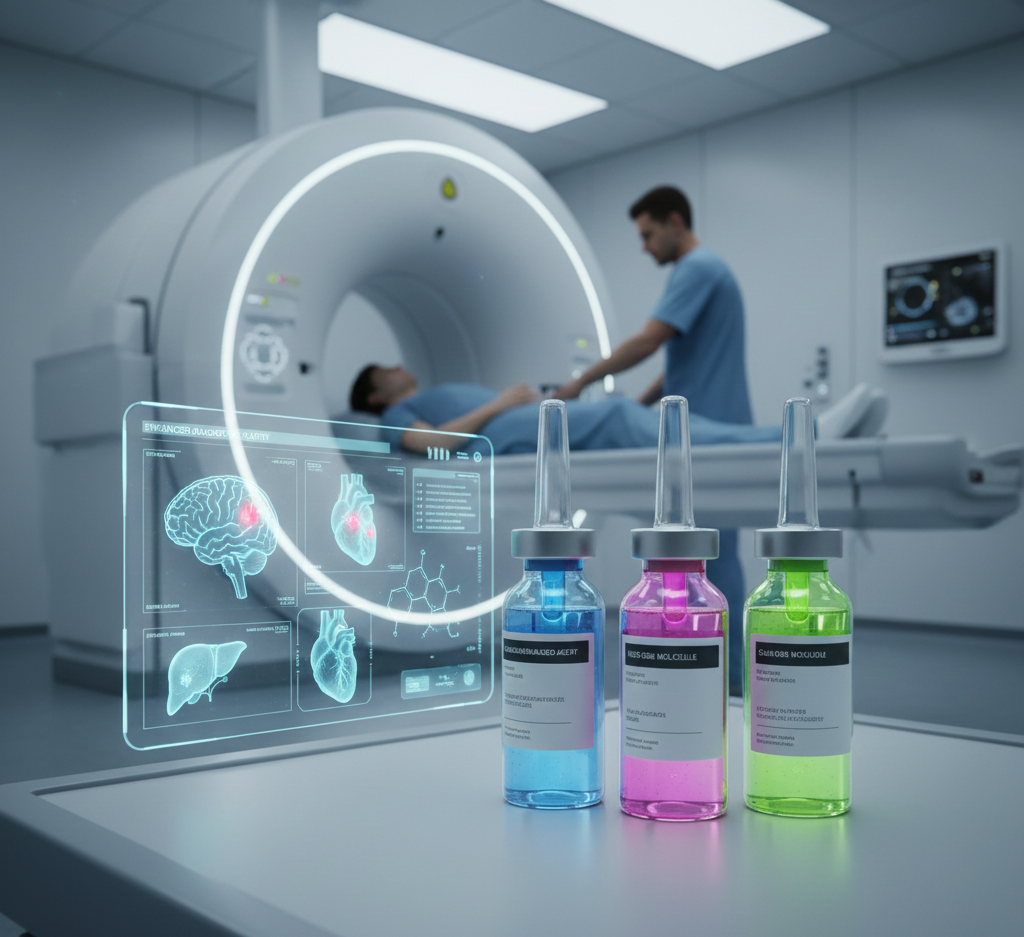
The Evolution of MRI Contrast Agents: Transforming Medical DiagnosticsA Story by Pujitha Reddy The story of MRI contrast media is ultimately a story about human ingenuity applied to healthcare's most fundamental challenge: understanding what's happening inside the body without Procedure Medical imaging has become the cornerstone of modern healthcare, and within this landscape, MRI contrast agents are playing an increasingly vital role. These specialized substances help doctors see what would otherwise remain hidden, making diagnoses more accurate and treatments more targeted. Understanding the Market LandscapeThe sector dedicated to MRI contrast agents has experienced substantial expansion recently. This growth stems from multiple factors working in concert: newer imaging technologies, more sophisticated diagnostic requirements, and an aging global population facing higher rates of chronic illness. Industry leaders including Bayer, Bracco, GE Healthcare, and Guerbet are investing substantial resources into developing next-generation products. Their focus remains on creating agents that are both safer for patients and more effective at revealing diagnostic details. What Makes This Technology Essential?Think of MRI contrast agents as highlighters for the human body. When physicians need to examine soft tissues, blood vessels, or potential abnormalities, these agents make specific areas stand out in scans. The result? Doctors can detect problems earlier and with greater certainty. The technology proves particularly valuable when diagnosing:
The Safety QuestionNot everything in this field has been smooth sailing. Certain gadolinium-based formulations have raised concerns about whether they accumulate in body tissues over time. This has prompted researchers to explore alternatives using different elements like manganese and iron. The industry's response to these safety questions demonstrates its commitment to patient wellbeing. Companies are actively developing new formulations that maintain diagnostic effectiveness while addressing potential long-term risks. Cancer Detection: A Primary DriverCancer diagnosis represents perhaps the most significant application for these contrast agents. As cancer rates continue rising globally, the demand for precise imaging grows correspondingly. MRI scans enhanced with contrast media allow oncologists to:
This capability has transformed cancer care, shifting diagnosis from educated guesswork toward data-driven certainty. Technology Categories Shaping the MarketDifferent clinical situations call for different types of contrast agents. Paramagnetic agents, typically containing gadolinium, currently dominate the market due to their proven effectiveness. Meanwhile, superparamagnetic agents using iron oxide nanoparticles offer specialized capabilities for targeting specific tissues. The diversity of available products means healthcare providers can select the most appropriate agent for each unique diagnostic challenge. Geographic VariationsThe market shows interesting regional patterns. North America leads in adoption, thanks to advanced healthcare infrastructure and widespread access to imaging technology. European nations follow closely, with well-established medical systems driving steady demand. Asia-Pacific represents the fastest-growing region, propelled by expanding healthcare access, rising medical tourism, and increasing health awareness among populations. Countries like China, India, and Japan are seeing particularly rapid growth. Latin America and the Middle East-Africa regions are emerging markets with significant potential as healthcare infrastructure continues developing in these areas. Where Patients Receive These ScansStandalone imaging centers have become major players in delivering MRI services. These specialized facilities focus exclusively on diagnostic imaging, offering patients convenient alternatives to hospital radiology departments. They consume substantial quantities of contrast media while performing scans across various medical specialties. Hospitals remain crucial users as well, employing these agents for everything from routine examinations to complex diagnostic investigations. The Future: AI and Smart AgentsPerhaps the most exciting development on the horizon involves artificial intelligence integration. Researchers are working on "intelligent" contrast agents designed to work seamlessly with AI-powered image analysis systems. This combination could dramatically improve both the speed and accuracy of diagnoses. Imagine contrast agents that not only highlight areas of concern but also provide real-time data that AI systems can immediately analyze and interpret. This represents a fundamental shift in how medical imaging functions. Precision Medicine and Personalized CareThe emergence of companion diagnostics in oncology showcases another frontier. These approaches combine advanced imaging with genetic and molecular information to create highly personalized treatment strategies. Contrast-enhanced MRI scans become part of a comprehensive diagnostic picture that guides therapists toward the most effective interventions for individual patients. Challenges and OpportunitiesThe path forward isn't without obstacles. Regulatory requirements remain stringent, and rightfully so given the stakes involved. Companies must navigate complex approval processes across different countries and regions, each with unique requirements. Economic factors also play a role. Healthcare systems must balance the benefits of advanced imaging against budget constraints. Making these technologies accessible while maintaining profitability challenges manufacturers and healthcare providers alike. Yet opportunities abound for organizations willing to innovate. The chronic disease burden continues growing globally. Demand for non-invasive diagnostic tools shows no signs of slowing. And technological capabilities keep advancing, opening new possibilities for what imaging can achieve. The Bottom LineThe MRI contrast media sector stands at a fascinating crossroads. Traditional products continue serving essential functions while new formulations address emerging safety concerns. Artificial intelligence promises to revolutionize how these agents are used and interpreted. And expanding global healthcare access creates markets where none existed before. For patients, these developments translate into better care. Earlier cancer detection. More accurate cardiovascular assessments. Clearer views of neurological conditions. All of this relies on the continued evolution of these remarkable diagnostic aids. © 2025 Pujitha Reddy |
Stats
35 Views
Added on November 27, 2025 Last Updated on November 27, 2025 |

 Share This
 Email
Email Facebook
 Twitter
 Read Request
 My Library
 Subscribe
 Flag Writing