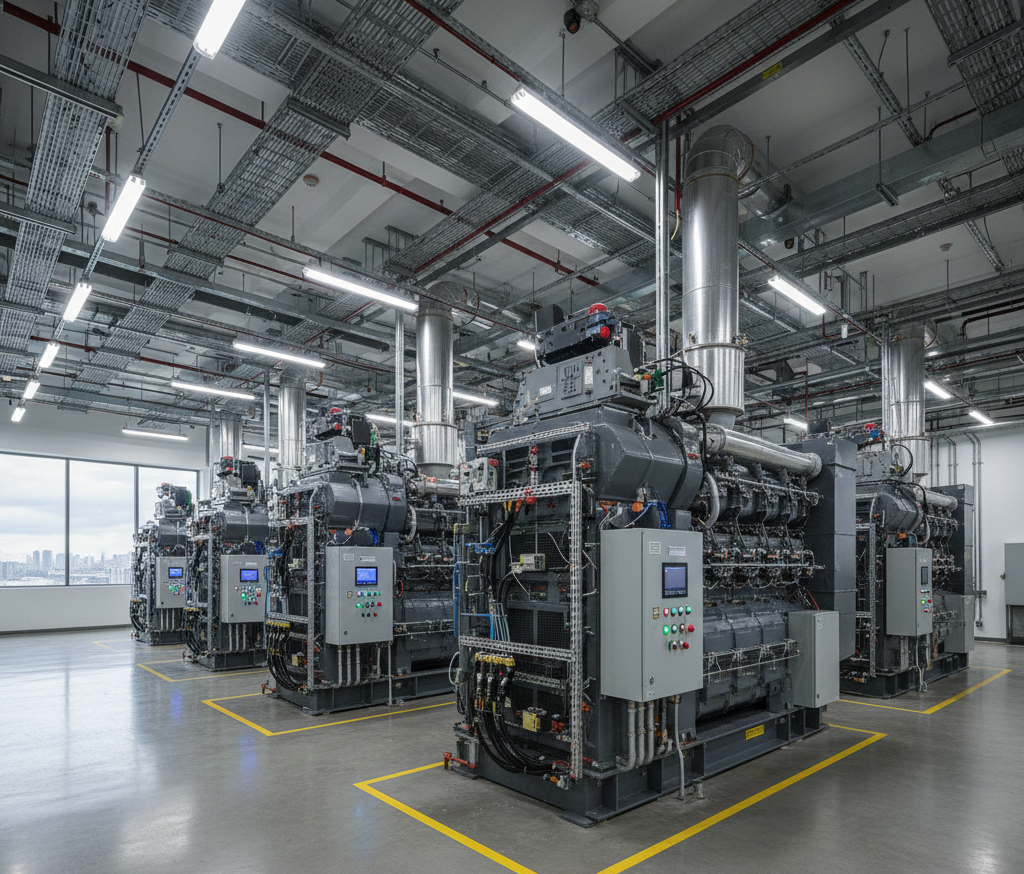
The Future of Data Center Power: Trends Shaping a $75 Billion Market by 2030A Story by Pujitha Reddy The data center power market stands at an inflection point where environmental imperatives, technological capabilities, and business requirements converge. The data center power infrastructure sector is experiencing unprecedented growth, with market valuations projected to more than double from approximately $33 billion in 2024 to over $75 billion by the end of the decade. This remarkable expansion reflects the fundamental shifts occurring in how we power the digital backbone of our modern economy. A Market in TransformationThe surge in data center power investments stems from multiple converging factors. Our world's insatiable appetite for data continues to grow exponentially, while simultaneously, pressure mounts to achieve greater energy efficiency and reduce carbon footprints. The proliferation of massive hyperscale facilities alongside distributed edge computing locations has created diverse infrastructure needs that demand innovative power solutions. This transformation encompasses everything from backup power systems and uninterruptible power supplies to sophisticated power distribution technologies. What's particularly striking is how sustainability considerations now drive technical decisions that once focused purely on reliability and cost. Revolutionary Approaches to Backup PowerOne of the most exciting developments involves rethinking traditional diesel backup generators. Hydrotreated Vegetable Oil has emerged as a game-changing alternative fuel that significantly reduces carbon emissions while maintaining the reliability operators demand. Produced from waste vegetable oils and animal fats, this renewable diesel serves as a direct replacement for conventional fossil fuels. Major operators worldwide are embracing this innovation. Companies across Singapore, the United States, Europe, and Latin America have either deployed or begun testing HVO in their facilities. This shift represents more than incremental improvement; it's a fundamental reimagining of how backup power can align with environmental goals without compromising on performance. The Battery RevolutionThe evolution of energy storage technologies is reshaping power infrastructure strategies. While traditional valve-regulated lead-acid batteries once dominated the market, we're witnessing a decisive shift toward more advanced alternatives. Lithium-ion technology leads this transition, with analysts predicting it will become the dominant battery type before the decade ends. However, the story doesn't stop with lithium-ion. Emerging technologies including nickel-zinc and sodium-ion batteries are gaining traction, offering different performance characteristics and supply chain advantages. Some innovators are even developing systems that allow battery replacement during operation, eliminating downtime risks that previously complicated maintenance schedules. This diversification of battery technologies provides operators with more options to match their specific needs while navigating complex supply chain dynamics and geopolitical considerations. Renewable Energy Integration AcceleratesPerhaps nothing illustrates the industry's commitment to sustainability more clearly than the aggressive pursuit of renewable energy procurement. Leading technology companies have made bold commitments to achieve net-zero carbon emissions, backing these promises with substantial investments in solar, wind, and geothermal power purchase agreements. Data centers consume between one and three percent of global electricity, making their energy choices consequential for worldwide emissions. Recent agreements demonstrate the scale of this commitment, with major operators signing decade-long contracts for tens of megawatts of renewable power generation. These initiatives extend beyond corporate responsibility rhetoric. They represent strategic business decisions driven by regulatory pressures, customer expectations, and long-term economic considerations as renewable energy costs continue declining. Artificial Intelligence Meets Power ManagementThe integration of artificial intelligence and machine learning into data center infrastructure management represents another frontier of innovation. As power consumption and operational complexity increase, AI-powered monitoring and optimization systems are becoming essential tools for operators. These intelligent systems can predict equipment failures, optimize power distribution, identify efficiency opportunities, and help operators make real-time decisions that reduce both costs and environmental impact. Major infrastructure vendors are embedding these capabilities directly into their data center infrastructure management platforms. Regional Dynamics and Growth PatternsThe geographic distribution of data center power investments reveals interesting patterns. North America, particularly the United States, maintains the largest market share, but growth is accelerating rapidly in other regions. Europe's major hub cities continue expanding while emerging markets across Southern and Northern Europe attract new investments. The Middle East and Africa are witnessing substantial development, with the Gulf states and South Africa leading the way. Meanwhile, the Asia-Pacific region shows tremendous dynamism, with established markets in China, Japan, and Singapore joined by rapidly growing opportunities in Southeast Asia and Oceania. The Road AheadLooking toward 2030, several themes will likely define the data center power landscape. Sustainability will continue shifting from aspiration to requirement, driving adoption of renewable energy, advanced battery systems, and low-carbon backup fuels. Modular and scalable infrastructure will gain importance as operators balance capacity growth with capital efficiency. Innovation in power distribution, cooling integration, and grid connectivity will create new opportunities for differentiation. Vendors that successfully combine sustainability with reliability while managing costs effectively will capture market share. The data center power market stands at an inflection point where environmental imperatives, technological capabilities, and business requirements converge. The organizations that navigate this transition successfully will not only prosper financially but also play a crucial role in building a more sustainable digital infrastructure for the decades to come. © 2025 Pujitha Reddy |
Stats
34 Views
Added on November 28, 2025 Last Updated on November 28, 2025 |

 Share This
 Email
Email Facebook
 Twitter
 Read Request
 My Library
 Subscribe
 Flag Writing