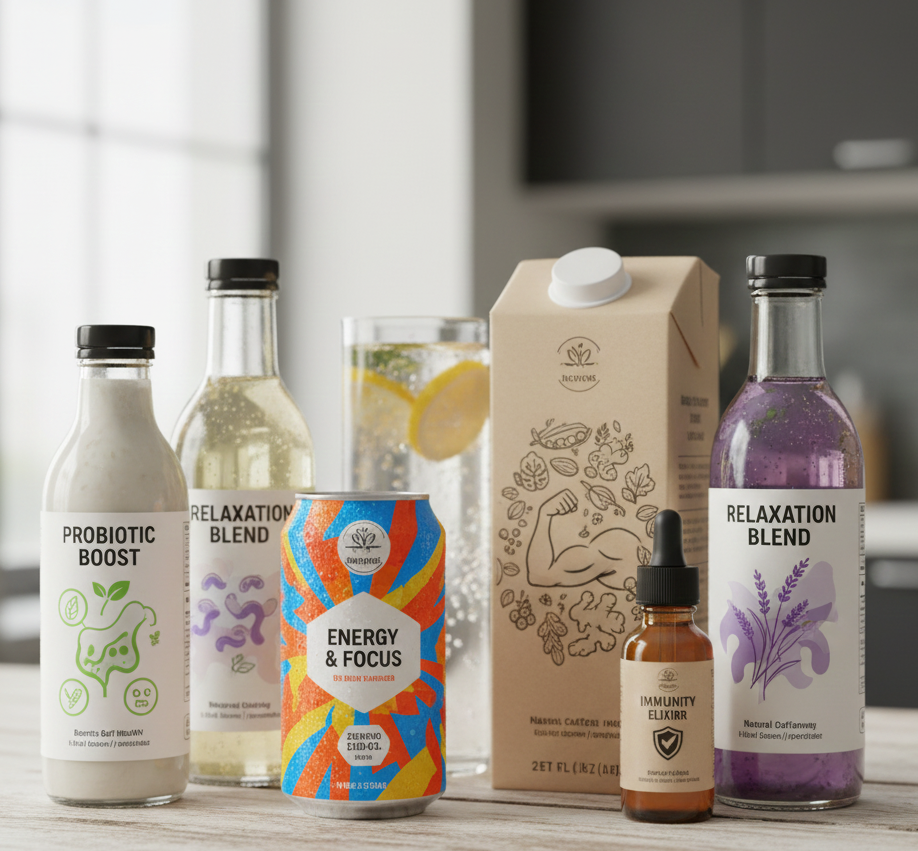
The Rise of Functional Beverages: A Wellness Revolution in Your GlassA Story by Pujitha Reddy The functional beverage category continues to expand and evolve. Whether you're an athlete seeking performance enhancement, a health-conscious consumer looking for immune support. The beverage aisle has transformed dramatically over the past few years. Gone are the days when consumers simply chose between soda, juice, or water. Today's shoppers are seeking drinks that do more than quench thirst�"they want beverages that support their health goals, boost their performance, and align with their wellness values. A Booming IndustryThe functional beverages industry is experiencing remarkable expansion, with market valuations climbing from over $130 billion in 2024 toward projections exceeding $174 billion by decade's end. This steady growth trajectory reflects a fundamental shift in consumer priorities, where health considerations increasingly influence purchasing decisions. What's driving this surge? The answer lies in our evolving relationship with wellness. Consumers today view beverages as functional tools that can enhance energy levels, support immune function, improve digestion, and provide targeted nutritional benefits. The Health-Conscious ConsumerThe pandemic served as a wake-up call, amplifying awareness around immunity and preventive health measures. This heightened consciousness hasn't faded�"instead, it's become embedded in daily habits. Shoppers now scrutinize labels, seeking out drinks fortified with vitamins, antioxidants, and beneficial compounds like probiotics. This trend extends beyond just avoiding illness. People are increasingly aware of connections between dietary choices and chronic health conditions. They're proactively incorporating functional drinks into their wellness routines rather than relying exclusively on traditional medicine after problems arise. What's Trending in Functional Beverages?Natural and Plant-Based IngredientsToday's consumers are turning away from synthetic additives and gravitating toward clean-label products. Beverages featuring turmeric, ginger, matcha, and chamomile are gaining traction. Plant-based proteins and natural sweeteners are replacing artificial alternatives, driven by both health concerns and sustainability values. Sports and Fitness FocusThe explosion of fitness culture�"from gym memberships to home workouts and virtual training sessions�"has created robust demand for performance-enhancing drinks. Athletes and fitness enthusiasts seek beverages that improve hydration, accelerate recovery, and fuel workouts. This has sparked innovation in plant-based protein drinks, natural energy formulations, and low-sugar recovery options. Gender-Specific PreferencesInterestingly, women are emerging as a particularly fast-growing consumer segment for functional beverages. They gravitate toward fortified juices, dairy alternatives, and probiotic drinks that address specific wellness concerns like skin health, digestion, and hormonal balance. Low-calorie and sugar-free options are especially popular among women managing weight and overall wellness. Age MattersDifferent age groups show distinct preferences within the functional beverage space. Young adults dominate consumption of energy drinks and fortified waters, while teenagers favor sports drinks for hydration during physical activities. Middle-aged adults tend toward low-sugar, low-calorie options that support fitness goals and address lifestyle-related health concerns. Older consumers increasingly choose probiotic beverages and fortified waters to address age-specific health needs. Innovation Drives the Market ForwardTechnology is revolutionizing how functional beverages are produced and distributed. Advanced fermentation techniques enable creation of bioactive compounds and probiotics. Sophisticated filtration methods improve taste, clarity, and shelf stability while preserving nutritional value. Automation ensures consistent quality, while blockchain technology enhances supply chain transparency and ingredient traceability. E-commerce platforms have transformed distribution, enabling personalized marketing and global reach. This digital expansion allows brands to connect directly with consumers and tailor offerings to individual preferences. Recent Market MovesMajor players continue making strategic moves to capture market share. Coca-Cola recently entered the prebiotic soda category with a fruit-forward line featuring gut health benefits and immune support. Keurig Dr Pepper acquired a rapidly growing energy drink brand to strengthen its position in that competitive segment. These moves reflect industry recognition of shifting consumer preferences toward health-focused formulations. Where Are People Buying?Supermarkets and hypermarkets remain the dominant distribution channel, offering consumers the ability to compare multiple brands and products while taking advantage of promotions. These retailers increasingly feature dedicated health and wellness sections that prominently display functional beverages. Private-label alternatives are also gaining ground as cost-effective options. Regional Growth PatternsThe Asia-Pacific region is experiencing particularly strong growth, driven by rising health awareness, increasing urbanization, and changing lifestyles. Markets like China, India, Japan, and South Korea show robust demand for energy drinks, fortified juices, and probiotic beverages. Growing awareness of lactose intolerance and preference for sustainable food choices are boosting plant-based and dairy alternative beverage sales throughout the region. Challenges on the HorizonDespite promising growth, the industry faces significant hurdles. Regulatory compliance presents ongoing challenges as different countries maintain varying standards for allowable ingredients, health claims, and labeling requirements. Global brands must navigate this complex landscape while meeting clean labeling demands for transparency. Health benefit claims require scientific validation and regulatory approval, adding costs and extending time-to-market. Emerging ingredients like CBD and adaptogens exist in evolving regulatory gray areas, creating uncertainty for manufacturers. The Future of Functional BeveragesThe functional beverage revolution shows no signs of slowing. As consumers continue prioritizing health and wellness, expect to see continued innovation in formulations, ingredients, and targeted benefits. The industry will likely see further personalization, with beverages tailored to specific health goals, dietary preferences, and lifestyle needs. Sustainability will play an increasingly important role, with consumers demanding not just personal health benefits but also environmentally responsible production and packaging practices. For brands competing in this space, success will depend on understanding evolving consumer preferences, maintaining transparency, backing health claims with science, and continuously innovating to meet changing needs. The functional beverage market represents more than a passing trend�"it's a fundamental shift in how we think about what we drink. As wellness remains a top priority for consumers worldwide, functional beverages will continue evolving from niche products to everyday essentials in the pursuit of healthier, more balanced lifestyles. © 2025 Pujitha Reddy |
Stats
38 Views
Added on December 1, 2025 Last Updated on December 1, 2025 |

 Share This
 Email
Email Facebook
 Twitter
 Read Request
 My Library
 Subscribe
 Flag Writing