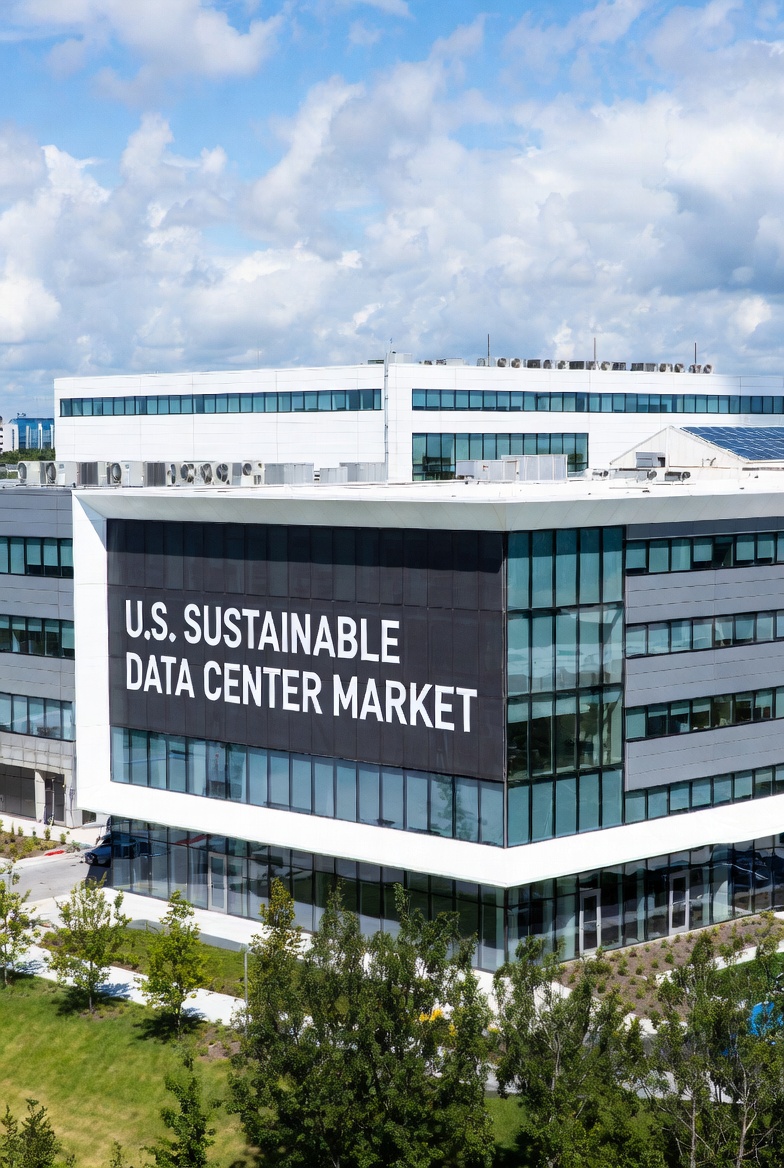
The Rise of Green Data Centers: U.S. Market Booms Toward a Sustainable FutureA Story by Pujitha Reddy The investment in sustainable data centers across the United States hit $17 billion in 2023 and is projected to double to $35.35 billion by 2029, fueled by a robust CAGR 12.98% In the heart of America's tech revolution, data centers are undergoing a massive green transformation. The investment in sustainable data centers across the United States hit $17 billion in 2023 and is projected to double to $35.35 billion by 2029, fueled by a robust compound annual growth rate (CAGR) of 12.98%. This surge reflects a broader industry pivot, where operators�"from tech giants to colocation providers�"are racing to power their facilities with wind, solar, and other clean sources, all in pursuit of a lower-carbon footprint. Why Sustainability is Powering the BoomThe push for eco-conscious data storage isn't just a buzzword; it's a necessity driven by skyrocketing energy demands from AI, cloud computing, and big data. Major players like Amazon Web Services (AWS), Meta, Microsoft, Google, Equinix, Digital Realty, and others are leading the charge. For example, Google's facilities have slashed energy use through AI-driven optimizations, proving that smart tech can make massive operations greener. Regulations and global commitments are accelerating this shift. Initiatives like the Paris Agreement, RE100 pledges, and certifications such as LEED and ISO 50001 are compelling operators to prioritize green builds. Hyperscale leaders are innovating aggressively, while colocation firms pour resources into efficient hardware and renewable procurement. Hot Trends Shaping the Green Data Center Landscape1. Renewables Take Center StageHyperscalers are setting ambitious targets: AWS sources 85% of its power from renewables, while Google, Meta, and Apple claim 100% for their centers. Microsoft eyes full renewable coverage by 2025. Colocation operators aren't far behind�"Digital Realty already hits 100% renewables, and QTS Realty Trust is at 35% with a 2025 goal of matching that mark. Power Purchase Agreements (PPAs) are the tool of choice, locking in long-term clean energy deals. 2. Next-Gen Power Solutions EmergeBeyond traditional renewables, cutting-edge alternatives are gaining traction:
Government mandates amplify this: The Federal Sustainability Plan targets zero-emission federal buildings by 2045 (50% cut by 2032), net-zero procurement by 2050, and 65% emissions drop by 2030 for operations. Infrastructure Upgrades Driving EfficiencyElectrical Power: Reliability Meets RenewablesThe sector's electrical backbone is evolving fast. Compass Data Centers teamed with Foster Fuels for HVO biodiesel generators. Google partnered with Fervo Energy on Nevada geothermal projects, Rolls-Royce eyes small nuclear reactors for cloud giants, and Microsoft works with Eaton on grid-friendly UPS systems. Mechanical Cooling: Smarter and CoolerAI workloads demand better cooling. Liquid immersion and direct-to-chip methods are dropping power usage effectiveness (PUE) below 1.4. Cargill's using plant-based immersion fluids; Danfoss supplies Google with heat-reuse systems (January 2024 partnership). Free cooling, zero-water tech, and wild ideas like underwater centers are slashing energy bills. Construction: Building Green from the Ground UpHyperscalers favor eco-materials: AWS with American Rock Products on low-carbon concrete, Microsoft testing microalgae-infused mixes in Washington (September 2023) to halve CO2 output. Modular designs and green concrete are standardizing sustainable builds. Regional Hotspots: Where the Action IsThe Southeast U.S. dominates, holding 40% of sustainable power capacity in 2023 (rising to 42% soon), thanks to wind, solar, and incentives. Virginia and North Carolina lure investors with tax breaks. Microsoft taps wind/solar in Texas and Iowa. By 2050, most states aim for 100% carbon-free electricity. Key Players Leading the Charge
The Road Ahead: A Cleaner Digital Backbone
The U.S. sustainable data center market isn't just growing�"it's redefining how we power the digital age. With tech innovation, policy muscle, and corporate ambition aligning, expect even bolder strides toward net-zero by 2030 and beyond. This green wave promises not only environmental wins but also resilient, cost-effective infrastructure for tomorrow's AI-driven world. © 2026 Pujitha ReddyAuthor's Note
|
Stats
20 Views
Added on February 6, 2026 Last Updated on February 6, 2026 |

 Share This
 Email
Email Facebook
 Twitter
 Read Request
 My Library
 Subscribe
 Flag Writing