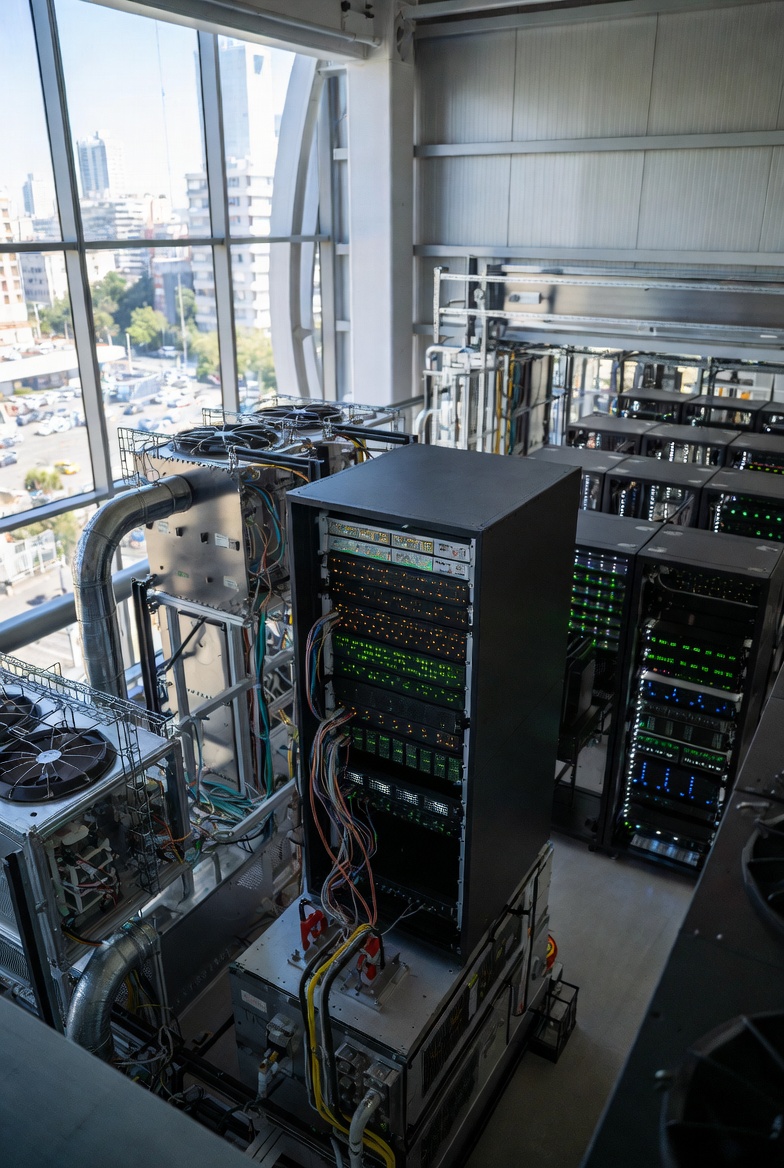
Argentina's Data Center Boom: Latin America's Digital Infrastructure FrontierA Story by Pujitha Reddy Argentina's data center evolution demonstrates how emerging markets can leverage connectivity, talent, and growing digital adoption to build competitive positions in regional infrastructure ecosystems Argentina is quietly positioning itself as a significant player in Latin America's data center landscape. With the colocation market set to more than double from $76 million in 2024 to $156 million by 2030, the country is experiencing a digital infrastructure awakening driven by cloud adoption, AI deployment, and strategic connectivity advantages. Buenos Aires: The Digital CapitalThe concentration of data center activity in Buenos Aires tells a strategic story. With 17 operational facilities and 2 more in development, the capital dominates Argentina's colocation landscape for compelling reasons: robust connectivity infrastructure, dense enterprise presence, and access to skilled IT professionals. This geographic concentration isn't unusual for emerging markets�"capital cities typically lead digital infrastructure development. However, Buenos Aires' combination of attributes creates a foundation for sustainable growth that extends beyond simple market size. Rising Demand and Capacity UtilizationPerhaps the most telling indicator of market health is occupancy rates. Argentina's data centers averaged over 81% occupancy in 2024, with projections suggesting this will climb to approximately 92% by 2030. These high utilization rates signal genuine demand rather than speculative overbuilding. This upward trajectory reflects increasing requirements for data storage and processing capabilities as Argentine businesses accelerate cloud migration and integrate AI into operations. The gap between current capacity and projected demand suggests room for both facility expansion and new market entrants. Market LeadershipCirion Technologies leads the market with over 17% of IT power capacity, establishing itself as the dominant operator through strategic focus on energy-efficient, high-density infrastructure. The company's emphasis on sustainability and large-scale deployments resonates with enterprise clients seeking reliable partners for long-term infrastructure needs. Other significant players including Claro, IPLAN, NextStream, and EdgeConneX contribute to a competitive landscape where operators differentiate through service quality, connectivity options, and specialized capabilities rather than price alone. The Cloud and AI CatalystBy 2030, the cloud and IT sector is expected to lead colocation demand�"a shift that reflects Argentina's broader digital transformation. Enterprises across industries are embracing cloud platforms, creating sustained requirements for local infrastructure that supports low-latency access and data sovereignty compliance. Artificial intelligence and machine learning workloads are particularly influential. These applications require high-density colocation racks, GPU clusters, and scalable bandwidth�"all managed through cloud platforms. As Argentine companies adopt AI for analytics, automation, and decision-making, infrastructure demands intensify. Edge computing represents another growth driver. The deployment of 5G networks creates opportunities for edge data centers that process information closer to end users, reducing latency for time-sensitive applications. This distributed architecture complements centralized facilities in Buenos Aires, potentially expanding data center investment to additional Argentine cities. The 5G ConnectionFifth-generation wireless technology isn't just about faster mobile phones�"it's fundamentally changing how data infrastructure is architected. 5G's ultra-low latency requirements make edge computing essential for applications like autonomous vehicles, industrial automation, and augmented reality. Argentina's 5G rollout is driving edge data center investments as telecommunications providers and enterprises recognize the need for distributed processing capabilities. This creates opportunities for smaller, strategically located facilities that complement larger colocation centers. Infrastructure FundamentalsThe market's growth is supported by improving connectivity infrastructure. Submarine cable systems linking Argentina to other South American nations and to North America enhance the country's attractiveness as a data hub. These connections enable Argentine facilities to serve not just local demand but also as regional infrastructure supporting neighboring markets. Cloud-on-ramp services�"direct connections between data centers and major cloud platforms�"are becoming standard offerings. These dedicated links provide enterprises with secure, high-performance access to AWS, Azure, Google Cloud, and other providers without traversing the public internet. Sustainability ConsiderationsAs the market matures, sustainability is becoming a competitive differentiator. Energy-efficient infrastructure, renewable power sourcing, and efficient cooling systems are increasingly important to enterprises with environmental commitments. Cirion Technologies' leadership position reflects partly its sustainability focus�"suggesting that environmental considerations influence purchasing decisions beyond simple cost calculations. As global corporations scrutinize their supply chains' environmental impact, data center operators' sustainability practices become material factors in vendor selection. Market Structure EvolutionCurrently, Argentina's colocation market serves primarily retail customers�"enterprises purchasing cabinet space, power, and connectivity on relatively small scales. However, as hyperscale cloud providers and large enterprises expand their Argentine presence, wholesale colocation demand is likely to grow. Wholesale colocation involves leasing entire rooms or halls rather than individual cabinets, typically at lower per-unit costs but much larger commitments. This segment's growth would indicate market maturation and the arrival of operators requiring substantial capacity. Challenges and OpportunitiesArgentina's economic volatility presents both challenges and opportunities. Currency fluctuations and inflation create planning complexity for operators making long-term infrastructure investments. However, these same dynamics make Argentina attractive for international operators who can access skilled labor and real estate at competitive costs. Regulatory stability and supportive government policies will be crucial for sustained growth. Clear frameworks around data sovereignty, tax treatment of infrastructure investments, and telecommunications regulation influence operator confidence in committing capital. Looking ForwardWith 22 operational facilities today and occupancy approaching capacity constraints, Argentina's data center market is at an inflection point. The combination of rising demand from cloud adoption and AI deployment, improving connectivity infrastructure, and competitive operator landscape suggests robust growth ahead. For enterprises evaluating Latin American infrastructure strategies, Argentina offers a compelling value proposition: strategic location, skilled workforce, improving connectivity, and competitive costs. For investors and operators, the market presents opportunities in a region where digital transformation is accelerating but infrastructure capacity remains constrained. The doubling of market size by 2030 isn't merely extrapolation�"it reflects fundamental shifts in how Argentine businesses operate and compete in an increasingly digital economy. © 2026 Pujitha Reddy |
Stats
28 Views
Added on February 12, 2026 Last Updated on February 12, 2026 |

 Share This
 Email
Email Facebook
 Twitter
 Read Request
 My Library
 Subscribe
 Flag Writing