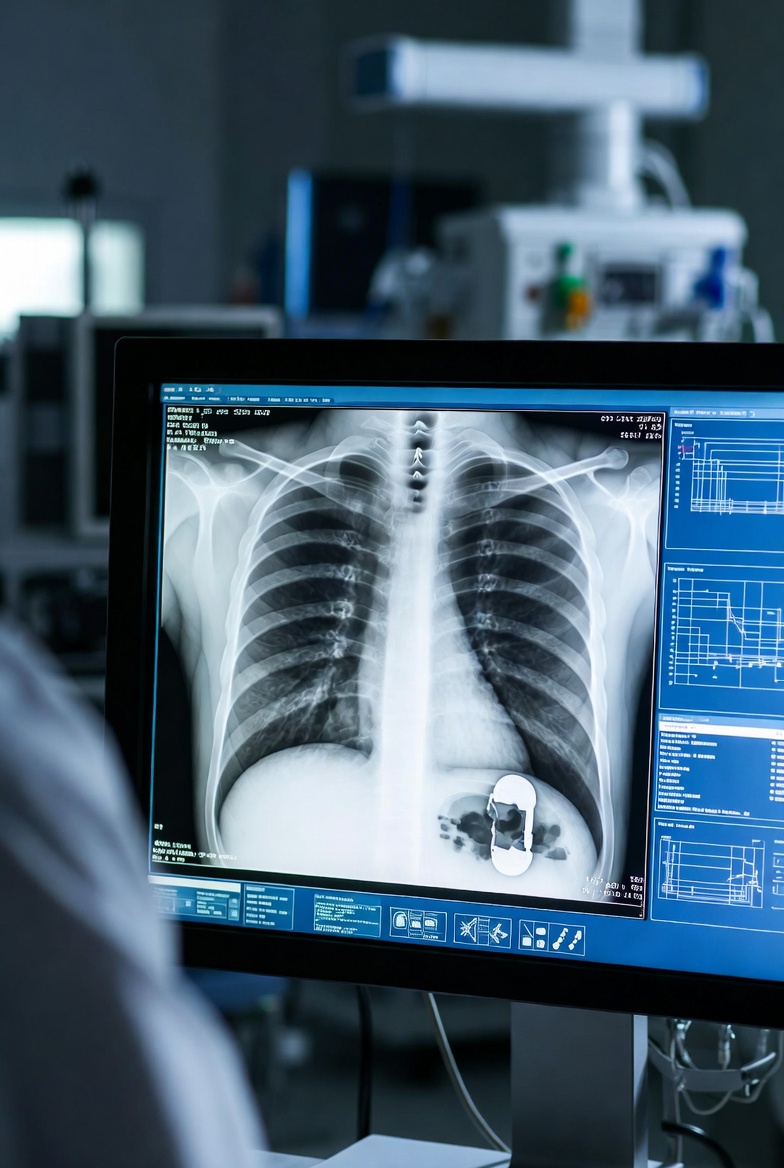
Seeing Beyond Sight: How AI is Transforming Medical ImagingA Story by Pujitha Reddy The integration of artificial intelligence into medical imaging exemplifies how technology can augment human expertise in domains requiring both pattern recognition at scale and nuanced judgment Every day, radiologists examine thousands of medical images�"X-rays, CT scans, MRIs�"searching for subtle signs of disease. It's painstaking work requiring intense concentration and expertise. But what if artificial intelligence could assist, catching anomalies human eyes might miss while accelerating diagnosis? This isn't science fiction. With the AI in medical imaging market projected to surge from $2.80 billion in 2023 to $29.28 billion by 2029�"growing at nearly 48% annually�"this transformation is already underway. Know More : https://www.arizton.com/market-reports/artificial-intelligence-in-medical-imaging-market The Diagnostic BottleneckHealthcare systems worldwide face a growing challenge: demand for medical imaging is outpacing radiologist capacity. The rising prevalence of chronic diseases like cancer, cardiovascular conditions, and neurological disorders drives approximately 10% annual growth in urgent imaging referrals. Wider clinical indications for CT and MRI scans further fuel demand. Meanwhile, radiologist workloads are reaching unsustainable levels. Each scan requires careful examination, comparison with previous images, and detailed reporting�"time-consuming even for experienced professionals. Fatigue and time pressure increase the risk of missed findings. This bottleneck delays diagnosis, postpones treatment, and strains healthcare resources. The solution requires augmenting human expertise with computational power. Deep Learning: Pattern Recognition at ScaleConvolutional Neural Networks (CNNs)�"a type of deep learning algorithm�"excel at image recognition. Trained on millions of annotated medical images, these systems learn to identify patterns associated with specific conditions: the characteristic appearance of tumors, the subtle changes indicating early-stage disease, the complex features distinguishing malignant from benign findings. What makes AI particularly valuable is consistency. While human performance varies with fatigue, time pressure, and distraction, AI systems maintain steady accuracy across thousands of images. They don't get tired, don't rush through the last cases of a long shift, and don't miss findings because of cognitive overload. AI doesn't replace radiologists�"it augments them. By flagging potentially abnormal findings, prioritizing urgent cases, and handling routine analyses, AI systems allow radiologists to focus expertise where it matters most: complex cases requiring nuanced judgment and patient interaction. Enhanced Accuracy and SpeedThe diagnostic improvements are measurable. AI-enabled MRI achieves over 80% accuracy and sensitivity with 87% specificity compared to traditional analysis�"particularly significant for conditions like Alzheimer's disease, where early detection dramatically impacts treatment options. Automated image analysis including segmentation, detection, and pattern recognition helps clinicians focus on specific areas of interest. AI can delineate tumor boundaries, identify disease-specific patterns, and highlight regions requiring closer examination�"transforming hours of manual work into minutes of automated processing. Speed matters in medicine. Faster diagnosis means earlier treatment initiation, which often translates directly to better outcomes. For conditions like stroke or acute trauma, where every minute counts, AI's rapid analysis can be lifesaving. Beyond Two Dimensions: 3D and VR/AR IntegrationMedical imaging is evolving beyond flat, two-dimensional representations. Three-dimensional reconstruction provides comprehensive anatomical views, while 4D imaging adds temporal dimension, showing how structures change over time. Virtual and augmented reality technologies are taking visualization further. Surgeons can now "walk through" 3D reconstructions of patient anatomy before operations, planning procedures with unprecedented precision. During surgery, AR systems overlay imaging data directly onto the surgical field, providing real-time guidance. Imagine a surgeon seeing tumor boundaries highlighted in their field of view, or visualizing critical blood vessels that should be avoided�"all without looking away from the patient. This augmented vision reduces complications and improves surgical outcomes. Natural Language Processing: From Images to InsightsAnalyzing images is only part of the diagnostic process. Radiologists must also review patient histories, previous imaging studies, and clinical notes�"then synthesize everything into detailed reports. Natural Language Processing (NLP) automates portions of this workflow. AI systems extract relevant information from electronic health records, compare current findings with previous studies, and generate draft reports highlighting key findings. This reduces documentation burden while ensuring nothing important is overlooked. Clinical decision support systems leverage NLP to suggest differential diagnoses, recommend additional imaging when appropriate, and flag findings requiring immediate clinical attention. These tools help standardize care while supporting evidence-based decision-making. Specialized Applications Across Medical FieldsDifferent medical specialties are adopting AI at varying rates, each finding unique applications: Neurology leads growth, with AI revolutionizing brain imaging analysis. Machine learning algorithms identify patterns in MRI, fMRI, and PET scans that indicate Alzheimer's, Parkinson's, multiple sclerosis, and other neurological conditions. Early detection enables interventions that can slow disease progression. Cardiology uses AI to analyze cardiac imaging, identifying structural abnormalities, measuring function, and predicting cardiovascular events. Automated analysis of echocardiograms and cardiac MRI reduces interpretation time while improving consistency. Oncology particularly benefits from AI's pattern recognition capabilities. Detecting subtle changes that might indicate early-stage cancer, distinguishing malignant from benign findings, and monitoring treatment response all improve with AI assistance. Orthopedics applies AI to fracture detection, joint assessment, and surgical planning. Automated measurements and comparison with normative data help diagnose conditions and track healing. © 2026 Pujitha Reddy |
Stats
23 Views
Added on February 16, 2026 Last Updated on February 16, 2026 |

 Share This
 Email
Email Facebook
 Twitter
 Read Request
 My Library
 Subscribe
 Flag Writing