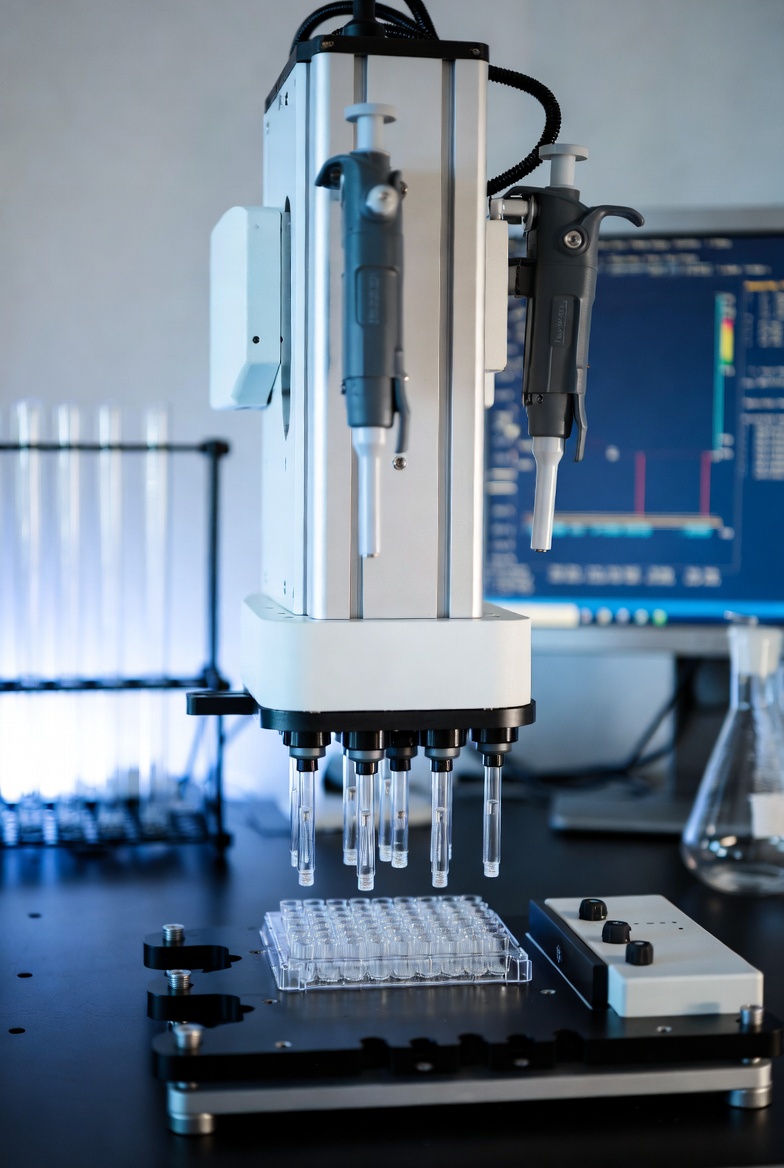
The Lab Revolution: How Automated Liquid Handling Systems Are Reshaping Scientific ResearchA Story by Pujitha Reddy The global automated liquid handling systems market is projected to grow at a CAGR of 9.82%, reaching USD 2.56 billion by 2029. Precision has always been the gold standard in laboratory work. But as research demands scale up and skilled professionals remain in short supply, a quiet technological revolution is transforming how labs operate. Automated liquid handling (ALH) systems �" once a niche solution �" are now central to modern scientific workflows, and the numbers reflect it. The global market, valued at USD 1.46 billion in 2023, is on track to nearly double to USD 2.56 billion by 2029, growing at an impressive CAGR of 9.82%. Know More : https://www.arizton.com/market-reports/automated-liquid-handling-systems-market Why Automation Is Taking Over the LabTraditional pipetting is prone to human error �" a reality that carries serious consequences in pharmaceutical trials, clinical diagnostics, and drug discovery. ALH systems address this by removing human variability from repetitive liquid transfer tasks, delivering greater precision, repeatability, and traceability across every sample processed. Beyond error reduction, these systems dramatically improve throughput. Labs can screen millions of compounds, prepare samples for high-volume sequencing, and run complex workflows �" all with fewer personnel and faster turnaround times. In an era where biotech and pharma companies are investing billions into R&D, the case for automation is straightforward: it protects those investments. Key Trends Driving GrowthAI and Machine Learning Integration are among the most exciting developments in the space. Intelligent systems can now optimize liquid handling protocols in real time, adapt to variables, and flag anomalies �" capabilities that were unimaginable just a few years ago. Cloud connectivity further enhances this by enabling remote monitoring, data sharing, and centralized lab management. Miniaturization is another compelling trend. Smaller, more compact analytical instruments allow labs to process a greater number of samples within the same physical footprint. This not only reduces reagent consumption but also accelerates result turnaround �" a critical advantage in fast-paced research environments. Contactless liquid handling is also gaining traction, with companies like Formulatrix introducing technologies such as the Flow Axial Seal Tip (F.A.S.T.) system, which reduces contamination risks and expands what's possible in sensitive assay workflows. Who's Using These Systems �" and WhyDrug discovery and development remains the dominant application segment. Screening millions of compounds for potential therapeutic value requires a level of consistency and scale that only automation can deliver. A single pipetting error in this context can cost millions and set timelines back by years. Pharmaceutical and biotech companies are the largest end-user group, given their ongoing clinical research obligations and stringent regulatory requirements. Academic and research institutions represent a fast-growing segment too, as universities and independent labs increasingly adopt automation to stay competitive in the global research landscape. A World Map of DemandNorth America leads the global market with over a third of total share, driven by a highly developed laboratory infrastructure, strong pharma and biotech presence, and sustained investment in healthcare innovation. Europe follows closely, with labs across the continent integrating automation as a core operational strategy. Meanwhile, emerging markets are catching up rapidly as healthcare systems modernize and research spending climbs. The Competitive LandscapeThe ALH market is competitive and consolidating. Major players �" including Agilent Technologies, Beckman Coulter, Eppendorf, Hamilton Company, and Thermo Fisher Scientific �" are leveraging acquisitions, partnerships, and co-development agreements to strengthen their positions. Agilent, for example, serves scientists in over 110 countries and offers purpose-built platforms like the AssayMAP Bravo system, designed specifically for biopharmaceutical applications. Smaller and emerging players, meanwhile, are carving out niches through specialized product launches and targeted innovation �" keeping the broader ecosystem dynamic and fast-moving. Looking AheadThe automated liquid handling systems market is no longer just a convenience for large pharma giants �" it's becoming essential infrastructure for any lab serious about scale, accuracy, and competitiveness. As AI deepens its integration into these platforms and miniaturization continues to expand what's possible, the laboratory of tomorrow will look very different from the one we know today. © 2026 Pujitha Reddy |
Stats
22 Views
Added on February 18, 2026 Last Updated on February 18, 2026 |

 Share This
 Email
Email Facebook
 Twitter
 Read Request
 My Library
 Subscribe
 Flag Writing