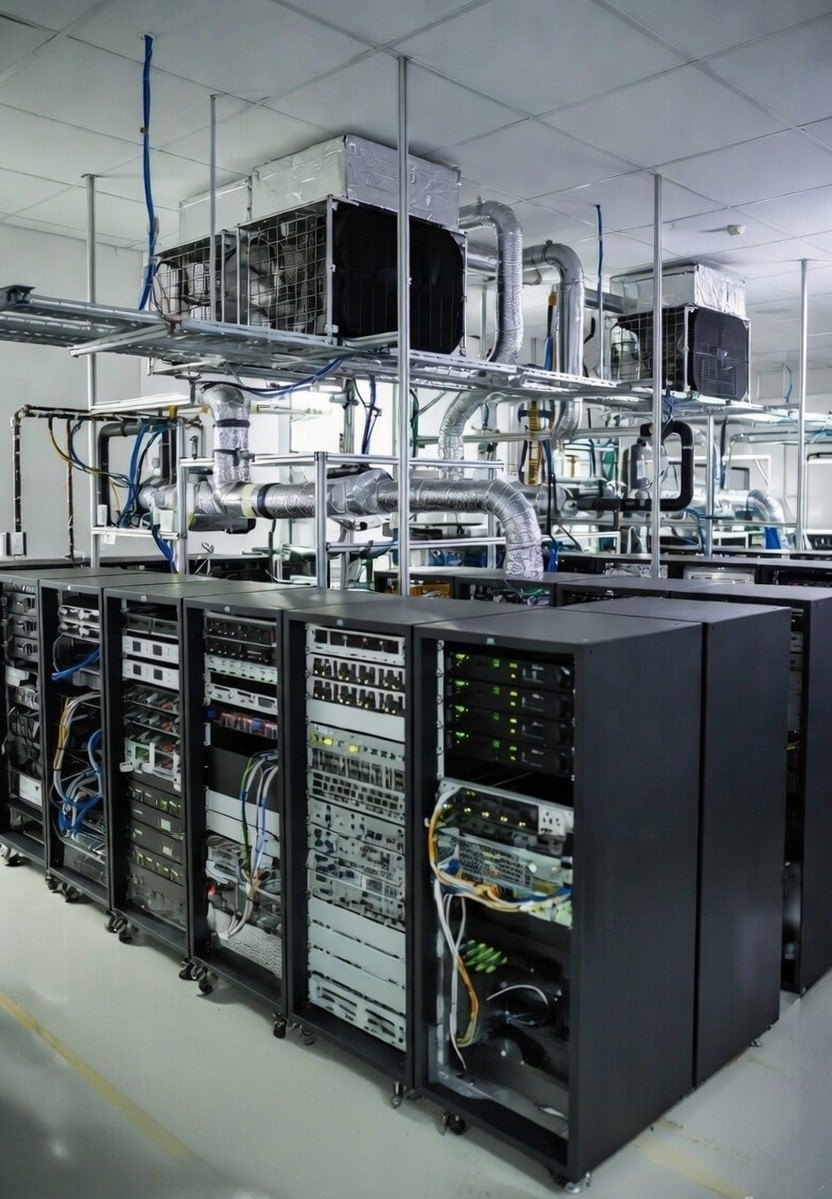
The Data Center Boom: Why Colocation Is the Backbone of the AI EraA Story by Pujitha ReddyEvery time someone runs a ChatGPT query, streams a video, or completes a cloud-based transaction, a data center somewhere is doing the heavy lifting. As digital workloads multiply �" and AI pushes demand into uncharted territory �" the infrastructure housing all of that compute power has become one of the most critical investments in the global economy. The global data center colocation market, valued at roughly $43 billion in 2023, is on track to nearly double by 2029, reaching over $80 billion. The engine driving that growth? Artificial intelligence. Know More : https://www.arizton.com/market-reports/global-data-center-colocation-market AI Is Rewriting the Rules of DemandThe arrival of generative AI has fundamentally changed the scale at which data centers must operate. AI training and inference workloads require enormous amounts of power and compute density �" far beyond what traditional enterprise IT demands. This surge is expected to drive the addition of approximately 48 GW of new data center capacity between 2024 and 2029 globally. The gap between available capacity and what the market needs is widening fast. Operators are racing to deploy infrastructure, even as they contend with power procurement challenges, supply chain constraints, and labor shortages. Going Green: Sustainability Moves to the CenterWith data centers consuming staggering amounts of electricity, the pressure to operate sustainably has never been greater. Operators across the industry are responding with serious commitments �" not just pledges. Solar and wind energy are being integrated into power strategies. Alternative fuels like Hydrotreated Vegetable Oil (HVO) are replacing conventional diesel in backup generators, cutting carbon emissions meaningfully. Advanced cooling technologies �" including liquid immersion, liquid-to-chip systems, and free cooling in colder climates �" are reducing the energy intensity of operations. And green financing is flowing in at scale, with major operators securing billions in sustainability-linked loans to fund eco-friendly expansions. Infrastructure innovation is keeping pace too. Lithium-ion UPS systems are replacing older lead-acid alternatives, offering longer lifespans and lower maintenance. Modular power solutions are enabling operators to scale capacity incrementally rather than making massive upfront capital commitments. A Truly Global BuildoutThe data center boom is playing out across every major region: In North America and China, investment and capacity addition continue to lead the world. The U.S. remains the largest single market by revenue and infrastructure scale. Europe is a mature but active market. While the UK, Germany, and Norway remain primary destinations for new development, secondary markets like Spain, Italy, and Greece are gaining ground year over year. The Asia-Pacific region is the largest by colocation revenue, accounting for close to 40% of the global total. China, India, Malaysia, Japan, and Australia are all seeing accelerated construction driven by cloud expansion and AI workload demand. In the Middle East and Africa, smart city ambitions in the UAE and Saudi Arabia �" alongside South Africa's growing digital economy �" are pulling in significant investment. Wholesale Colocation Leads the ChargeWithin the market, wholesale and hyperscale colocation �" large-scale facilities leased to cloud providers and enterprises with massive capacity needs �" is outpacing retail colocation in growth. Cloud giants are locking up capacity at an unprecedented rate to support AI infrastructure, making hyperscale leasing agreements one of the hottest segments in commercial real estate and tech infrastructure alike. Over 40 new players have entered the colocation market in just the past two years, including real estate asset managers and subsidiaries of power producers �" a sign of just how attractive the sector has become. The Bottom LineData center colocation is no longer just an IT infrastructure story. It sits at the intersection of AI development, energy transition, and global digital transformation. As AI workloads grow and cloud adoption deepens, the facilities that house this infrastructure will define the pace at which the digital economy can scale. The race to build �" sustainably, efficiently, and at speed �" is well and truly on. © 2026 Pujitha Reddy |
Stats
20 Views
1 Review Added on February 26, 2026 Last Updated on February 26, 2026 |

![[send message]](http://slow.writerscafe.org/images/mail.png)
![[befriend]](http://slow.writerscafe.org/images/friend.png)


 Share This
 Email
Email Facebook
 Twitter
 Read Request
 My Library
 Flag Writing