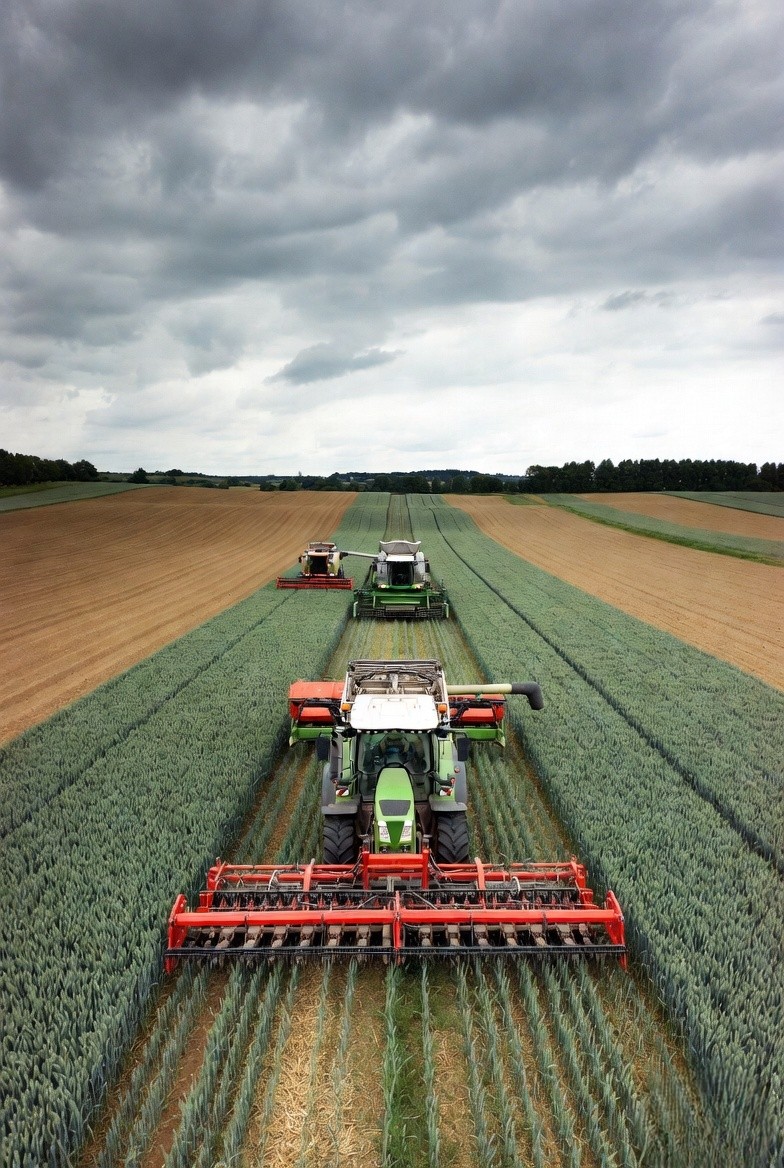
Farming Smarter: The Forces Shaping Europe's Agricultural Equipment MarketA Story by Pujitha Reddy Europe's agricultural equipment market is not chasing explosive growth. Instead, it is navigating something arguably more challenging: meaningful transformation at scale. Steady Growth in a Sector Under TransformationEurope's agricultural equipment market is not chasing explosive growth. Instead, it is navigating something arguably more challenging: meaningful transformation at scale. Estimated at around 243,000 units in 2025 and expected to reach approximately 262,000 units by 2031, the market is growing at a modest 1.28% annually. But behind those measured numbers lies a sector being reshaped by electrification, precision technology, shifting economics, and mounting regulatory pressure. From the industrialized farms of France and Germany to the smaller family-run operations of Eastern and Southern Europe, the demand for agricultural machinery reflects a continent trying to produce more food with fewer workers, lower emissions, and tighter budgets. Know More : https://www.arizton.com/market-reports/europe-agriculture-equipment-market Mechanization Fills the Labor GapThe most immediate force driving equipment demand across the continent is the chronic shortage of agricultural labor. Seasonal workers are harder to find, skilled operators are in short supply, and wage costs are rising. For many farmers, investing in machinery is no longer a choice driven purely by efficiency ambition. It is a practical response to workforce constraints. Government policy is making that response easier to act on. The European Union's Common Agricultural Policy continues to provide grants, income support, and rural development funding that reduce the financial barrier to acquiring modern machinery. Banks and rural credit institutions are supplementing this with flexible financing options that extend access to advanced equipment well beyond the largest and most profitable farm operations. The result is a market that is mechanizing steadily across all farm sizes and geographies, from high-capacity combine harvesters on France's grain plains to mid-range compact tractors on Polish family farms. Electric and Compact: Sustainability Becomes a Product CategoryThe most visible transformation in European agricultural equipment is the move toward electric and compact machinery. Stringent EU emissions standards, government incentives for zero-emission equipment, and farmers' own desire to cut fuel costs and reduce their environmental footprint are all accelerating this shift. Major manufacturers are responding with serious commercial products. John Deere unveiled a fully electric tractor at AGRITECHNICA 2025 delivering around 130 horsepower and featuring modular battery packs, designed specifically to meet the demands of European farms operating under tight sustainability regulations. New Holland's T4 Electric Power tractor, first shown in Europe at Agritechnica 2023, represents another step toward clean powertrains becoming mainstream rather than experimental. Germany, France, Italy, the United Kingdom, and the Netherlands are leading this transition. As battery technology matures and costs decline, electric equipment is expected to become a credible option for a broader range of farm types and applications across the forecast period. Precision Technology Changes What Machinery Can DoBeyond electrification, the integration of precision farming technology is raising the performance ceiling for European agricultural equipment. Camera-guided sprayers that identify and target individual weeds rather than blanket-treating entire fields are reducing chemical usage while improving compliance with environmental regulations. These "see-and-spray" systems represent a fundamental shift in how plant protection equipment operates. Planting technology is also becoming more sophisticated. Row-by-row seed singulation, electric metering, and retrofit precision kits allow operators to improve yield consistency without replacing entire systems. For farmers working with limited capital, the ability to upgrade incrementally rather than invest in full replacements is a meaningful advantage. Kubota's partnership with Norwegian agtech startup Kilter to pilot the AX-1 autonomous AI-guided weeding robot in Europe shows how technology collaboration is accelerating the pace of innovation at the farm level. Digital sales channels are also changing the purchasing landscape. Farmers are increasingly researching and transacting online, bypassing traditional dealerships in favor of platforms that offer greater price transparency, cross-border options, and integrated after-sales service. The Challenges Holding the Market BackTwo constraints are limiting the pace of new equipment sales in meaningful ways. The first is the growing appetite for second-hand machinery. Amid economic uncertainty, high interest rates, and stretched farm finances, many smaller operators are choosing used equipment over new purchases. This keeps farms running but directly suppresses demand for new machinery, particularly among cost-sensitive buyers. The second constraint is the labor shortage itself. While worker scarcity generally pushes farmers toward mechanization, the absence of skilled operators also creates reluctance to invest in advanced equipment that cannot be fully utilized without qualified staff. Trade tariffs on steel and aluminium are adding further cost pressure on manufacturers, with potential implications for retail pricing. The Road AheadSpain is the fastest-growing country in the regional market, driven by rising mechanization rates and growing agricultural investment. France leads in market size, Germany anchors manufacturing, and Italy is expected to recover from a period of contraction from 2026 onward. Globally recognized brands including John Deere, CNH Industrial, AGCO, Kubota, and CLAAS dominate, competing intensely on technology, sustainability credentials, and precision farming capabilities. For a market growing steadily rather than spectacularly, the real story is the quality of transformation underway and what it means for the future of farming across Europe. © 2026 Pujitha Reddy |
Stats
14 Views
Added on March 5, 2026 Last Updated on March 5, 2026 |

 Share This
 Email
Email Facebook
 Twitter
 Read Request
 My Library
 Subscribe
 Flag Writing