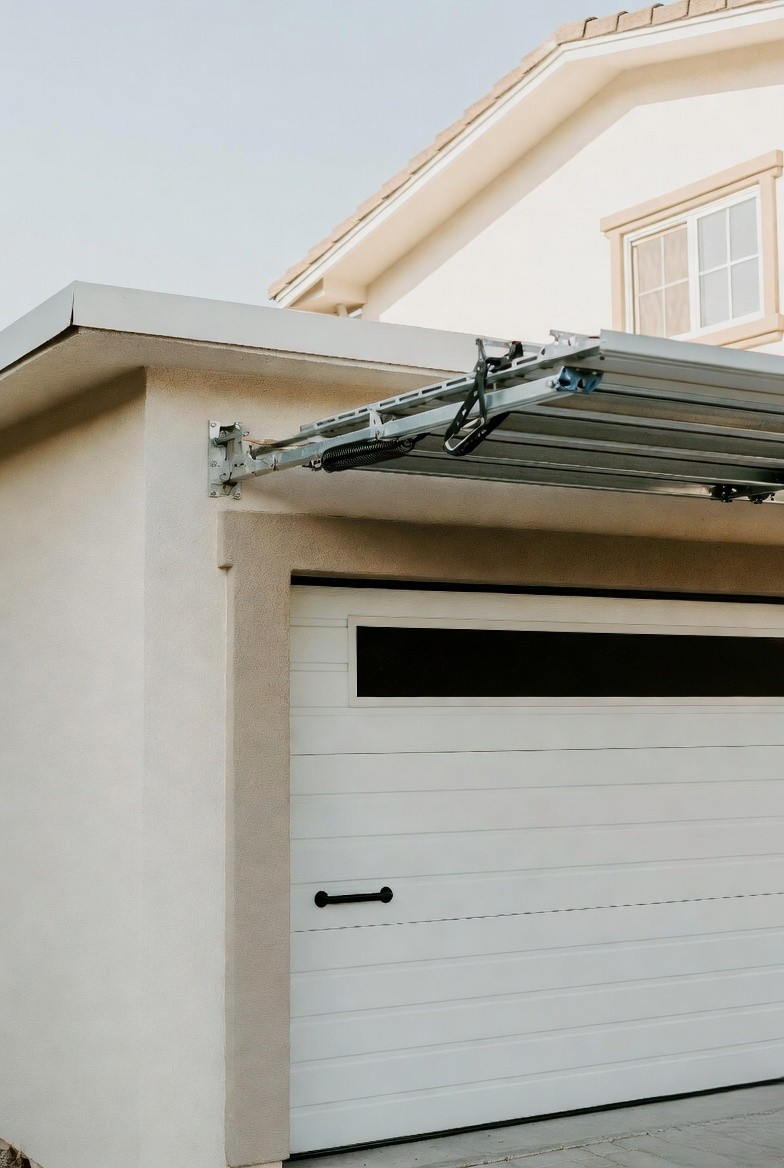
GCC Garage Doors Market: Smart Homes, Mega Projects, and a Region Building at ScaleA Story by Pujitha Reddy The GCC garage doors market, valued at $215 million in 2025, is projected to reach $299.07 million by 2031, growing at an annual rate of 5.65%. A Market Driven by Construction and ConnectivityGarage doors may not be the most glamorous component of modern construction, but in the GCC they are becoming a meaningful indicator of the region's broader transformation. The GCC garage doors market, valued at $215 million in 2025, is projected to reach $299.07 million by 2031, growing at an annual rate of 5.65%. Behind that steady growth is a region building at an extraordinary pace, integrating smart technology into everyday infrastructure, and developing logistics networks that require industrial-grade access systems at scale. From luxury villas in Dubai to warehouse complexes in Riyadh and cold storage facilities in Abu Dhabi, garage doors are following the construction boom every step of the way. Know More : https://www.arizton.com/market-reports/gcc-garage-doors-market Construction Boom Across the RegionThe primary engine of market growth is straightforward: the GCC is building intensively, and residential and commercial developments both require garage door systems as standard infrastructure. In Saudi Arabia, government-funded housing initiatives under Vision 2030 are delivering thousands of new residential units, while giga-projects including NEOM, ROSHN, and Qiddiya are creating entirely new urban environments. Riyadh, Jeddah, and Dammam are expanding continuously, adding new homes, gated communities, and mixed-use developments that generate consistent demand for both residential and commercial garage door products. The UAE is contributing equally to this momentum. Abu Dhabi delivered around 1,400 new residential units in the third quarter of 2025 alone, while Dubai recorded transactions covering over 8,100 apartments and 1,650 villas in high-demand areas during the same period. Qatar's government has revealed a $22.2 billion infrastructure plan for 2025 to 2029 that includes 5,500 new residential plots through public-private partnerships. Taken together, this construction activity across the six GCC states creates a deep and durable pipeline of demand for garage door products across all price segments. Smart Homes and Automation Raising the BarThe residential garage door market in the GCC is not just growing in volume. It is growing in sophistication. Rising adoption of home automation systems is driving demand for smart garage doors that integrate seamlessly with digital security platforms, smartphone applications, and voice-activated controls. Premium villa developments and smart community projects increasingly specify automated doors as standard rather than optional features. The automatic segment is recording the highest growth rate in the market, reflecting consumer preference for remote operation, keyless access, and integration with broader home management systems. Some models now allow owners to open and close their garage from anywhere via a smartphone app, a capability that resonates strongly with the tech-forward, convenience-driven consumer base in Gulf cities. This shift is particularly visible in developments like Dubai Urban Master Plan 2040, which emphasizes smart city infrastructure and is indirectly expanding demand for automated access systems across parking structures, service areas, and residential zones. Logistics and Warehousing: A Growing Commercial Demand DriverBeyond residential construction, the rapid expansion of logistics and warehousing infrastructure across the GCC is generating substantial demand for commercial-grade garage doors. Saudi Arabia's warehousing sector added approximately 1.3 million square meters in the first half of 2025, with major logistics hubs in Riyadh, Jeddah, and Dammam operating at near-full occupancy. Cross-docking terminals, fulfillment centers, cold storage facilities, and food and beverage distribution warehouses all require high-cycle sectional or rolling shutter door systems built for heavy industrial use. The expansion of AD Ports Group's StockSpace and a new $13.6 million warehouse facility in KEZAD covering 14,200 square meters are examples of the kind of projects generating sustained demand for heavy-duty automated commercial garage door solutions. Dubai Logistics District and Saudi Logistics Hub are both prioritizing durability and fast-cycle performance in their door specifications, creating opportunities for specialized industrial brands that can meet demanding operational requirements. Tourism and Hospitality Adding Another LayerThe GCC's booming tourism sector is contributing to commercial garage door demand in ways that are easy to overlook. Hotel revenues in the UAE reached around $7.1 billion in the first half of 2025, reflecting a 6.3% year-on-year increase. Dubai welcomed nearly 9.88 million international visitors in the same period, placing it among the world's top three tourism destinations. Hotels, resorts, mixed-use developments, and large parking facilities all rely on automated commercial garage door systems for vehicle access management, security, and operational efficiency. As the region continues to develop hospitality infrastructure to support growing visitor numbers, this demand will only deepen. Key Segments and MaterialsSectional garage doors hold the largest product segment share at over 37%, valued for their vertical lifting design that maximizes driveway usability in residential properties and villas where space efficiency matters. Metal remains the dominant material, favored for its structural strength, compatibility with insulated panel construction, and ease of integration with automation systems. Wood garage doors are growing at nearly 5% annually, driven by demand in coastal areas where their natural properties offer advantages over traditional materials in humid, corrosive environments. Manual doors still hold the largest operational segment share due to low upfront costs and minimal maintenance requirements. However, automatic doors are growing at the highest rate, reflecting the overall premium shift in residential and commercial specifications. Challenges to WatchTwo constraints are limiting faster growth in the market. High upfront costs, including installation, automation features, insulation, and ongoing maintenance, create a financial barrier for price-sensitive residential buyers. A shortage of skilled installation and service labor is also emerging as a restraint, affecting installation timelines and after-sales service quality across the region. The Competitive LandscapeThe GCC garage doors market is served by a combination of international and regional players. Global brands including Hormann, ASSA ABLOY, Novoferm, Teckentrup, and DoorHan compete on technology, product quality, and brand positioning, particularly in premium residential and large commercial projects. Regional manufacturers including Al-Barrak and Saudi Anfal compete on affordability, climate-adapted designs, faster delivery, and local service networks. Saudi Arabia leads the regional market with over 41% share, supported by the scale and pace of its construction and infrastructure programs. The UAE, Qatar, Kuwait, Oman, and Bahrain are all contributing to market growth through distinct combinations of residential development, logistics expansion, and smart city investment. © 2026 Pujitha Reddy |
Stats
9 Views
Added on March 5, 2026 Last Updated on March 5, 2026 |

 Share This
 Email
Email Facebook
 Twitter
 Read Request
 My Library
 Subscribe
 Flag Writing