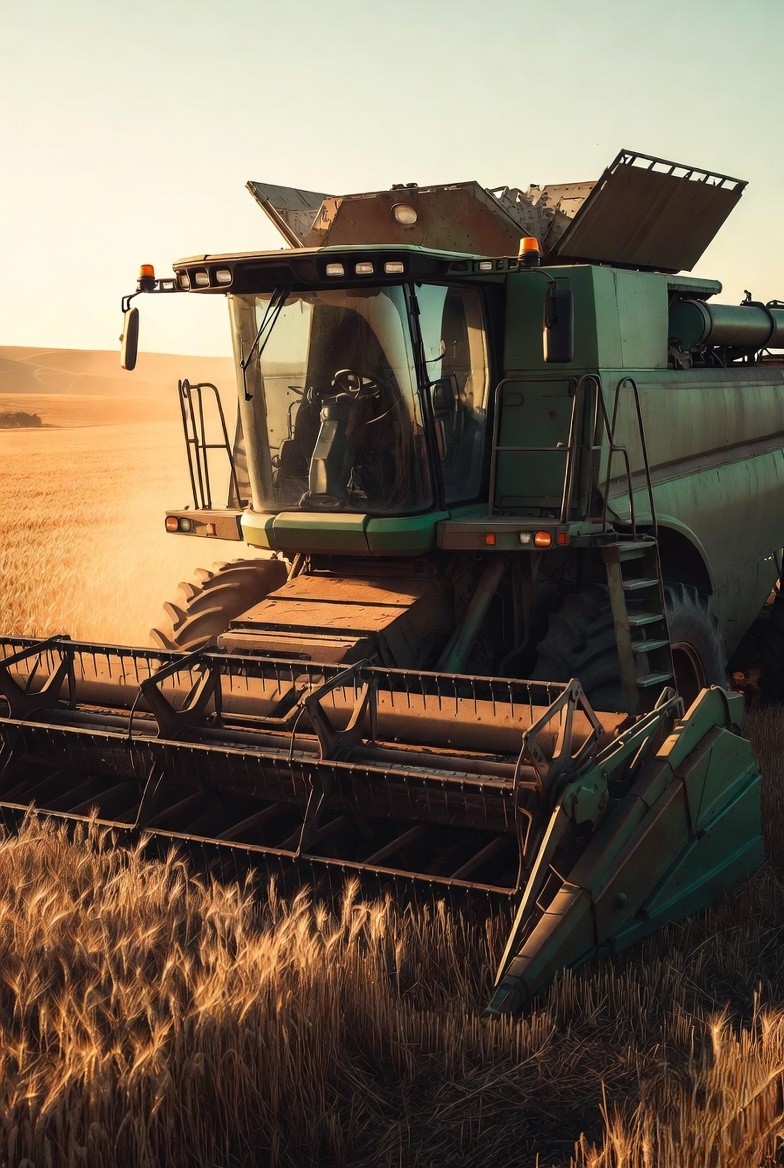
America's Agricultural Equipment Market: Precision, Electrification, and the Push to Farm SmarterA Story by Pujitha Reddy Estimated at around 300,000 units in 2025 and projected to reach approximately 346,000 units by 2031, the U.S. agriculture equipment market is growing at a CAGR of 2.38%. A Market on a Steady ClimbThe United States has long been a global leader in agricultural machinery, and its domestic market reflects that position. Estimated at around 300,000 units in 2025 and projected to reach approximately 346,000 units by 2031, the U.S. agriculture equipment market is growing at a CAGR of 2.38%. The pace is measured, but the transformation underway is anything but incremental. Labor shortages, rising input costs, environmental pressures, and the accelerating adoption of precision farming technology are collectively pushing American farmers toward smarter, cleaner, and more capable machinery. At the same time, government support programs and evolving financing options are making it easier for farms of all sizes to invest in modern equipment. Know More : https://www.arizton.com/market-reports/us-agricultural-equipment-market Precision Farming: From Fields to Data CentersThe most consequential shift in U.S. agricultural equipment is the move from broad, uniform farm management to highly targeted, data-driven operations. Precision farming technology, including GPS guidance, variable-rate application systems, sensors, drones, telematics, and cloud analytics, is helping farmers reduce input costs, improve yields, and make smarter decisions about everything from planting depth to fertilizer distribution. Modern tractors and combines now routinely feature auto-steering, remote sensing, and real-time connectivity that feed data directly into farm management platforms. Major equipment manufacturers are building integrated ecosystems that connect machinery to field-level decision-making tools, creating a feedback loop between what happens in the soil and what happens in the cab. John Deere's partnership with Drive TLV in February 2025, giving it access to a broad network of technology startups focused on autonomy, sensors, electrification, and connectivity, illustrates how the industry's leading players are actively accelerating the pace of innovation. CNH Industrial's launch of satellite internet connectivity across North American markets, starting with pilot regions in the U.S. in 2024, is enabling farmers in remote rural locations to use smart farming equipment in real time, a capability that was not practically available to them just a few years ago. Electric and Compact Equipment: Sustainability Meets PracticalityAlongside precision technology, the U.S. market is experiencing a meaningful rise in electric and compact agricultural machinery. Stricter emissions regulations, declining battery costs, and demand for quieter and lower-maintenance machines are all contributing to this shift, particularly among smaller farms, specialty operations, orchards, and urban agriculture enterprises. Compact electric tractors with under 40 horsepower are gaining traction for their instant torque, zero tailpipe emissions, and low noise output. For orchard operators, vineyard managers, and small-acreage farmers, these characteristics make electric machinery genuinely practical rather than aspirational. AGCO's launch of Fendt electric tractors in early 2024, alongside the expansion of its Fuse Smart Farming platform, signals that major manufacturers are committing seriously to this transition. Government Support Remains a Critical EnablerAgricultural policy in the United States plays a meaningful role in determining how quickly farmers can upgrade their equipment. The USDA provided $3.1 billion in relief through the Inflation Reduction Act in 2024, enabling over 30,000 financially distressed farmers and ranchers to remain operational. The Farm Service Agency continues to provide direct and guaranteed loans for operating expenses and long-term investments in machinery, with recent policy updates streamlining application processes and introducing low-interest installment options for distressed borrowers. State-level programs add another layer of support. Maryland's Southern Maryland Farm Mini Grant Program, for instance, offers matching grants of up to $2,000 for startup projects and farm diversification, illustrating how targeted local initiatives are helping smaller and newer operations access modern tools. Together, these mechanisms reduce the financial risk associated with investing in expensive machinery and accelerate mechanization across a wider range of farm sizes. Key Products and SegmentsTractors remain the dominant product category, holding the largest market share in 2025 and growing at a CAGR of 2.37%. Their centrality to virtually every farming operation ensures consistent baseline demand regardless of broader market fluctuations. Self-propelled harvesters occupy a significant position in the harvesting segment, prized for faster speeds, reduced labor dependency, and precise cutting mechanisms that minimize crop loss. In the planting segment, planters lead the seedling and transplanting category, with growing demand for innovations like row-by-row seed singulation and electric metering that enable yield improvements without requiring full system replacement. Plant protection equipment is also evolving rapidly. Camera-guided see-and-spray systems that target individual weeds rather than blanket-treating entire fields are reducing chemical usage and improving compliance with environmental regulations. These targeted approaches represent a major shift in how plant protection works in practice. The Headwinds: Commodity Prices and Trade TariffsThe market is not without its challenges. Falling commodity prices in several crop and livestock segments have compressed farm margins significantly, reducing the capital available for major equipment investments. When profitability is under pressure, farmers tend to repair older machines and extend equipment life cycles rather than buying new, which directly suppresses demand. Trade tariffs add further complexity. The U.S. government's current 50% tariff rate on steel and aluminium imports raises production costs for domestic equipment manufacturers, with potential downstream effects on retail pricing. Reciprocal tariffs announced in April 2025 on imports from around 90 countries could further disrupt supply chains that depend on globally sourced components and raw materials. Regional DynamicsThe Southwest accounts for the largest regional share at over 49% of the U.S. agriculture equipment market, driven by the production of cotton, Chile peppers, and a range of specialty crops across Texas, Arizona, and New Mexico. The Midwest, known for corn, soybeans, and wheat, represents another major hub with large landholdings that generate consistent demand for high-capacity machinery. The West is important for fruits, almonds, grapes, and specialty crops that rely heavily on irrigation. The Northeast is anchored by its dairy sector, particularly in New York and Vermont, while the Southeast produces cotton, peanuts, tobacco, and soybeans across a warm, fertile agricultural region. The Competitive LandscapeJohn Deere, CNH Industrial, AGCO, and Kubota dominate the U.S. market, competing aggressively on technology, precision farming capability, and sustainability credentials. AGCO's $2 billion acquisition of an 85% stake in Trimble Inc in 2024, creating a joint venture focused on autonomous and advanced farming technologies, is the most significant recent consolidation move in the industry. Smaller regional manufacturers face growing competitive pressure as global brands invest more heavily in integrated technology ecosystems that are difficult to replicate at smaller scale. Differentiation through service, local expertise, and niche product offerings will remain important for players operating outside the major brand tier. © 2026 Pujitha Reddy |
Stats
8 Views
Added on March 6, 2026 Last Updated on March 6, 2026 |

 Share This
 Email
Email Facebook
 Twitter
 Read Request
 My Library
 Subscribe
 Flag Writing