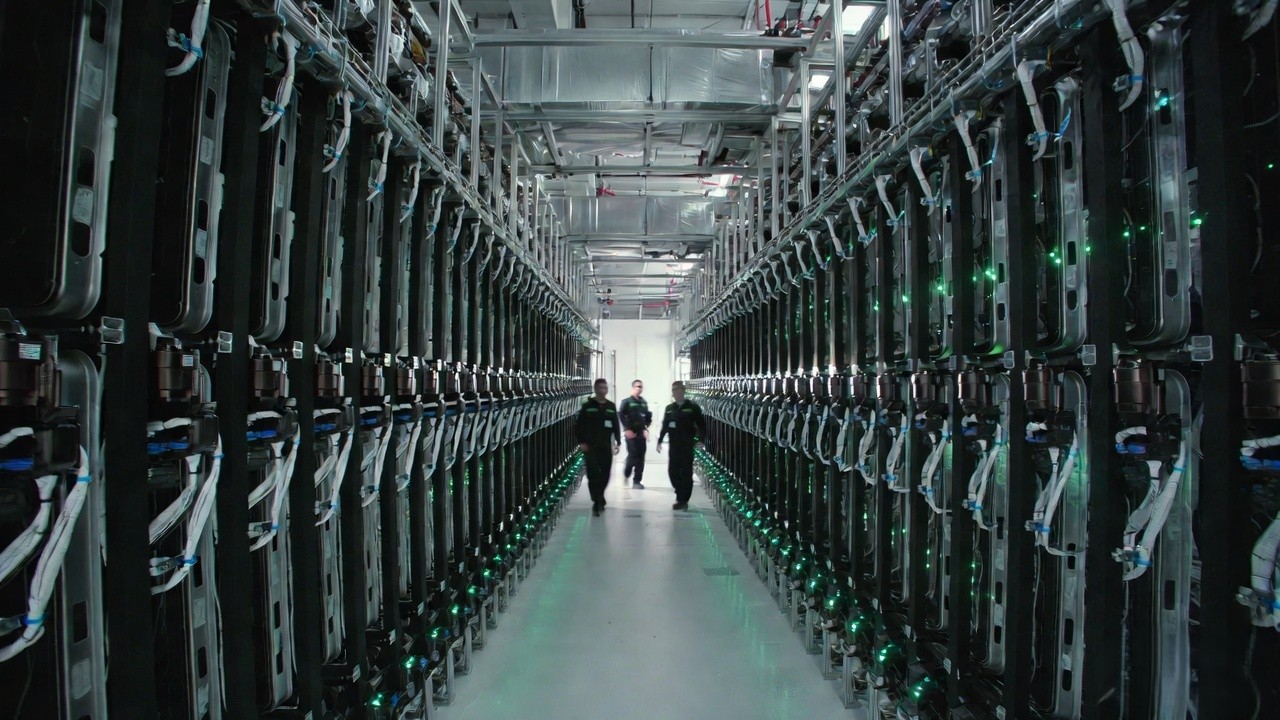
Japan's Data Center Market: Powering the World's Most AI-Ambitious NationA Story by Pujitha Reddy Japan's data center market is undergoing a transformation of remarkable scale. Valued at $12.76 billion in 2025, it is projected to reach $38.92 billion by 2031 A Market Tripling in Six YearsJapan's data center market is undergoing a transformation of remarkable scale. Valued at $12.76 billion in 2025, it is projected to reach $38.92 billion by 2031, growing at an annual rate of over 20%. That trajectory places Japan among the fastest-growing data center markets in the Asia-Pacific region, driven by a government committed to becoming the world's most AI-friendly nation, a deeply embedded culture of technological adoption, and a wave of hyperscale and colocation investment flowing into the country from global operators. With approximately 119 operational colocation facilities and 49 more in the pipeline across 17 locations, Japan's digital infrastructure buildout is well advanced and accelerating. AI at the Center of Japan's Digital StrategyJapan's national ambition to lead the world in artificial intelligence development is perhaps the single most powerful force reshaping its data center requirements. Government policy, public investment, and international collaboration are all being mobilized in pursuit of this goal, and the infrastructure implications are substantial. AI workloads demand computing environments that differ fundamentally from traditional enterprise IT: dense GPU clusters, high-bandwidth networking, advanced cooling systems, and elevated power capacity. The country's data center operators and global technology partners are responding with AI-ready facilities designed specifically to meet these requirements. In June 2025, HPE and KDDI announced the development of the Sakai Data Center in Osaka, a new AI-ready facility powered by NVIDIA Blackwell infrastructure and liquid cooling, expected to become operational by early 2026. The $2 billion Cosmosquare Data Center campus in Osaka, developed through a joint venture between CloudHQ and ESR, represents another major commitment to large-scale, high-performance capacity in the region. In September 2025, Preferred Networks, Internet Initiative Japan, and the Japan Advanced Institute of Science and Technology began pilot testing liquid-cooled high-density AI servers and hybrid-cooled data centers, with the explicit objective of developing ultra-efficient AI computing infrastructure at national scale. Tokyo Leads, but Secondary Cities Are RisingTokyo remains Japan's dominant data center destination, home to around 74 existing facilities and 26 more under development as of mid-2025. The city's concentration of enterprise customers, cloud regions, and financial services firms ensures it will remain the market's primary hub for the foreseeable future. Osaka has established itself firmly as the second major cluster, attracting significant hyperscale investment and serving as Japan's western anchor for cloud infrastructure. AWS, Google, Microsoft, Oracle, Alibaba, and Tencent Cloud all operate dedicated cloud regions with presence across Tokyo and Osaka. Beyond these two cities, a new wave of interest is building in locations including Hokkaido, Kyushu, Nagoya, and Yokohama. These regions offer meaningful advantages: available land, lower construction costs, government incentives, and in some cases access to renewable energy sources that are harder to secure in dense urban markets. As Tokyo and Osaka face growing constraints on available land and power, secondary city development is becoming an increasingly important part of the supply-side story. Liquid Cooling: The Technology Defining the Next GenerationThe shift toward liquid cooling is one of the most consequential technical trends in Japan's data center market. As AI workloads drive power densities to levels that traditional air-cooled infrastructure cannot efficiently manage, liquid cooling is transitioning from a specialized solution to an industry standard for high-performance facilities. Liquids absorb and transfer heat far more effectively than air, making them essential for facilities housing dense GPU clusters and high-performance computing systems. The pilot testing program launched in September 2025 at IIJ's Matsue Data Center Park and JAIST's Ishikawa campus is specifically designed to advance Japan's domestic capability in this area, with the goal of establishing ultra-efficient AI computing infrastructure that can scale nationally. Connectivity: A Record-Breaking Infrastructure AdvantageJapan's digital infrastructure ambitions are underpinned by world-class network performance. In April 2025, the National Institute of Information and Communications Technology set a new global record for internet speed, achieving 1.02 petabits per second over a distance of 1,808 kilometers. For data center operators and cloud providers, this kind of connectivity performance translates directly into the low-latency, high-bandwidth environment that AI and enterprise applications demand. Japan's investment in IoT, big data, and smart city technology is simultaneously expanding the base of digital services that generate data center demand. With approximately $225 million allocated in the FY2025 budget to promote smart city technology adoption, the government is actively building the application layer that drives infrastructure requirements across healthcare, transportation, and energy. Sovereignty and Sustainability: Two Growing PrioritiesData sovereignty is emerging as a meaningful consideration in Japan's market, particularly for public sector and regulated enterprise customers who require their data to remain within national borders under Japanese governance. In October 2025, SoftBank and Oracle announced a joint venture to deliver sovereign cloud and AI services for Japanese organizations, using Oracle Alloy technology to build a fully domestically managed cloud infrastructure. This kind of offering addresses a genuine and growing need in the market. Sustainability is equally prominent on the industry agenda. Microsoft signed a Power Purchase Agreement with Shizen Energy in October 2025, securing approximately 100 megawatts of solar power from four projects across Kyushu and Chugoku. This deal reflects a broader industry movement toward renewable energy procurement as operators work to reduce the carbon intensity of their Japanese operations and align with the country's decarbonization goals. A Rich and Competitive Vendor EcosystemJapan's data center market features an exceptionally deep vendor ecosystem. Established operators including Equinix, NTT Communications, Telehouse, MC Digital Realty, IIJ, AT TOKYO, and Colt Data Centre Services anchor the colocation landscape. A wave of new entrants including AirTrunk, Keppel Data Centres, EdgeConneX, Vantage Data Centers, CapitaLand, NEXTDC, and Princeton Digital Group are adding competitive depth and accelerating the pace of new capacity development. On the IT infrastructure side, the presence of NVIDIA, Cisco, Dell Technologies, HPE, Fujitsu, Hitachi Vantara, and others ensures that Japan's facilities have access to the hardware required to support both current and next-generation workloads. Support infrastructure providers including Schneider Electric, Vertiv, Mitsubishi Electric, Eaton, and Siemens maintain strong local service capabilities to support an expanding fleet of operational facilities. © 2026 Pujitha Reddy |
Stats
13 Views
Added on March 9, 2026 Last Updated on March 9, 2026 |

 Share This
 Email
Email Facebook
 Twitter
 Read Request
 My Library
 Subscribe
 Flag Writing