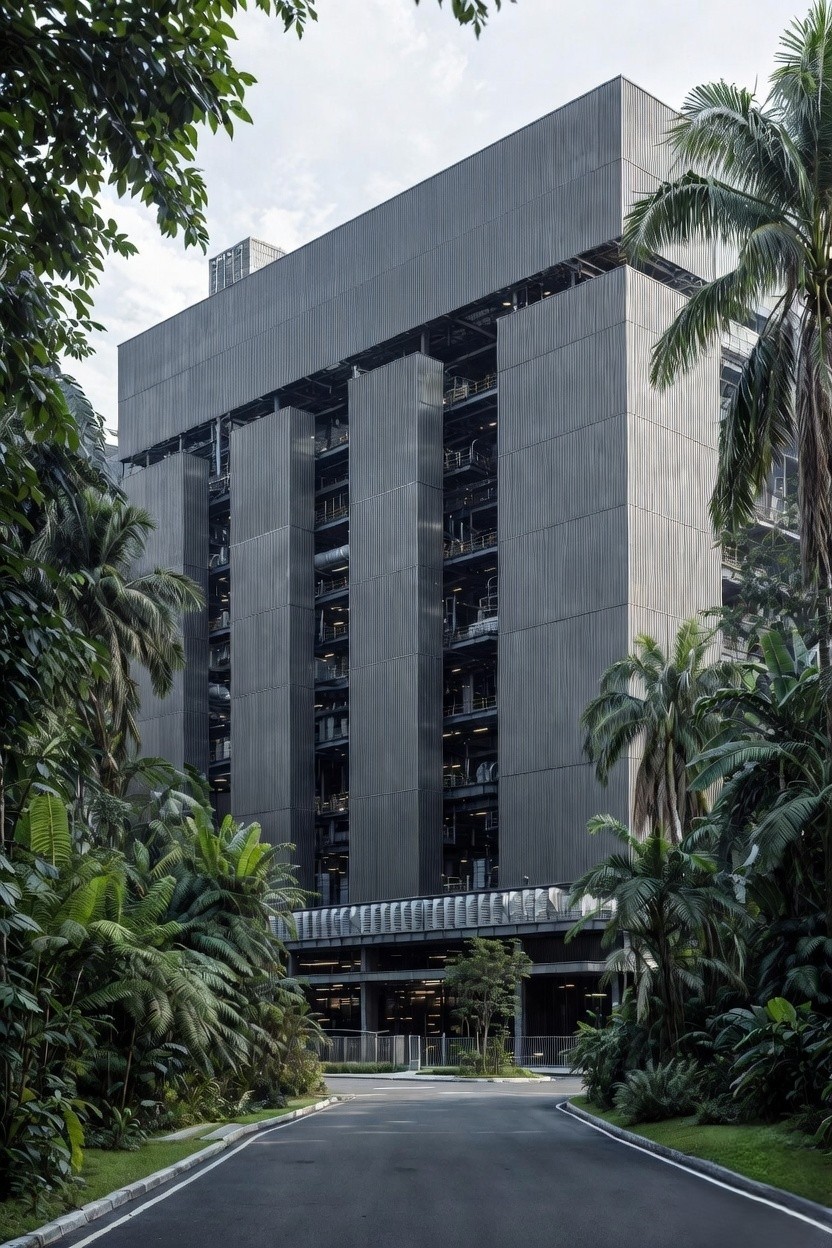
Southeast Asia's Data Center Surge: The Region Is Becoming a Global Digital PowerhouseA Story by Pujitha Reddy The Southeast Asia data center market, valued at $13.71 billion in 2024, is on track to more than double to $30.47 billion by 2030. For years, Singapore was the undisputed gateway for data center investment in Southeast Asia. Today, the story is far more complex �" and far more exciting. A wave of hyperscale investment, shifting data sovereignty regulations, and the relentless demand from AI and cloud services is transforming the entire region into one of the world's most dynamic data center markets. The Southeast Asia data center market, valued at $13.71 billion in 2024, is on track to more than double to $30.47 billion by 2030. That growth rate �" a CAGR of 14.23% �" places it among the fastest-expanding digital infrastructure markets anywhere on the planet. Know More : https://www.arizton.com/market-reports/southeast-asia-data-center-market What's Fueling the GrowthSeveral forces are converging to drive this expansion. Internet user populations across the region continue to grow rapidly, smartphone penetration is deepening, and businesses of every size are migrating away from on-premise server rooms toward cloud-based infrastructure. At the same time, data localization laws enacted by countries including Indonesia, Thailand, and Singapore are making it a legal requirement for certain data to be stored within national borders �" creating built-in demand for local data center capacity. Add to that the competitive advantages that markets like Malaysia and Indonesia offer �" lower land and power costs, accommodating regulatory frameworks, and available space that increasingly constrained neighbors like Singapore simply cannot provide �" and the investment case becomes compelling. Hyperscalers Are Planting Flags Across the RegionThe scale of hyperscale investment in Southeast Asia over the past year has been remarkable. Microsoft, Google, AWS, and Oracle have all made significant moves, often with multi-year, multi-billion-dollar commitments. Google announced plans to invest $1 billion in Thailand across data centers in Bangkok and Chonburi, with spending spread through 2029. Microsoft opened a new data center in Thailand and committed $1.7 billion to AI and cloud infrastructure in Indonesia. Oracle launched its second cloud region in Singapore, responding to surging demand for AI-enabled cloud services. Google also announced a hyperscale facility in Ho Chi Minh City, Vietnam, expected to be operational by 2027. These aren't isolated bets �" they reflect a coordinated recognition that Southeast Asia's digital economy is entering a phase of structural, sustained growth. Malaysia Takes the LeadWithin the region, Malaysia has emerged as the top destination for data center investment, and the reasons are straightforward. Land is available and affordable, power costs are competitive, and the government has created a regulatory environment that actively welcomes foreign investment in digital infrastructure. As neighboring Singapore faces physical constraints on new development, capital has flowed northward to Malaysia �" a trend that shows no sign of reversing. Indonesia is also a rising force, with more than 14 cloud zones operated by global providers including AWS, Google Cloud, Microsoft Azure, Alibaba Cloud, and others. Investment is concentrated in the Greater Jakarta region, where power supply and network infrastructure are most reliable, but the country's scale and growth trajectory make it a long-term priority market. Thailand is rapidly establishing itself as a credible alternative hub, supported by a strong power grid, strategic geographic positioning, and a government that is actively streamlining permit processes and offering tax incentives to attract data center developers. Vietnam, meanwhile, is accelerating its data center buildout to position itself as a beneficiary of the AI infrastructure wave. Sustainability Is No Longer OptionalAs data centers multiply across Southeast Asia, operators face mounting pressure to power them responsibly. The region's hyperscalers are responding with serious commitments. Microsoft secured a 20-year solar power purchase agreement in Singapore for 200 MW of renewable capacity. Etix Everywhere deployed solar panels across more than 6,000 square feet of its facilities, targeting 100% renewable energy by 2025. AIMS Data Centre's new Kuala Lumpur facility offsets energy use through hydroelectric power from Sarawak Energy Berhad. Thailand's government has set ambitious targets �" a 30% increase in renewable energy supply by 2037 and carbon neutrality by 2050 �" and has formalized its green energy framework accordingly. Malaysia's access to solar and hydropower gives operators in the country a meaningful path to greener operations. On the technical side, liquid cooling is becoming a standard consideration rather than a premium option. Digital Realty's deployment of liquid-cooled servers in its Singapore facility demonstrated up to 29% reduction in power consumption �" a number that resonates strongly as energy costs and sustainability targets both tighten. The Infrastructure Behind the BuildoutKeeping pace with demand requires not just more facilities, but smarter ones. Across the region, data center operators are upgrading networking infrastructure to higher-speed switching architectures, adopting flash storage, and deploying blade servers to handle increasingly dense and sophisticated workloads. Backup power reliability remains a non-negotiable priority. Despite sustainability pressures, generator capacity remains essential �" particularly in markets where grid stability is uneven. The buildout of robust IT infrastructure is being supported by a deep ecosystem of global technology providers and a growing pool of specialized construction contractors and engineering firms operating across the region. The Competitive Race Heats UpThe Southeast Asia data center market is attracting a broad mix of participants �" global hyperscalers, international colocation providers, regional operators, and infrastructure investors. Equinix's acquisition of three data centers in the Philippines from Total Information Management is a recent example of how established players are actively expanding their regional footprint, drawn by strong growth potential, a digitally engaged population, and favorable cost structures. Competition is intensifying, and that pressure is a positive signal �" it drives innovation in facility design, sustainability practices, and service quality, ultimately benefiting the enterprises and consumers whose digital lives these facilities support. Looking AheadSoutheast Asia is no longer a secondary consideration in global data center strategy. It is a primary destination �" one where policy alignment, economic growth, and the AI-driven demand for compute infrastructure are all pointing in the same direction at once. © 2026 Pujitha Reddy |
Stats
13 Views
Added on March 12, 2026 Last Updated on March 12, 2026 |

 Share This
 Email
Email Facebook
 Twitter
 Read Request
 My Library
 Subscribe
 Flag Writing