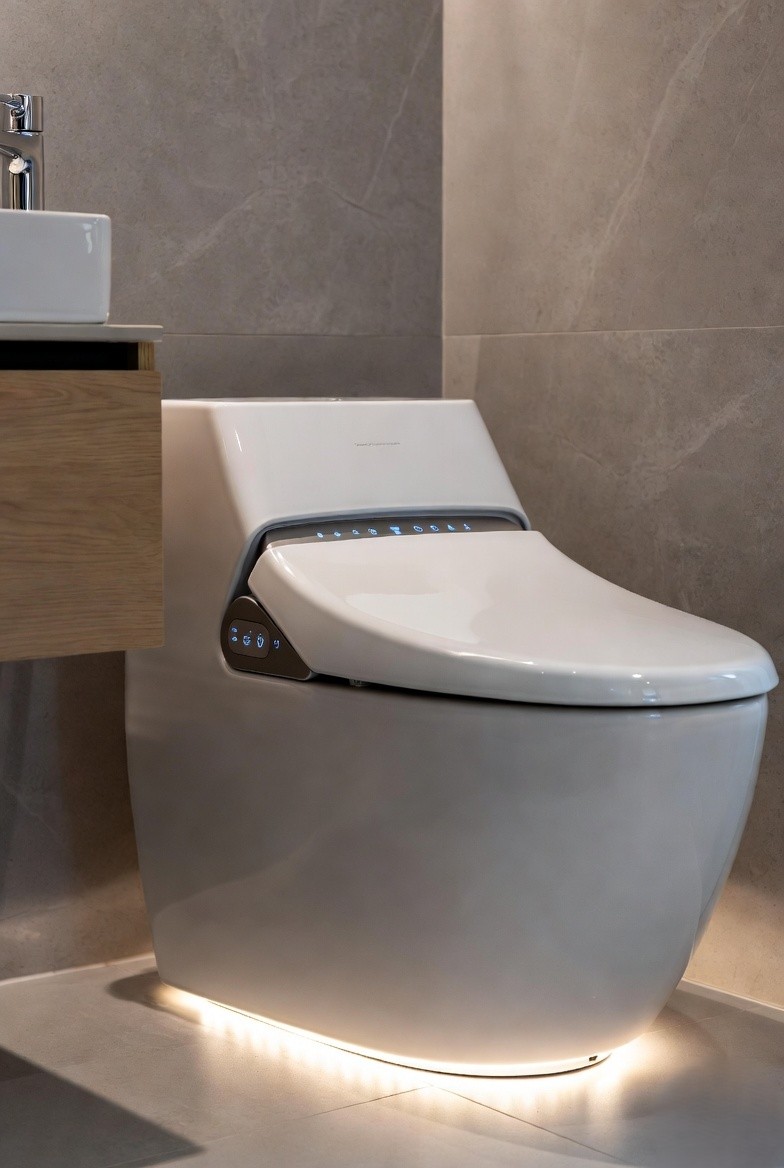
The Smart Toilet Revolution: Where Hygiene Meets High TechnologyA Story by Pujitha Reddy The global smart toilet market, valued at $10.11 billion in 2024, is expected to reach $16.09 billion by 2030, growing at a CAGR of 8.04%. It might not be the first thing that comes to mind when we talk about smart home innovation, but the humble toilet is quietly undergoing a remarkable transformation. Smart toilets �" equipped with sensors, AI, bidets, self-cleaning functions, and app connectivity �" are moving from novelty to mainstream in markets around the world. The global smart toilet market, valued at $10.11 billion in 2024, is expected to reach $16.09 billion by 2030, growing at a CAGR of 8.04%. So what's driving consumers to rethink one of the most private fixtures in their homes? Hygiene Is No Longer Just a Preference �" It's a PriorityThe COVID-19 pandemic reshaped how people think about cleanliness and touchless interactions, and the bathroom was no exception. Demand for bidet-equipped and hands-free toilet solutions surged during lockdowns �" some U.S.-based bidet retailers reported sell-out conditions �" and that momentum has continued, with sales growing around 30% annually since the pandemic peak. Japan offers the clearest picture of where the market can go: over 80% of Japanese homes have a smart bidet toilet, making it a cultural standard rather than a luxury item. As consumers in other markets grow more conscious of hygiene standards, smart toilets are increasingly being marketed and perceived as a meaningful upgrade in everyday sanitation. Technology Is Making Toilets Genuinely IntelligentModern smart toilets are a long way from simple electronic seats. AI and IoT integration now allows these systems to learn individual user preferences �" adjusting water temperature, pressure, and seat heating automatically. Motion sensors enable hands-free lid operation. Some models offer health diagnostic features, analyzing waste to track indicators of hydration, digestive health, and other wellness metrics. TrueLoo by Toi Labs is a compelling example of this health-monitoring frontier. The AI-powered toilet seat had been deployed in more than 50 senior living facilities as of late 2024, providing continuous health insights and alerts to care staff �" a practical application of smart toilet technology that goes well beyond comfort. Connectivity is deepening too. Bluetooth and Wi-Fi enabled models now integrate with smart home ecosystems, allowing users to control functions through mobile apps or voice assistants. Kohler's partnership with Samsung SmartThings, for instance, connects bathroom water management directly into the broader home automation framework �" a glimpse at how the bathroom is becoming just another node in the connected home. Luxury Is a Real and Growing DriverBeyond hygiene and health, there is a straightforward luxury dimension to this market. Heated seats, personalized user profiles, warm air drying, automatic deodorization, and ambient lighting are features that resonate strongly in high-end residential and hospitality settings. Affluent consumers in emerging markets are beginning to embrace this category too. Reports from India in early 2025 noted a growing cohort of wealthy buyers investing in premium smart toilet models, with some units priced as high as $18,500. In the Gulf states, luxury real estate developments are incorporating smart bathroom fixtures as standard offerings, reflecting how the product category has moved from bathroom upgrade to architectural statement. The Price Barrier Remains RealFor all its momentum, the smart toilet market faces a straightforward challenge: cost. A traditional two-piece toilet can be purchased for around $200, while smart toilet seats alone range from $400 to $15,000 depending on features and brand. Full integrated smart toilet systems sit at an even higher price point. For consumers in price-sensitive markets or those who simply don't prioritize bathroom technology, that gap is difficult to bridge. Specialized maintenance and repair requirements add another layer of friction, particularly in regions where technical expertise for these systems is limited. Expanding affordability �" through entry-level product tiers and broader service networks �" will be essential for the market to achieve truly mass-market penetration. Who's Leading and WhereEurope holds the largest regional share of the global smart toilet market at over 36%, driven by strong consumer appetite for water-saving technologies, energy efficiency, and premium bathroom design in markets like Germany, the UK, and France. Government regulations promoting water conservation have also accelerated adoption across the region. Asia-Pacific is defined by Japan's long-standing dominance in the category �" TOTO Ltd. essentially created the modern smart toilet market �" but China and South Korea are growing rapidly, and emerging markets like India and Southeast Asia represent significant long-term opportunity as urbanization and disposable incomes rise. North America is an expanding market, with Kohler and TOTO USA investing heavily in innovation and smart home integration driving broader adoption. The Middle East �" particularly the UAE and Saudi Arabia �" is seeing growth anchored in luxury real estate development and smart city initiatives, while Latin America, led by Brazil, is beginning to build momentum as spending power increases. The Competitive LandscapeThe market is dominated by established brands �" TOTO, Kohler, LIXIL, Villeroy & Boch, Jomoo Group, and Roca Sanitario �" all competing on the strength of their technology pipelines, sustainability credentials, and design. TOTO's recent unveiling of next-generation innovations at KBIS 2025 and Geberit's expanded smart bathroom portfolio with advanced self-cleaning and motion-sensor features are indicative of how rapidly the product category is advancing. All major players are investing in eco-friendly design as a competitive differentiator, with sensor-based flush optimization reducing water waste �" a feature that increasingly resonates with environmentally conscious buyers and aligns with tightening water conservation regulations. The Bottom LineThe smart toilet is no longer a curiosity. It sits at the intersection of hygiene awareness, wellness technology, smart home integration, and the global luxury market �" and each of those tailwinds is strengthening. As prices gradually decline, health monitoring capabilities deepen, and smart home ecosystems expand, the bathroom is set to become one of the most technology-rich rooms in the modern home. What started as a heated seat is becoming a health platform. And the market is only just getting started. © 2026 Pujitha Reddy |
Stats
14 Views
Added on March 12, 2026 Last Updated on March 12, 2026 |

 Share This
 Email
Email Facebook
 Twitter
 Read Request
 My Library
 Subscribe
 Flag Writing