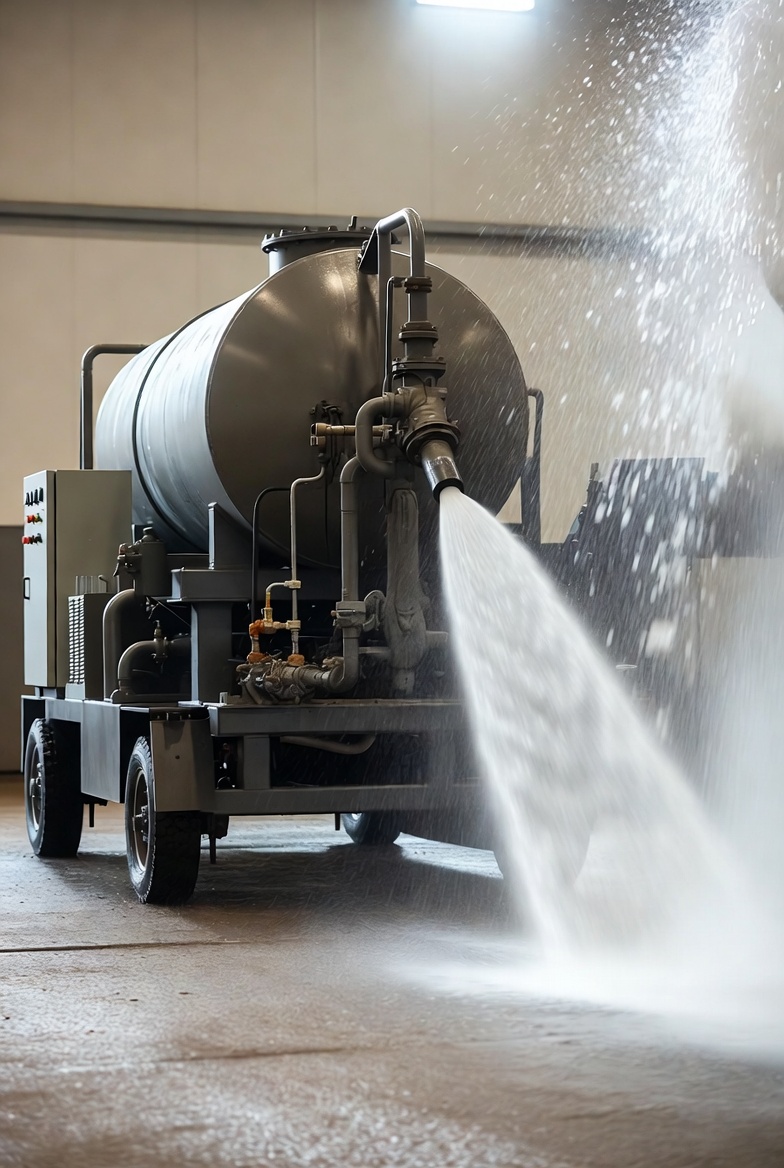
Water Blasting Machines: The Industry Replacing Chemicals With PressureA Story by Pujitha Reddy The global water blasting machine market heads to $1.03B by 2030. Explore how eco-friendly cleaning, infrastructure investment, robotic systems, and supply chain shifts are reshaping this industrial A Quiet Industrial RevolutionAcross oil refineries, shipyards, municipal sewer networks, construction sites, and power plants, a significant shift is underway in how industrial cleaning gets done. Hazardous chemical solvents that once defined the cleaning and surface preparation industry are being replaced by pressurized water. The technology driving this transition is the water blasting machine, and its market is growing steadily as industries worldwide recognize the operational, environmental, and safety advantages of hydro blasting over chemical alternatives. The global water blasting machine market, valued at $755 million in 2024, is projected to reach $1.03 billion by 2030, growing at a CAGR of 5.33%. The demand is structural and recurring: industrial equipment needs maintenance, infrastructure deteriorates and requires rehabilitation, and regulatory bodies are increasingly mandating cleaner, chemical-free approaches to industrial cleaning operations.' Know More : https://www.arizton.com/market-reports/water-blasting-machine-market Why Water Is Replacing ChemicalsThe industrial cleaning industry has historically relied on solvents, chemical degreasers, and abrasive blasting to remove rust, scale, grease, and contaminants from equipment surfaces. These methods are effective but come with significant drawbacks: hazardous chemical waste, volatile organic compound emissions, health risks for workers, and disposal costs that are rising as environmental regulations tighten. Water jet blasting systems use pressurized water rather than hazardous materials to achieve the same or superior cleaning outcomes. They produce no chemical waste, generate lower emissions than solvent-based alternatives, and align with the increasingly stringent environmental standards being applied to industrial operations across energy, marine, construction, and manufacturing sectors. Regulatory agencies in North America, Europe, and parts of Asia-Pacific are actively promoting this transition, creating compliance-driven demand that supplements the efficiency-based case for adoption. For industries already operating under strict environmental oversight, the shift to hydro blasting is increasingly less of a choice and more of an obligation. The Applications Driving Consistent DemandWater blasting machines serve a remarkably diverse range of applications, each generating its own recurring demand cycle. In oil and gas, heat exchanger cleaning, pipeline descaling, and tank degreasing are critical maintenance activities that must be performed on regular schedules to maintain operational safety and efficiency. In marine, ship hull cleaning and surface preparation before repainting are essential for vessel performance and compliance with port authority standards. In construction, concrete demolition and bridge rust removal are growing applications, particularly as aging infrastructure across North America and Europe requires rehabilitation. Municipal and public infrastructure applications are the fastest-growing end-user segment, projected to grow at a CAGR of 6.80% through 2030. Sewer cleaning, storm drain maintenance, clarifier tank cleaning, and pipeline inspection before trenchless rehabilitation are all driving adoption of water jet blasting systems in public utility operations. Government initiatives like the U.S. Infrastructure Investment and Jobs Act are accelerating this trend by directing substantial capital toward infrastructure modernization projects that require these services. Technology Evolution: Smarter, Safer, GreenerModern water blasting equipment has advanced significantly beyond basic pressure delivery. Automated pressure control systems, integrated water recycling technologies, remote monitoring capabilities, and robotic deployment platforms are all becoming standard features in premium industrial systems. Water recycling is particularly significant. Industrial water blasting operations can consume large volumes of water, and the ability to capture, filter, and reuse that water reduces both operating costs and environmental impact. For facilities operating in water-scarce regions or under strict wastewater discharge regulations, this capability is a practical necessity rather than an optional add-on. Robotics and automation are extending the reach of water blasting technology into confined spaces and environments where manual operation would be unsafe or impractical. Hammelmann's partnership with Zhoushan Xinya Shipyard, signed in April 2025 for nearly 100 ultra-high-pressure water jet systems to replace traditional sandblasting in maritime surface preparation, reflects the industry's movement toward automated, higher-performance solutions at scale. Aquajet robotic demolition equipment and remote-controlled pipe cleaning systems represent the frontier of this automation trend, improving both the efficiency and the safety profile of operations in hazardous industrial environments. Diesel Still Leads, But Electric Is GainingBy drive mechanism, diesel-powered water blasting machines account for approximately 46% of the market. Their dominance reflects practical reality: many of the highest-value applications for water blasting occur in remote, off-grid environments where access to electrical power is limited or unreliable. Oilfields, pipelines, and shipyards require equipment that can operate independently of fixed power infrastructure, and diesel systems deliver the torque and mobility that these environments demand. However, emission restrictions in urban environments and sustainability commitments across industrial sectors are creating growing demand for electric and hybrid water blasting systems. Manufacturers are responding with battery-electric and plug-in portable systems designed for indoor operations and emission-restricted workplaces. This segment is expected to grow significantly as energy infrastructure improves and regulatory pressure on diesel emissions intensifies. Low-pressure systems hold the largest share by pressure range, reflecting their wide adoption in municipal cleaning, food processing, and sanitation applications where surface sensitivity limits the use of ultra-high-pressure equipment. Trade War Impacts and Supply Chain ReconfigurationThe escalation of U.S.-China trade tensions in January 2025 created meaningful disruption across the water blasting machine supply chain. Higher tariffs on imported components including high-pressure intensifiers, precision nozzles, PLC controllers, and electric motors increased procurement costs for manufacturers and systems integrators globally. U.S. tariffs imposed on Indian exports in August 2025 further affected the supply of high-pressure hoses, crimped fittings, and custom flanges that are essential components in hydro blasting systems. These pressures have accelerated sourcing diversification toward Vietnam, Thailand, Southeast Asia, and Latin America, though the transition has introduced extended lead times and logistical complexity. Operators dependent on aftermarket components for hydro blasting machines have faced spare-parts shortages that raise the risk of operational downtime in critical industrial environments. Inventory planning has become more complex as companies build buffer stock and develop multi-regional supply relationships to manage this exposure. Asia-Pacific Leads, Europe Follows Strict RegulationsAsia-Pacific dominated the global water blasting machine market in 2024 and is projected to remain the fastest-growing region with a CAGR of 6.76%. China's petrochemical sector, modern shipbuilding industry, and government-mandated industrial safety standards generate substantial and growing demand. India contributes through refinery maintenance, municipal water system upgrades, and large construction project activity. Vietnam is emerging as a high-growth market within APAC, supported by expanding manufacturing clusters and port infrastructure development that is increasing demand for compact, efficient water jet blasting systems. Europe accounts for approximately 18% of the global market, with growth driven by stringent environmental regulations pushing industries away from chemical cleaning. Poland is the highest-growth country within the region, supported by industrial manufacturing expansion, power generation facility investments, and pipeline maintenance programs. © 2026 Pujitha Reddy |
Stats
15 Views
Added on March 25, 2026 Last Updated on March 25, 2026 |

 Share This
 Email
Email Facebook
 Twitter
 Read Request
 My Library
 Subscribe
 Flag Writing