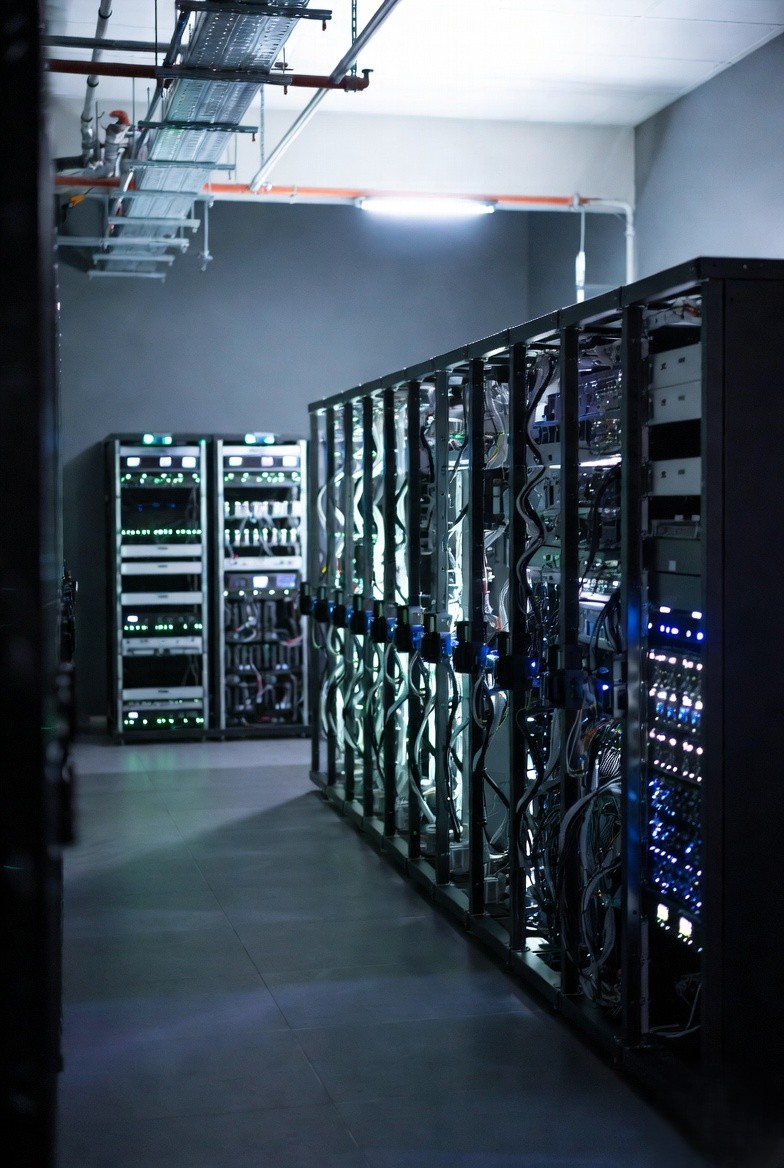
Switzerland's Data Center Market: Precision, Privacy, and a Near-Capacity ProblemA Story by Pujitha Reddy Switzerland's data center colocation market doubles to $916M by 2030. Explore how AI demand, near-full occupancy, renewable energy, and cloud growth are making Switzerland one of Europe's fastest A Market Growing at Remarkable SpeedSwitzerland occupies a distinctive and rapidly growing position in the European data center landscape. The country's colocation market, valued at $465 million in 2024, is projected to nearly double to $916 million by 2030, growing at a CAGR of 11.96%. That pace places Switzerland among the fastest-growing colocation markets in Western Europe, a category where competition is fierce and differentiation matters. What makes Switzerland's growth story particularly compelling is the combination of factors driving it: near-saturation occupancy rates that are creating competitive tension between supply and demand, a rising wave of AI infrastructure investment, a regulatory environment that prioritizes data privacy, a reputation for political stability and neutrality, and a deep commitment to renewable energy that is increasingly important to enterprise and hyperscale customers alike. Know More : https://www.arizton.com/market-reports/switzerland-data-center-colocation-market The Occupancy Story: Demand Outrunning SupplyPerhaps the most commercially significant fact about Switzerland's data center colocation market is how little spare capacity exists. Average occupancy rates across the country already exceed 90%, and this figure is expected to approach 95% by 2030, leaving vacancy rates at just 5%. For operators, this near-capacity environment is both a commercial opportunity and an operational challenge. High occupancy generates strong revenue and pricing power, but it also creates urgency around capacity expansion that must be balanced against Switzerland's physical constraints, the costs of construction, and the land availability challenges that characterize the country's densely developed urban areas. For customers seeking colocation space in Switzerland, the tightening supply environment means earlier engagement with providers, longer lead times, and less flexibility in negotiating terms. Enterprises and cloud providers that delay their infrastructure planning in this market risk finding the capacity they need unavailable at the time they need it. No Submarine Cables, Strong Connectivity RegardlessSwitzerland presents an interesting geographic challenge for data center operators: it is a landlocked country with no submarine cable access. For markets that depend on submarine connectivity as a foundational element of their data center attractiveness, this would be a significant disadvantage. Switzerland has addressed this structural constraint effectively through a dense network of underground fiber-optic cables connecting it to Germany, France, Italy, Austria, and other neighboring countries. These terrestrial links provide the international bandwidth capacity and redundancy that cloud providers, enterprise customers, and telecommunications operators require for low-latency, high-availability connectivity. The country's position at the heart of Europe, bordered by major economic centers and connected to all of them by high-capacity fiber infrastructure, means that despite the absence of submarine cable landings, Switzerland maintains strong and reliable global network connectivity. AI Demand: The Next Growth CatalystArtificial intelligence is driving a new phase of data center investment across Switzerland. Enterprise customers across healthcare, financial services, transportation, and manufacturing are deploying AI applications that require GPU-dense computing infrastructure, low-latency connectivity, and the kind of regulatory certainty that Switzerland's data protection framework provides. Data center operators in Switzerland are already beginning to invest in AI-ready facilities designed around the specific requirements of GPU workloads: elevated power densities, advanced cooling systems, and high-bandwidth internal networking. This infrastructure investment is adding new capacity categories to the Swiss market beyond conventional enterprise colocation, attracting a new class of AI-focused customers who require purpose-built computing environments rather than traditional shared infrastructure. The growth of AI adoption across Swiss industries is expected to accelerate throughout the forecast period, creating a sustained demand driver that operates independently of the general enterprise cloud migration cycle. Cloud Dominates, Telco FollowsThe cloud sector holds approximately 40% of Switzerland's colocation demand, reflecting the strong adoption of cloud services by Swiss enterprises and the presence of multiple cloud provider infrastructure nodes in the country. Cloud providers require reliable, well-connected colocation space that meets high standards for uptime, physical security, and data protection compliance, all areas where Switzerland's colocation market excels. Telecommunications and IT services follow as the second-largest demand segment, accounting for around 30% of the market. The concentration of multinational financial institutions, pharmaceutical companies, and professional services firms in Switzerland creates consistent enterprise IT demand that flows through both direct procurement and telecommunications intermediaries. The combination of cloud growth and AI-driven infrastructure demand suggests the market's customer mix will become more compute-intensive over time, placing greater emphasis on power density, cooling capability, and network performance as the key competitive dimensions in the market. Renewable Energy: A Competitive DifferentiatorSwitzerland's commitment to renewable energy is becoming an increasingly important competitive attribute for its data center market. The country benefits from substantial hydropower capacity that provides a stable, clean baseline energy supply, and this is being supplemented by growing solar and wind investments. Data center operators are actively committing to renewable energy as both a regulatory requirement and a competitive differentiator for customers whose own sustainability reporting requires them to document the carbon intensity of their IT infrastructure. NorthC's Winterthur facility, which opened in March 2025 powered by 100% renewable energy, exemplifies the market's direction. As the EU sustainability framework tightens and Swiss enterprises face increasing pressure to reduce their digital carbon footprint, the ability to offer renewable-powered colocation at competitive prices will become a more significant factor in procurement decisions. The Operator LandscapeSwitzerland's colocation market is served by a mix of global operators and specialized regional providers. Digital Realty, Equinix, NTT DATA, STACK Infrastructure, and Vantage Data Centers bring international scale, technology, and customer relationships to the market. Green Datacenter and NorthC represent operators with deep Swiss market expertise and specific sustainability credentials. The market currently hosts 75 operational colocation facilities across 24 cities, with five more in various stages of development. The geographic distribution across multiple Swiss cities reflects both the national distribution of enterprise demand and the practical necessity of locating large data center campuses where land, power, and connectivity infrastructure can be assembled at the required scale. © 2026 Pujitha Reddy |
Stats
12 Views
Added on April 2, 2026 Last Updated on April 2, 2026 |

 Share This
 Email
Email Facebook
 Twitter
 Read Request
 My Library
 Subscribe
 Flag Writing