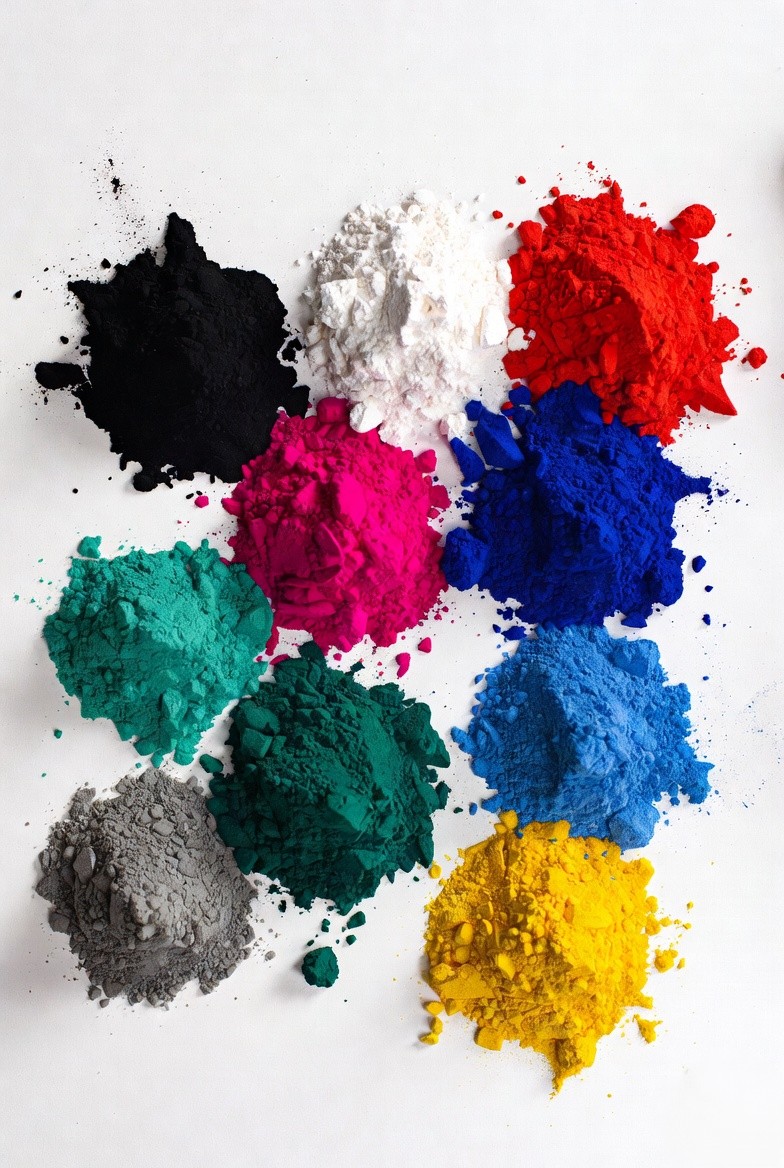
Powder Coatings: The Surface Technology Powering a Greener Industrial WorldA Story by Pujitha Reddy The global powder coatings market grows to $20.87B by 2030. Explore how EV battery demand, strict VOC regulations, eco-friendly formulations, and automotive growth are reshaping this durable coatings A Market Built on Durability and Environmental AdvantagePowder coatings occupy a unique position in the industrial finishing landscape. They deliver superior durability, corrosion resistance, and aesthetic quality while producing virtually no volatile organic compound emissions and generating significantly less waste than conventional liquid paint systems. In an era of tightening environmental regulation and growing corporate sustainability commitments, this combination of performance and environmental advantage is making powder coatings an increasingly preferred choice across a widening range of applications. The global powder coatings market, valued at $15.17 billion in 2024, is projected to reach $20.87 billion by 2030, growing at a CAGR of 5.46%. That steady growth reflects both the expansion of existing end markets and the development of new applications, particularly in electric vehicles and sustainable manufacturing, where powder coatings offer capabilities that liquid alternatives cannot match. Know More : https://www.arizton.com/market-reports/powder-coatings-market Environmental Regulation as a Growth EngineStrict environmental regulations limiting VOC emissions are one of the most powerful structural drivers of powder coatings adoption. Governments in North America, Europe, and increasingly across Asia-Pacific are tightening permissible VOC thresholds for industrial finishing operations, creating compliance pressure that makes solvent-based liquid coatings increasingly costly and legally risky to operate. Powder coatings sidestep this problem entirely. They contain no solvents, release no VOCs during application or curing, and achieve material utilization rates significantly higher than liquid systems because overspray can be collected and reused rather than being treated as hazardous waste. For manufacturers operating in regulated jurisdictions, the transition from liquid to powder is frequently not just an environmental preference but an operational and financial imperative. PPG's 2025 commitment to achieve 50% of sales from sustainably advantaged solutions by 2030, with powder coatings as a central element of that strategy, reflects how major industry players are positioning themselves for a regulatory environment that will only become more demanding. Arkema's Mass Balance ISCC+ certification at its powder coating resins facility in Spain signals the same direction of travel. Electric Vehicles: A Transformative New OpportunityThe rise of electric vehicles is creating one of the most significant new demand opportunities the powder coatings market has seen in a generation. EV battery manufacturing presents a specific and high-value application: the need for dielectric coatings that insulate battery components while managing heat effectively during charging cycles. Epoxy powder coatings offer distinct advantages over liquid alternatives in battery applications. Their dielectric properties provide superior insulation, their heat management characteristics are better suited to the thermal environment of EV battery charging, and their application efficiency reduces material waste and cost. AkzoNobel is already advancing powder coatings technology specifically for EV battery applications, and Ford Motor Company selected a new powder coating technology for its electric vehicle lineup in 2024, highlighting how the transition to EVs is reshaping OEM specification decisions. The broader growth of the electric vehicle market adds to this opportunity. Electric truck sales grew 35% in 2023, surpassing electric buses for the first time. China leads global electric truck adoption with 70% of sales, while Europe and the United States are also experiencing rapid growth. Every new EV requires coating solutions throughout its body, chassis, and powertrain components, and powder coatings are increasingly specified for these applications given their durability, environmental profile, and cost efficiency. Automotive Aftermarket: A Sustained Demand DriverBeyond new vehicle manufacturing, the global automotive aftermarket represents a significant and growing market for powder coatings. Aftermarket revenues grew by 4% in the most recent measured year to reach $71 billion, reflecting the sustained demand for vehicle repair, customization, and refurbishment that generates consistent consumption of finishing products. Powder coatings are well-suited to aftermarket applications because they deliver professional-grade durability and finish quality in formats that can be applied efficiently by both large refinishing operations and smaller specialist shops. Axalta's launch of Axalta Irus Mix, a fully automated hands-free mixing machine for the automotive refinish industry, illustrates how suppliers are investing in application technology that makes powder coatings more accessible and efficient for aftermarket operators. Polyester Leads, Thermoset DominatesAmong resin types, thermoset resins hold the largest market share, valued for their excellent mechanical properties, heat and chemical resistance, and the strong, durable coatings they form upon curing. Their minimal VOC emissions align well with both regulatory requirements and sustainability goals. Within the thermoset category, polyester resins account for more than 30% of total market revenue. Polyester-based powder coatings offer a compelling combination of cost-effectiveness, weather resistance, and versatility that makes them the default choice for a wide range of exterior applications including automotive components, garden furniture, window frames, and architectural cladding. Consumer goods hold the largest end-user share, encompassing household appliance coatings, electronics, furniture, and metal goods finishing. The automotive sector is the second-largest and fastest-growing end-user, while furniture represents a significant and growing category as consumer preferences shift toward more durable and aesthetically differentiated products. Asia-Pacific Leads, North America and Europe Sustain GrowthAsia-Pacific dominates the global powder coatings market with over 38% revenue share, driven by rapid industrialization, urbanization, and growing investment in automotive, construction, and consumer goods manufacturing across China, India, and Southeast Asia. Government infrastructure programs and growing demand for green coatings are reinforcing the region's leadership position. North America holds a significant share, driven by stringent environmental regulations that are actively encouraging the shift from liquid to powder coatings across industrial and automotive applications. The United States and Canada are investing in advanced coating technologies to meet sector-specific performance requirements. Europe's market is growing steadily, supported by its strong regulatory focus on VOC emission reduction and sustainable manufacturing. Germany, France, and Italy are the key markets, with significant adoption across automotive, furniture, and architectural finishing applications. The Middle East and Africa are growing markets where infrastructure development, harsh climate conditions demanding corrosion-resistant coatings, and industrial diversification are all contributing to adoption. Raw Material Volatility: The Primary ChallengeThe powder coatings market's most significant operational challenge is the volatility of petrochemical-derived raw material prices. Epoxy resins, a critical ingredient, increased in price by 25% over the year preceding this analysis due to constrained supply from major Asian producers combined with strong demand from automotive and electronics sectors. Global crude oil price movements and supply chain disruptions create cost uncertainty that is difficult for manufacturers to manage through pricing alone, particularly in competitive segments where customers are sensitive to price increases. The development of bio-based resin alternatives is partly motivated by the desire to reduce this petrochemical price exposure while simultaneously meeting sustainability requirements. A Competitive and Consolidating MarketThe global powder coatings market features major multinational players alongside numerous regional specialists. AkzoNobel, PPG Industries, Axalta Coating Systems, Sherwin-Williams, Jotun, and BASF are the dominant global players, competing on technology, product breadth, distribution networks, and sustainability credentials. © 2026 Pujitha Reddy |
Stats
12 Views
Added on April 3, 2026 Last Updated on April 3, 2026 |

 Share This
 Email
Email Facebook
 Twitter
 Read Request
 My Library
 Subscribe
 Flag Writing