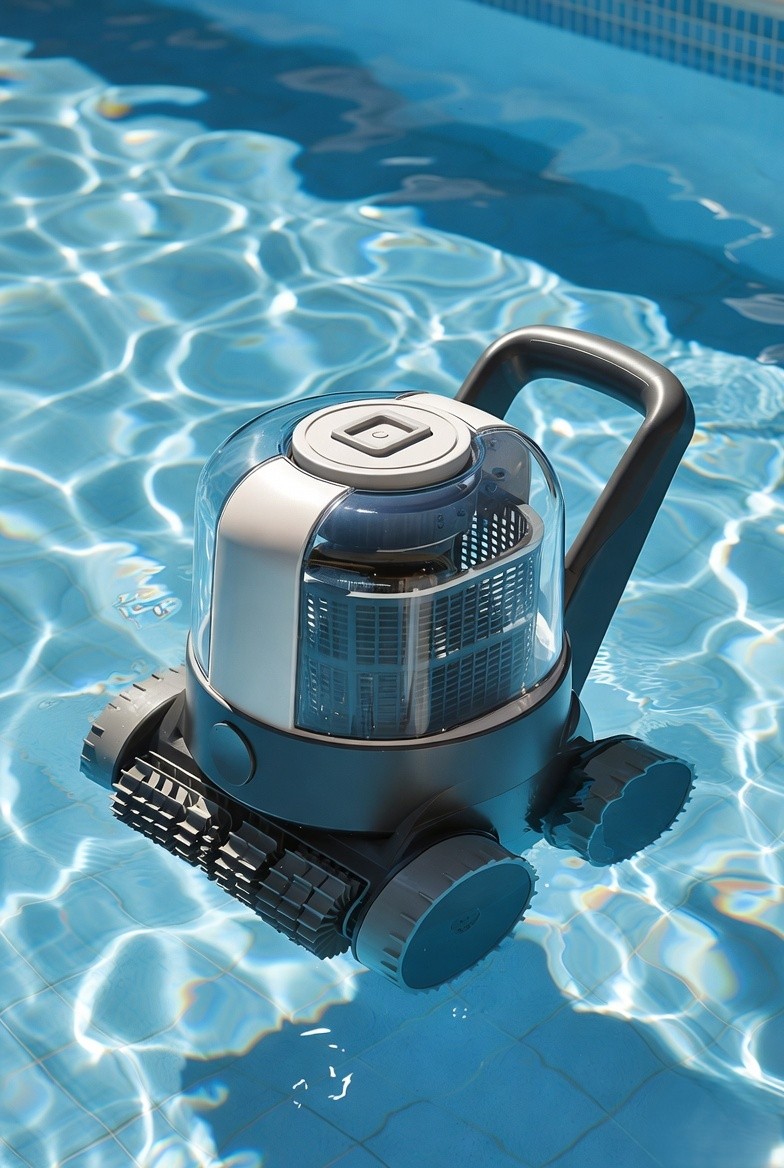
Robotic Pool Cleaners Are Changing How America Maintains Its PoolsA Story by Pujitha Reddy Discover how the U.S. robotic pool cleaner market is growing fast, driven by AI technology, cordless innovation, rising labor costs, and over 10 million pools across the country. Owning a swimming pool used to mean either spending hours on manual maintenance or writing a recurring check to a pool service professional. That equation is shifting rapidly. Robotic pool cleaners are giving homeowners and commercial facility managers a smarter, more cost-effective alternative, and the market is responding accordingly. The U.S. robotic pool cleaner market was valued at USD 480.50 million in 2024 and is projected to reach USD 696.92 million by 2030, growing at a CAGR of 6.39%. With more than 10 million swimming pools across the country, including roughly 6.1 million in-ground pools as of 2025, the foundation for this market is enormous and still expanding. Why Robotic Cleaners Are Winning Over Pool Owners Traditional pool cleaning relies on the pool's own filtration system or on manual suction and pressure-side devices that require significant setup and oversight. Robotic pool cleaners operate independently of all of that. They move autonomously across pool floors, walls, steps, and waterlines, scrubbing surfaces and filtering debris on their own schedule. For a homeowner juggling a busy life, the appeal is immediate. Beyond convenience, the economics are compelling. Professional pool cleaning services in the U.S. typically cost between USD 80 and USD 150 per visit for basic cleaning, with additional charges depending on pool size and condition. In labor-constrained states like California and Florida, where skilled technicians are in short supply, scheduling reliable service has become increasingly difficult. Robotic cleaners offer a one-time investment that eliminates this dependency entirely and pays for itself over time. AI and Smart Technology Are Raising the Bar The most significant development transforming this category is the integration of artificial intelligence and smart home connectivity into pool cleaning devices. Consumers who have already adopted smart thermostats, automated lighting, and voice-controlled appliances are now expecting the same intelligence from their outdoor maintenance tools. The WYBOT S3, launched in 2025, represents exactly this direction. It features 3D mapping navigation, app-based scheduling that links to weather forecasts, autonomous self-emptying into a dock-mounted debris bin, and solar-assisted charging. This is not a simple cleaning device. It is a fully automated outdoor maintenance system that anticipates conditions and adapts accordingly. Maytronics has also been pushing boundaries. Its Dolphin Liberty 600, launched in 2024, is a high-end cordless robotic cleaner with inductive charging and smart navigation technology. It represents the kind of premium innovation that is pulling consumers toward the upper end of the market while establishing new benchmarks for what a pool cleaner can do. The Cordless Revolution One of the most visible consumer trends in this market is the growing preference for cordless robotic pool cleaners. Cords have long been a point of frustration for pool cleaner users, creating tangling issues, limiting maneuverability, and complicating setup and storage. Cordless models eliminate all of these problems. Brands including Maytronics, Fluidra, and Hayward have all expanded their cordless lineups to cover a wide price range, making battery-powered cleaning accessible beyond the premium tier. The Dolphin Liberty 300, for instance, delivers a 2.5-hour runtime that handles most residential pool sizes comfortably. As battery technology continues to improve, runtime and charging efficiency will only get better, making cordless the clear direction for the category. Energy Efficiency Is Becoming a Purchase Decision Factor Rising electricity costs are reshaping how consumers evaluate pool cleaning equipment. A device that runs for hours every day adds meaningfully to a household's energy bill, and buyers are paying attention. Manufacturers have responded with models that incorporate optimized navigation algorithms, low-power operating modes, and extended runtimes that clean more area per unit of energy consumed. The Sonar 50 is one example of this approach, designed to maintain pools of varying sizes efficiently while minimizing energy draw. For environmentally conscious consumers and households managing tight utility budgets, these features are moving from nice-to-have to genuinely important purchasing criteria. Hygiene Awareness Is Driving Additional Demand Public health awareness has also become a meaningful demand driver in this market. The CDC's June 2025 guidelines reinforced the importance of maintaining proper disinfection levels in swimming pools and avoiding contaminated water. For households with children, elderly family members, or guests using the pool regularly, consistent and thorough cleaning is a genuine health concern, not just an aesthetic preference. Robotic cleaners address this by delivering regular, systematic cleaning that covers every surface of the pool without human intervention. This consistency reduces the risk of algae buildup, bacteria accumulation, and waterborne illness, giving pool owners greater confidence in the hygiene of their water. A Look at Key Market Segments In-ground pools represent the dominant segment in this market, accounting for the largest share of revenue. Their size and structural complexity require more powerful and capable cleaning solutions, making them a natural fit for advanced robotic systems. The segment is projected to grow at a CAGR exceeding 6.35% through the forecast period. Above-ground pools are also a growing segment, having contributed more than USD 144 million in revenue in 2024. Suburban households have embraced affordable, easy-to-install above-ground pool options, and compact cordless robotic cleaners designed for flat-bottomed pools are meeting this demand effectively. The residential segment leads on the end-user side, growing at a CAGR of 6.38%. States like Florida, Texas, California, and Arizona, with their warm climates and high pool ownership rates, are the strongest markets. The commercial segment, covering hotels, resorts, fitness centers, schools, and public aquatic facilities, is expected to reach USD 63.14 million by 2030, driven by the need for high-volume, continuous cleaning solutions. Online channels dominate distribution, reflecting broader consumer comfort with purchasing home appliances and technology products digitally. Offline channels remain relevant, particularly through specialty retailers like Leslie's Poolmart and large home improvement chains such as Home Depot and Lowe's, where in-store demonstrations and staff expertise help buyers navigate a technically complex product category. Challenges the Market Still Faces Despite strong growth fundamentals, two challenges continue to limit broader adoption. The first is cost. Entry-level robotic cleaners start around USD 150, but models with advanced features like wall-climbing capability, Wi-Fi connectivity, and smart navigation typically cost between USD 800 and USD 1,500 or more. For price-sensitive buyers who simply want basic cleaning functionality, this price point is a real barrier. The second challenge is product reliability. A March 2024 Pollfish survey found that 41% of robotic cleaner users reported dissatisfaction, with incomplete cleaning cited by 23% of respondents and poor water quality maintenance by another 15%. These figures highlight the importance of continued product improvement and better consumer education around device capabilities and maintenance requirements. Tariffs on imported components including motors, sensors, and plastic housings are also adding pressure to production costs, particularly in the mid-range segment where margin is already tight. © 2026 Pujitha Reddy |
Stats
8 Views
Added on April 16, 2026 Last Updated on April 16, 2026 |

 Share This
 Email
Email Facebook
 Twitter
 Read Request
 My Library
 Subscribe
 Flag Writing