
Ecological Appendix I - Central HighlandsA Chapter by HaleyBShardhorn (Cervus crystallus)Size & Build: Large herbivore, averaging 2.3 m at the shoulder. Muscular yet graceful limbs for navigating uneven highland terraces and crystal outcrops. Hooves broad and slightly concave for stability on rocky terrain. Hide & Camouflage: Bark-patterned hide in muted browns and grays, providing natural camouflage among lichens and crystalline rocks. Seasonal shifts in hue occur subtly, reflecting surrounding vegetation and mineral substrates. Antlers: Crystal-like, branching antlers refract sunlight into faint spectral arcs. Functions as both predator deterrent and subtle visual signaling within herds. Partial antler damage observed near experimental Bloom zones, suggesting interaction with aggressive crystal flora can be risky. Habitat: Highland meadows, crystalline outcrops, and terraces with abundant mineral-rich lichens. Prefer areas with moderate sun exposure to maximize antler refractive effect. Behavior & Diet: Grazes on mineral-rich lichens and crystal-adapted grasses. Herds migrate seasonally, redistributing nutrients across terraces and supporting pollination of moss and terrace flora. Antler light refractions may confuse predators or signal herd cohesion at dawn/dusk. Cultural Significance: Sacred to Sages; antlers harvested carefully for ritual talismans. Herds are monitored for seasonal indicators and considered omens of ecological health. Ecological Role: Keystone grazer; migration aids nutrient cycling, moss spore distribution, and seed dispersal. Influences settlement planning and resource allocation for local communities.
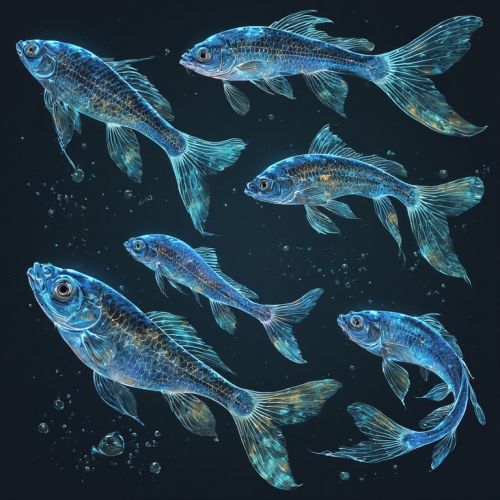
- Glowfish (Piscis lumen resonans)
Size & Build: Small freshwater fish, ~10 cm long. Streamlined, slender body for agile swimming in crystal-filtered springs and streams. Fins delicate but flexible, with slight translucence. Bioluminescence: Faint phosphorescent organs run along the spine and branch subtly into fins. Glow intensity responds to sound vibrations, pulses for communication, and increases in the presence of predators to startle or confuse them. Body & Coloration: Semi-transparent body, revealing internal organs faintly. Slight opalescent shimmer along spine and fins. Color changes minimally but brightness varies with stimulus. Habitat: Crystal-filtered springs and streams fed by underground quartz veins. Prefers slow-moving, nutrient-rich pools with ample shelter among submerged moss and rock formations. Behavior: Nocturnal; feeds on microscopic algae. Uses glowing signals for intra-species communication and predator avoidance. Sensitive to vibrations; excessive human-made resonance can stress populations. Cultural Significance: Incorporated into healing rites and festival displays. Presence signals clean, safe water for ritual or community use. Ecological Role: Indicator of water purity; supports small-scale nutrient cycling and microflora regulation. Serves as a food source for higher trophic species like Riverwhisks.
- Glassfang (Lynx vitreus)
Size & Build: Adult stands ~1.2 m at the shoulder. Muscular yet compact body, designed for explosive ambush in rocky terrain. Limbs short but powerful, with padded paws for silent stalking across uneven surfaces. Fur & Coloration: Subtle reflective sheen on short, dense fur, allowing blending with highland rock and quartz formations. Color ranges from slate gray to pale silver depending on lighting. Fangs & Teeth: Distinct transparent crystalline fangs, refracting light in faint spectral glints. Used primarily for swift killing strikes. Eyes & Senses: Glow softly under quartz light, aiding nocturnal hunting. Acute hearing and smell adapted to rocky crevasses. Habitat: Highland crevasses, rocky terraces, and outcrops near grazing zones. Prefers elevated vantage points for observing prey movement. Behavior & Hunting: Ambush predator; preys on Glowfish in shallow pools, juvenile Shardhorn, and other small herbivores. Moves silently and strikes rapidly. Rarely encountered outside rocky highlands. Cultural Significance: Feared and respected. Killing or interfering is strictly prohibited. Occasionally appears in ritual storytelling as “guardian of balance.” Ecological Role: Apex predator; critical for population control of small to mid-sized herbivores. Maintains ecosystem balance by preventing overgrazing and controlling prey populations.
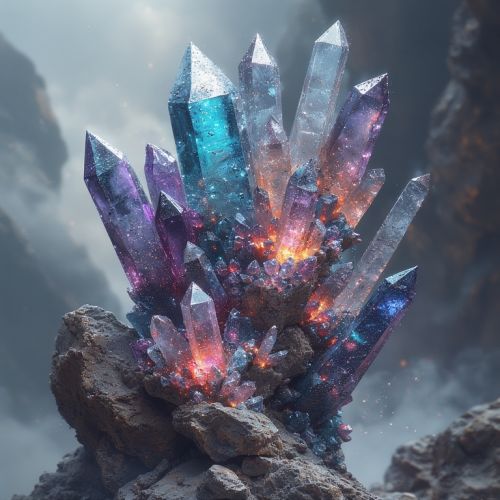
- Resonance Crystals (Mineralis cantans)
Size & Form: Varying from fist-sized clusters to towering spires several meters tall. Naturally fractured quartz formations with smooth and jagged surfaces. Crystals are semi-transparent to opaque depending on mineral content, often with internal veining that reflects light. Color & Composition: Colors range from pale translucent whites and blues to deep amethysts and greens. Internal striations create subtle patterns that shift when the crystal vibrates. Different mineral compositions slightly alter vibration frequency and resonance. Habitat: Cliff faces, crystalline spires, subterranean quartz veins, or terraced outcrops. Often aligned along natural energy corridors, forming networks that Stewards and Sages use for navigation or ritual guidance. Behavior & Interaction: Crystals vibrate in response to specific frequencies, audible hums for humans or low, subsonic pulses affecting soil and water flow. Nearby small animals may respond instinctively to resonance, using the vibrations for navigation or avoiding hazards. Cultural Significance: Central to Sage culture; integrated into architecture, ceremonial rites, and communication. Used in tuned instruments for healing, signaling, or energy manipulation. Improper handling risks fractures or destabilization of terraces and cliffs. Ecological Role: Influences water channels and soil compaction. Small fauna use resonance patterns as cues for migration or feeding. Resonance can stimulate growth in nearby flora sensitive to vibrational energy.
- Crystal Springs (Aqua prismatica)
Classification: Bioluminescent, mineral-filtered freshwater source. Morphology: Springs glow faintly with soft blues or greens due to high quartz and mineral content. Water often contains Glowfish (Piscis lumen resonans) and a unique layer of microflora that reflects and refracts light. Quartz veins along the basin edges shimmer subtly, intensifying under twin-moonlight. Habitat: Found in highland basins and sheltered valleys near Resonance Crystal formations. Frequently positioned at junctions of underground quartz networks. Behavior & Ecology: Water flows steadily during most of the cycle year but fluctuates seasonally, especially during high rains or Bloom interference. Mineral content fosters growth of rare, luminescent plants and algae that stabilize the spring’s ecosystem. Cultural Significance: Regarded as sacred by Sages and Wardens; sites of pilgrimage, healing rituals, and seasonal offerings. Water is collected for ceremonial use in lantern festivals and solstice rites. Interactions: Springs are believed to "sing" faintly when the wind harmonizes with underlying crystal structures, an event used to mark the start of certain planting cycles. Pilgrims and healers tread lightly to avoid disrupting Glowfish breeding or microflora balance. Notes: Overharvesting or improper ritual resonance can alter mineral distribution and disturb the springs’ natural glow. Protected under Warden stewardship; access sometimes restricted during breeding or Bloom monitoring periods.
- Quartz Chamber (Chamberis harmonica)
Classification: Harmonic geological formation. Morphology: Naturally formed or partially sculpted crystalline caverns, their walls embedded with quartz strata that refract light into soft prisms. Chambers range from intimate, bell-like grottos to expansive vaulted halls. Acoustics are highly responsive, transforming even whispers into layered harmonic echoes. Habitat: Found primarily along highland ridges and crystalline fault lines, often adjacent to Resonance Crystal clusters or beneath ancient terraces. Behavior & Ecology: Sound introduced within the chamber resonates for extended periods, capable of carrying vibrations across significant distances via interconnected quartz networks. Some chambers are “tuned” through ritual placement of Resonance Crystals to maintain tectonic equilibrium or guide seasonal migrations of Glowfish and other sensitive species. Cultural Significance: Central to Sage meditation practices, Warden conclaves, and healing rites. Certain chambers are designated as “anchor halls,” used in resonance ceremonies to stabilize Bloom disruptions or prevent minor quakes. Interactions: Access is highly controlled; visitors undergo harmonic cleansing before entering to prevent disharmony. Ritualists maintain strict frequency logs to avoid overuse. Notes: Improper or excessive activation can trigger localized tremors or disrupt surrounding mineral lattices. Some abandoned chambers bear fractured crystal scars from unregulated pre-Sage eras.
© 2025 HaleyB |
Stats
181 Views
Added on August 20, 2025 Last Updated on August 29, 2025 |




 prev chapter

 Share This
 Email
Email Facebook
 Twitter
 Read Request
 My Library
 Subscribe
 Flag Writing