
Ecological Appendix I - Western Floating Archipelago: Skyhaven RegionA Chapter by HaleyB Fauna Skydrifter (Aetheria volantis)Size & Build: Wingspan averages 5-6 m, with slender ribbon-like wings tapering to graceful filaments. Lightweight skeletal structure and hollow bones optimized for extended gliding. Torso compact, aerodynamic, with a slight dorsal curve supporting symbiotic lichen patches.Plumage & Camouflage: Feathers are semi-translucent near the tips, reflecting sunlight to blend with sky gradients. Lichen colonies vary from pale silver to verdant green, adapting seasonally to UV exposure. This natural camouflage protects them from aerial predators and helps in stealthy observation of migratory prey. Symbiosis: Dorsal lichen collects moisture and nutrients from high-altitude air. Lichen thrives on minimal care, slowly releasing minerals to Skydrifter skin and contributing to feather resilience. Occasionally, lichen spores are shed mid-flight, aiding upper-atmosphere plant dispersal. Head & Senses: Small, streamlined head with large, panoramic eyes specialized for detecting thermal currents and distant movements. Narrow beak suitable for plucking airborne planktonic seeds and occasional insects. Acute auditory range, capable of sensing high-frequency wind fluctuations. Behavior: Drift along thermal currents in loose flocks of 3-12. Descend only during storms or mating season. Flight is effortless and continuous; rarely land except on high cliff ledges. Communication occurs through low-frequency hums resonating with lichen vibrations. Ecological Role: Aerial gardeners of the upper canopy and sky layers. Lichen spore dispersal fertilizes epiphytic communities; flight patterns stir upper-atmosphere moisture layers, influencing microclimate. Cultural Significance: Considered omens of seasonal change by highland tribes; sightings mark planting or harvest cycles. Feathers occasionally harvested for ceremonial wind talismans, though harming the birds is taboo.
- Gale Petrel (Venturus spiralum)
Classification: Medium-sized aerial omnivore; wingspan approximately 60-75 cm. Morphology: Gale Petrels possess spiral-feathered wings optimized for riding high-altitude thermals. Tail fans end in rigid quills that provide precise control during turbulent winds. Plumage is iridescent with subtle shimmer, allowing camouflage against sky reflections and cloud layers. Beaks are short and hooked for capturing airborne insects and seeds. Habitat: Found along high atmospheric corridors between floating islands and sky terraces. Nests in sheltered crevices beneath sky bridges, cliff overhangs, or crystal ledges. Prefers areas with consistent thermals and moderate magical resonance. Behavior & Ecology: Feeds on windborne seeds, pollen, and small sky-insects, often forming flocks that ride currents for efficient foraging. Synchronized flight patterns help locate dense insect swarms and signal seasonal atmospheric shifts. During migration, flocks adjust altitude in response to changes in thermal and magical currents, avoiding turbulent or Bloom-affected zones. Ecological Role: Acts as both pollinator and seed disperser for aerial flora like Stratos Vines, while providing prey for higher aerial predators. Flock movements serve as natural indicators of skyward energy flow and wind health across island networks. Cultural Significance: Seen as heralds of change by Skybound Navigators. Observing flock patterns informs seasonal planning, glider travel, and festival timing. Their flights are incorporated into ceremonial displays symbolizing adaptation and guidance. Notes: Sensitive to magical interference. Strong Bloom surges or structural resonance disruptions can scatter flocks and temporarily displace local populations.
- Skywhale, Anchored Type (Pelacora symmetra)
Classification: Massive, slow-drifting aerial herbivore; body length can exceed 50 meters. Morphology: Anchored Skywhales have broad, crystal-studded bodies with buoyant gas bladders that support extended periods of aerial suspension. Retractable tendrils coil around floating island roots or large skybridge pylons to maintain position. Their dorsal crystal plates refract sunlight and magical energy, creating a subtle glow along the whale’s spine. Habitat: Found within mid-to-high altitude bands beneath major floating trade islands and along stable thermals. Prefers areas where wind currents are steady and energy flows are moderate. Behavior & Ecology: Anchored Skywhales filter airborne spores, dust, and magical particulates as they drift slowly through the skies. Some individuals remain in semi-dormant states for decades, effectively becoming living “cloud reefs” that support microhabitats for smaller aerial fauna and epiphytic flora. Tendril anchoring stabilizes floating islands while minimizing energy expenditure. Ecological Role: Functions as both aerial filter and mobile ecosystem platform. Their presence supports epiphytic growth, distributes spores across high-altitude corridors, and stabilizes island infrastructure via anchored tendrils. Dormant Skywhales act as living foundations for long-term aerial microhabitats. Cultural Significance: Skyhaven Artisans and Navigators build suspended gardens, wind harps, and ceremonial structures atop ancient dormant Skywhales. Considered sacred, they are treated as living foundations and central symbols of patience and continuity. Notes: Sudden energy discharges, uncontrolled Bloom surges, or improper anchoring rituals can disturb dormant Skywhales, causing drift hazards and displacement of dependent flora and fauna. Careful monitoring is essential for both ecological and cultural safety.
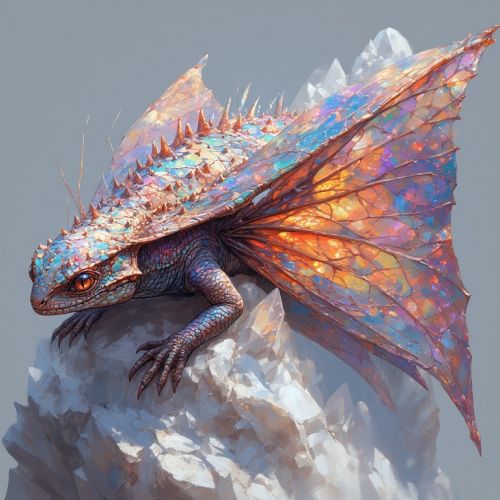
- Sunscale Drakes (Draconis solaris)
Classification: Reptilian flyers; wingspan approximately 3-4 meters. Description: Sunscale Drakes have small, dragon-like bodies covered in reflective, solar-absorbing scales. When sunlight strikes, scales scatter prismatic light, creating shimmering patterns across cliffs and crystal ridges. Wings are muscular and semi-translucent, with reinforced tips for precise maneuvering in high-altitude thermals. Eyes have a reflective layer that allows acute vision in both bright sunlight and low-twilight conditions. Habitat: Found along high cliffs, crystal ridges, and floating terrace edges in Skyhaven zones. Prefer areas with abundant sunlight and vantage points for territorial perches. Behavior & Ecology: Primarily territorial, Sunscale Drakes perch near crystal formations to survey hunting grounds. They feed on aerial insects, including Lumin Moths and Halo Swifts, helping regulate populations. During mating displays, individuals flare wings and reflect sunlight in prismatic bursts to attract mates. Scale fragments shed naturally contribute to microhabitats and are occasionally harvested for lenses or ornamental use. Ecological Role: Apex insectivores of high-altitude corridors. Control pollinator populations while indirectly supporting plant growth and energy flow across terraces. Scale shedding contributes to ceremonial and practical applications, from optical lenses to ritual artifacts. Cultural Significance: Revered by Skyhaven artisans as symbols of prismatic beauty and precision. Sages caution against excessive scale harvesting to prevent ecological disruption. Observing Sunscale Drakes is considered a sign of stable environmental energy and seasonal balance. Notes: Sensitive to Bloom energy interference, which can disrupt hunting and mating behaviors. Territorial disputes occasionally escalate, but populations remain stable with careful monitoring.
- Inkspinners (Arachnis prismatica)
Classification: Arachnid crystal-symbiotes; body length approximately 15 cm. Morphology: Inkspinners have spider-like bodies with semi-reflective carapaces that shimmer faintly in crystal light. Legs are thin but dexterous, tipped with micro-claws that allow precise manipulation of crystalline surfaces. Silk produced is reflective and prism-tuned, diffusing excess crystal light while remaining strong and elastic. Habitat: Nest in crystal archives, ceremonial halls, and natural crystal caverns. Prefer areas with concentrated resonance or light-reflecting crystal structures. Webs are often integrated into corners, alcoves, or along energy conduits, serving both ecological and structural purposes. Behavior & Ecology: Build intricate webs that filter and diffuse intense crystal light, preventing overheating of delicate structures and moderating local resonance. Webs are frequently repaired or expanded to match shifts in crystal energy. Inkspinners actively respond to environmental vibrations and adjust silk tension accordingly. Ecological Role: Essential for maintaining crystal health in both natural and constructed environments. Their presence stabilizes energy flow, protects archives and terraces from light surges, and indirectly supports smaller fauna attracted to diffused light zones. Cultural Significance: Often tolerated or deliberately cultivated by Sages in archives and study halls. Considered accidental “guardians of knowledge,” protecting delicate structures and ceremonial spaces. Web patterns are sometimes interpreted as auspicious omens during energy monitoring or festival preparations. Notes: Sensitive to Bloom energy interference, which can disrupt web-building and light-diffusing function. Overhandling or removal of webs can lead to localized crystal overheating or resonance instability.
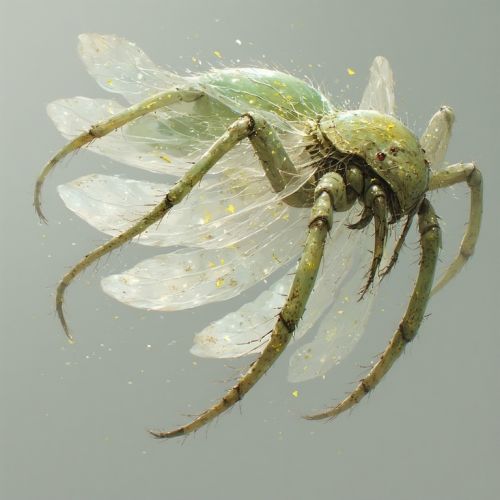
- Windveil Spinner (Araneus ventosus var. harmonialis) Size & Build: Body length closer to 0.8 m, with a leg span around 2 m. Limbs taper into graceful, plume-fringed joints that stabilize movement during gales and scatter pollen as they pass. Exoskeleton & Camouflage: Soft lichen-greens and dawn-copper streaks with subtle iridescence that shifts under sun or moonlight. Chitin is partially translucent, creating the impression of wind-etched glass rather than armored menace. Silk & Symbiosis: Threads glint faintly in sunlight, resembling drifting seed-fluff. Symbiotic fungi still live within the silk, but they glow faintly during storms, creating soft, lantern-like arcs that guide migratory birds and pollinators. Head & Feeding: Eyes retain wide-angle sensitivity but are framed with leaf-like protrusions that break up the arachnid outline. Mandibles smaller and finer, adapted more for plucking pests from cliffside flora than for predation. Behavior: Occupy high cliffs and floating outcrops, weaving canopy bridges that act as windbreaks and seed catchers. During storms, their webs form iridescent veils that reduce turbulence and scatter spores. Ecological Role: Less predator, more pollinator-ally and ecosystem anchor. Their webs are often colonized by mosses and tiny flowers, turning storm canopies into aerial meadows over time. Cultural Significance: Revered as “Wind Gardeners.” Sylvarains paint their likeness in festival banners, and their silk is a treasured gift rather than a harvested resource, given only when the Spinner voluntarily sheds an old anchor web.
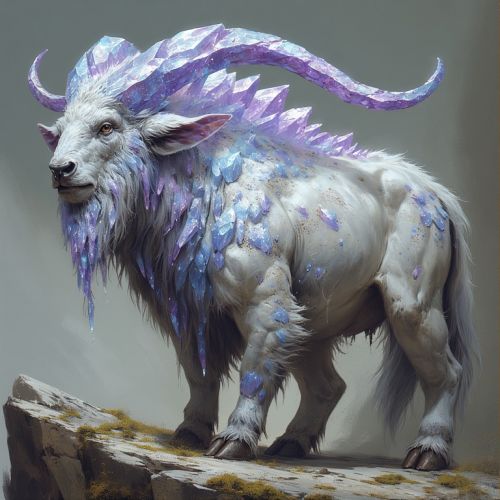
- Cloudcrest (Nimbusceros cristatus) Size & Build: Medium-sized herbivore, standing roughly 1.8 m at the shoulder. Muscular limbs and padded hooves provide exceptional grip on cliff ridges. Compact torso and strong neck support crystalline horns that curve backward, often catching morning sunlight like natural prisms. Hide & Camouflage: Fur dense and silvery, interwoven with faint streaks of pale blue and lilac, allowing seamless blending with mist-laden ridges. Seasonal fur shedding aligns with temperature fluctuations, maintaining insulation and visual concealment. Horns & Symbiosis: Crystalline horns composed of layered keratin and mineral deposits. Horns grow slowly and naturally shed minor flakes, which local mosses and lichens utilize for mineral enrichment. Horns refract light, occasionally attracting pollinating insects to ridge flora. Head & Feeding: Broad muzzle with strong molars for clipping Nimbus Fern and Auravine Lattice. Eyes positioned for panoramic cliff-side vision, detecting predators or herd movements. Small, mobile ears capture subtle rockslide or wind cues. Behavior: Travel in small, tight-knit herds of 4-12, navigating narrow ridges with careful precision. Grazing is methodical; movement maintains open pathways for other cliff-dwelling species. Herds often pause during storms to shelter in rock alcoves or overhangs. Ecological Role: Regulate ridge flora, preventing overgrowth that could destabilize cliff platforms. Grazing promotes biodiversity by creating open patches for epiphytic and creeping plants. Their movements influence moss bed development and ridge soil aeration.
Cultural Significance: Horns lightly harvested for ceremonial tools; care is taken to avoid stressing herds. Ridge guardians closely monitor populations, believing herd disruption may trigger ecological imbalance or interfere with weather patterns.
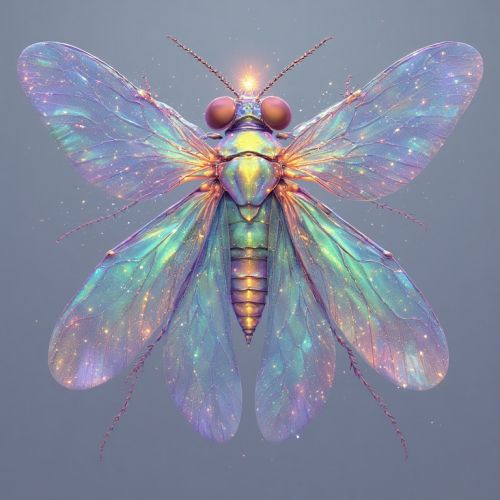
- Lumenfly (Lucis papilio) Size & Build: Tiny, delicate insects with wingspans of 8-12 cm. Transparent wings shimmer with faint iridescence, edged in subtle phosphorescent filaments. Body slender, segmented, and lightly armored to protect internal light-emitting organs. Exoskeleton & Camouflage: Body ranges from pale violet to soft emerald, adapting to background foliage. During daylight, translucence renders them nearly invisible; at night, luminescence pulses rhythmically in tune with aurora-like energy conduits. Bioluminescence & Symbiosis: Specialized abdominal organs emit soft, oscillating light. Light intensity and pulse frequency adjust according to ambient conduit energy, aiding in navigation and mating. Feeding on Bloomcaps supplements energy for bioluminescence. Head & Feeding: Small head with multifaceted eyes capable of detecting minute light fluctuations. Mandibles delicate yet efficient, designed for consuming Bloomcap spores and nectar. Sensitive antennae detect conduit energy pulses and pheromone trails. Behavior: Swarm in synchrony with energy surges along conduits, creating shimmering living tapestries in the air. During dispersal, they release spores critical for fungal and flowering plant reproduction. Swarms follow seasonal rhythms, retreating during low-energy periods. Ecological Role: Vital pollinators for upper canopy and conduit-associated flora. Their presence indicates healthy conduit function and energy flow. Swarm patterns influence seed dispersal and fungal propagation, maintaining ecosystem balance.
Cultural Significance: Apprentices and energy wardens monitor Lumenfly activity as a living barometer for conduit performance. Collection or disturbance is strictly controlled; luminescent swarms inspire ceremonial dances and light rituals in highland communities.
- Stratos (Caeloserpens altivolus) Size & Build: Stretches up to 12 m but appears almost weightless, a ribbon of muscle and hollow bone designed for weeks of stratospheric drift. Its membrane fins catch rarefied currents like sails, requiring almost no effort to stay aloft. Appearance: Iridescent blues and silvers, with shifting cloud-like patterns that mimic auroras and high-altitude ice. From below, it’s barely visible, just a faint gleam when the sun hits it right, like a phantom bridge between isles. Behavior: Appears in loose pods every few decades, riding atmospheric rivers across entire archipelagos. Rarely hunts near inhabited islands unless extreme imbalance forces it lower. After feeding, it leaves trails of nutrient-rich excretions that fertilize cloudborne lichen fields. Ecological Role: Apex migratory predator that only sweeps low when jet streams shift violently or upper-atmosphere prey collapses. Its rare descents help reset glider populations that have over-bloomed and threaten to strip delicate canopy layers.
Cultural Significance: Seen as both warning and blessing. Its passage means the upper skies are in turmoil, but the nutrients it leaves behind spark years of lush growth. Highland ecologists log its sightings like others track eclipses; energy wardens record them in cloudstone archives.
© 2025 HaleyB |
Stats
195 Views
Added on August 20, 2025 Last Updated on August 29, 2025 |





 prev chapter

 Share This
 Email
Email Facebook
 Twitter
 Read Request
 My Library
 Subscribe
 Flag Writing