
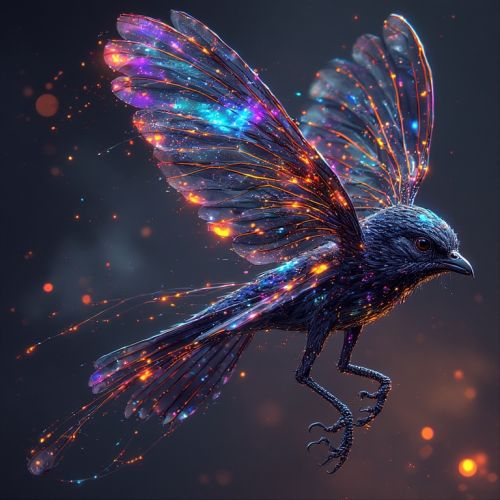
Ecological Appendix I - Southern Plains: Lumina StewardsA Chapter by HaleyBHalo Swifts (Aquila iridion)Classification: Compact, streamlined avians averaging 40 cm wingspan. Bodies are slender with a slight forked tail to stabilize in turbulent highland currents. Hollow bones reinforced with trace crystal fibers, light but unnervingly resilient. Description: Matte charcoal-gray body with a faint blue-violet iridescence on the wingtips. The “halos” are concentric, semi-transparent filaments growing along the primary feathers, refracting light into faint coronas when crossing active energy conduits. At high resonance, the halos shimmer like thin soap bubbles. Short, hooked beak with a serrated inner edge for snatching midair insects. Eyes are large, forward-angled, with a thin reflective band, rumored to allow them to “see” conduit currents the way some fish see magnetic fields. Behavior: Flocks number from 20 to 60, weaving through auroral lines in synchronized arcs, like starlings that actually paid attention in geometry class. At dusk, they roost on crystalline outcrops, preening halos to keep the filaments intact. Tied to the intensity and flow of highland energy conduits. Sudden shifts in their routes are a bad omen for farmers and a thrilling excuse for council members to yell at each other. Ecological Role: Control highland insect populations, especially the biting, crop-harassing ones. Their droppings are laced with trace luminescent minerals, fertilizing cliffside flora that would otherwise starve in wind-swept zones. Notes: To spot the first halo at dawn is said to mark a week of stable weather. The superstitious avoid flight paths where swifts vanish en masse.
- Prismhorn (Antilocapra prismaticus) Classification: Plains herbivore,~1.8 m at the shoulder; longer-legged than a modern antelope, built for relentless distance rather than bursts of speed. Muscles corded, not bulky, like it was carved by wind and sun. Morphology: Each pair rises in a gentle helix, sheathed in translucent crystalline growths that fracture sunlight into dancing rainbows on the plains. Growth rings form seasonally; when shed or broken, fragments hum faintly when struck together, used by Lumina Stewards in weather-reading rites.; Dense but fine-haired, with chromatophores that let it transition from pale gold in dry seasons to deep viridian when moss is abundant. Flanks show subtle opalescent speckling, catching dawn and dusk light like dew. Behavior: Herds can swell to a few hundred in the bloom season, then fracture into familial lines as resources thin. During mineral licks at crystal terraces, they engage in soft clashing, horns resonating like chimes. Ecological Role: Keep fast-growing moss mats from choking grasslands. Crystal terraces only form where their droppings, rich in silicates, accumulate over decades. Notes: A herd seen shifting course at dusk is read as a sign: energy flux if they move toward the terraces, drought if they flee them. 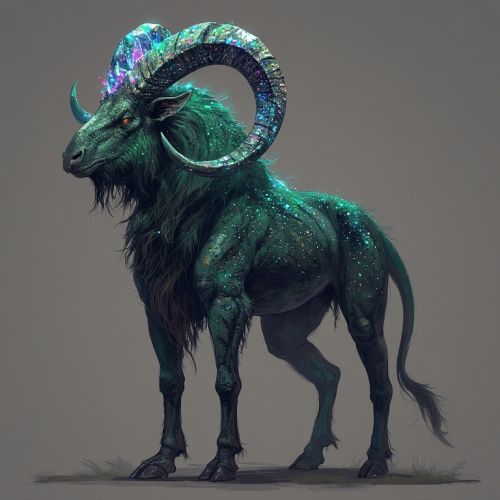 - Quartz-Spined Leaper (Leporinus prismatica) Morphology: A series of translucent quartz-like spines run from the shoulder blades to mid-tail, each slightly curved and semi-hollow. They refract sunlight in sharp flashes, disorienting aerial predators. Spines grow in segments that shed annually; fresh ones are clearer, older ones grow milky with mineral deposition. Soft, sand-toned fur with faint streaks of greenish-gray along the flanks. Belly fur is paler to blend with lichen mats. Spines are often streaked with tiny mineral inclusions, used by crafters as charms because they hum faintly when exposed to energy flux. Blunt muzzle with chisel-like incisors, designed to scrape crystalline lichen and gnaw on mineral-encrusted bark. Eyes placed high and lateral for panoramic vision, with a secondary lid that filters glare off the terraces. Behavior: Solitary foragers outside mating season, but congregate loosely in areas of heavy moss bloom. When startled, they perform a “flare leap,” arching their backs so the spines catch maximum light, creating a sudden, prismatic flash to blind pursuers. Ecological Role: Their constant foraging breaks up overgrown moss terraces, preventing them from choking the plains’ grass layers. Spores from the lichens cling to their fur and paw pads, spreading rare moss varieties to distant terraces. Notes: Spine fragments are worn as talismans by travelers who want protection from getting lost in the high plains’ energy shifts. 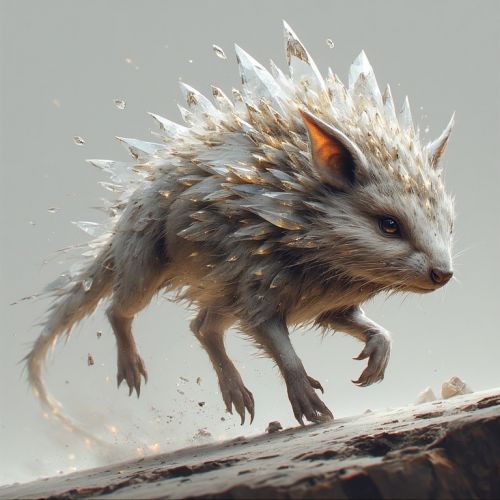 - Riverwhisks (Lutrinae resonata) Morphology: Dense double-layered coat, deep slate underfur for warmth, silvery-olive guard hairs that shed water in sheets. Under bright light, faint ripples of blue-green shimmer trace along their spines. Long, semi-translucent, each threaded with microscopic mineral channels that faintly glow when detecting crystalline resonance. Patterns shift color slightly depending on energy flow: pale gold in stable waters, erratic violet flecks when magic destabilizes. Broad skull with slightly flattened snout for foraging under riverstones. Diet: small fish, resonance shrimp, and riverbed mollusks with mineral-rich shells that help maintain their whisker conductivity. Behavior: During dual-sun equinoxes, they form spawning flotillas, moving in spirals upstream, “dancing” along waterfalls by using resonance vibrations as step-stones. Outside mating season, they travel in small kin pods, leaving spiral-scratch marks on resonant boulders as waypoints. Ecological Role: Natural barometers of magical flow and river purity. Whisker shedding coincides with seasonal river flux; fragments are collected downstream as indicators for upcoming floods or magical surges. Notes: Lumina Navigators read their dance patterns to chart safe crossing points. To kill one without ritual consent is said to “deafen” the river for seven years. 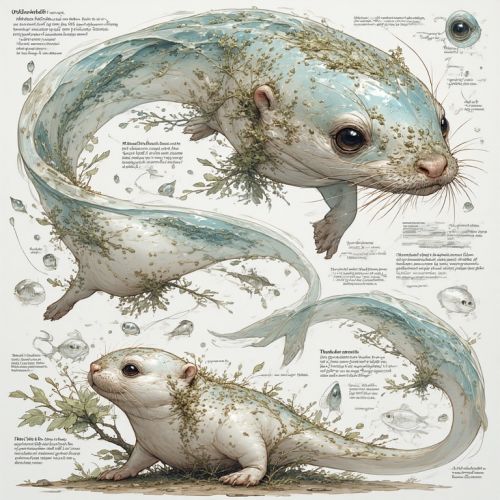 - Duskveil Stalkers (Felivulpes crepuscula) Morphology: Base coat: matte charcoal-black that absorbs most twilight wavelengths, giving it a near-silhouette look at dawn/dusk. Embedded in the fur are refractive micro-filaments that catch faint twin-sun light, creating rippling, aurora-like patterns along the spine and shoulders for a few fleeting minutes each day. Triangular ears with a notch of translucent cartilage at the tips, enhancing low-frequency sound detection. Eyes are elongated, with a slit pupil that blooms to a wide oval at low light; they pick up residual heat trails for a few minutes after sunset. Broad, padded, almost unnervingly silent. Pads contain a thin, oil-secreting layer that dampens ground vibration, making their approach nearly ghostlike. Behavior: Solitary hunters or pair-bonded during breeding season. They strike during the overlap of twin suns, when most plains creatures’ vision falters. Known to stalk prey by shadow mimicry, lying utterly still as their fur “twinkles” just enough to pass for reflected terrain. Ecological Role: Thin out the overconfident grazers that think dusk is just pretty, not deadly. Their predation patterns force herds to rotate grazing zones, preventing overbrowsing near waterholes. Notes: Tracks, with their slightly elongated toe drag, often confuse novices into thinking the ground has been marked by a wandering spirit. Hunters use their pelt shimmer as a talisman to walk unseen. 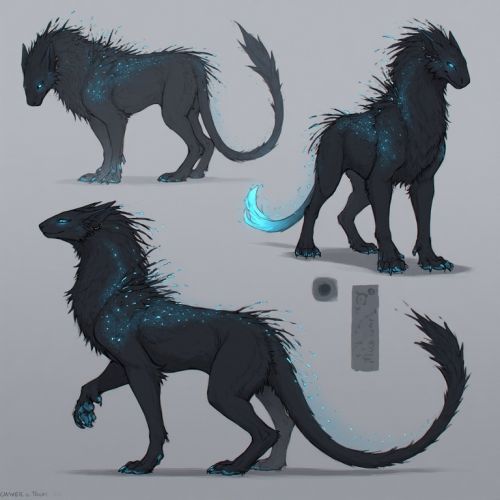 - Starback (Grus astralis) Morphology: Plumage has a brushed-metal sheen, steel-gray base with interwoven copper and pale gold filaments that catch sunrise and moonlight differently. Across the back: an irregular starburst pattern, each bird’s arrangement as unique as a fingerprint. A delicate fan of semi-translucent filaments, glowing faintly under moonlight due to stored photoluminescent minerals absorbed from crystal pools. During courtship or ritual dance, the crest flares, shedding tiny motes of light into the air. Behavior: Migratory, with long, looping routes traced by ancient energy flows. Each migration season begins with a dance performed at specific crystal pools, where the flock’s synchronized stomping is believed to “reset” their internal navigation fields. Their call is a resonant, low-pitched hum that echoes through valley chambers before storms. Ecological Role: Diet includes small aquatic invertebrates and the seedpods of moss terrace plants. By consuming and redistributing these seeds during migration, they maintain a genetic exchange across fragmented highland ecosystems. Notes: Featured in ancient Lumina mosaics as heralds between sky and earth. A crane landing on a terrace during a twin-moon night is said to herald a year of fertile moss bloom. Feathers found post-molt are worn by highland navigators for luck on energy-crossing expeditions. 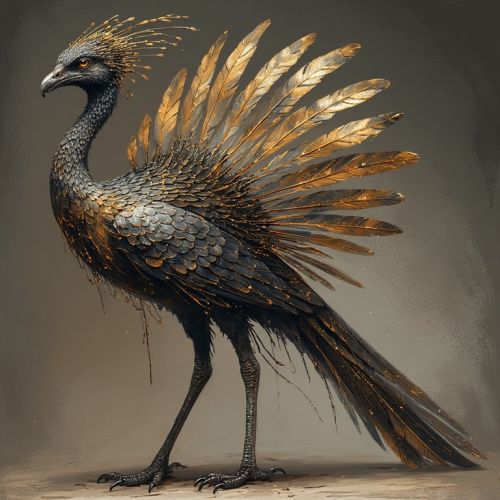 - Emberhide Skinks (Scincus fulguris) Morphology: Smooth, coppery scales along the body; dorsal plates are matte obsidian edged with minute crystalline ridges. These plates absorb heat during the day, gradually shifting from dull charcoal to a faint ember-glow by late afternoon. The tail contains a lattice of mineralized capillaries storing static energy harvested from solar charge. During mating season, males elevate their tails, creating visible heat ripples and faint electric pops as they compete for mates. Narrow, wedge-shaped snout with fine serrated teeth for crunching beetles and crystal mite shells. Tongue slightly forked, tipped with iridescent film for chemical tasting of mineral-rich soil. Behavior: Most active in the hours before dusk. When threatened, they whip their tails, releasing a sharp crackling discharge that stings bare skin and startles predators. In high winds, they press flat to the ground, plates aligned to absorb residual heat while avoiding chill loss. Ecological Role: Keep insect swarms under control, particularly the root-chewing kind that ruin moss terrace roots. Their burrowing aerates the mineral-rich soils, which in turn benefits crystal terrace growth. Notes: Favored by apprentices of the Lumina Stewards as living “weather charms”, they grow restless before storms, and their plate color is believed to mirror energy fluctuations in the ground. 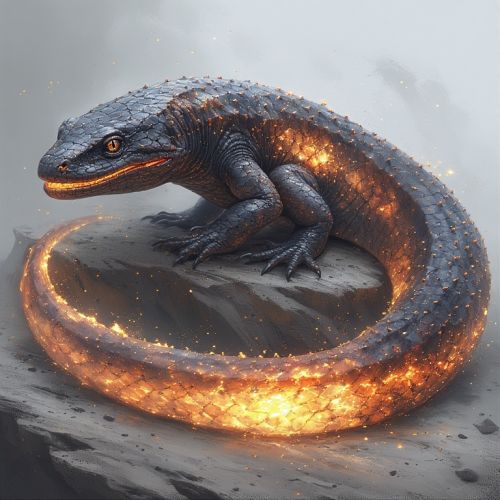 - Mossveil (Lepus umbravallis) Morphology: Soft gray-brown base coat interwoven with fine moss-like filaments that vary in hue depending on the season, green in wet months, muted gold in dry spells. When flattened, their fur visually merges with moss plains, making them almost invisible to predators. Large, expressive eyes angled for panoramic vision. Long ears tipped with moss-colored tufts that detect subtle air currents, giving early warning of approaching predators. Behavior: Crepuscular, emerging at twilight and dawn. Forages lightly, nibbling on moss, lichens, and tender grasses. Digging behavior not only collects dew for hydration but also disperses spores and seeds into the soil. Ecological Role: Their burrowing aerates moss plains and spreads spores, effectively seeding the next growth season. Serve as prey for Duskveil Stalkers, shaping predator-prey dynamics across the plains. Notes: Herbalists and lowland farmers track their paths to locate natural dew-pockets, a key water source during dry spells. Flattened hares often mistaken for moss mounds by the untrained eye. 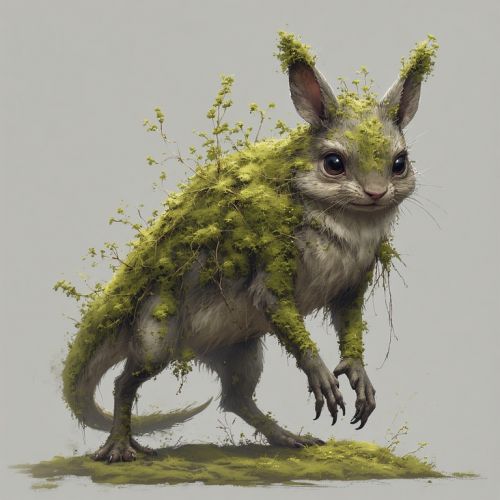 © 2025 HaleyB |
Stats
162 Views
Added on August 21, 2025 Last Updated on August 27, 2025 |
 prev chapter

 Share This
 Email
Email Facebook
 Twitter
 Read Request
 My Library
 Subscribe
 Flag Writing