
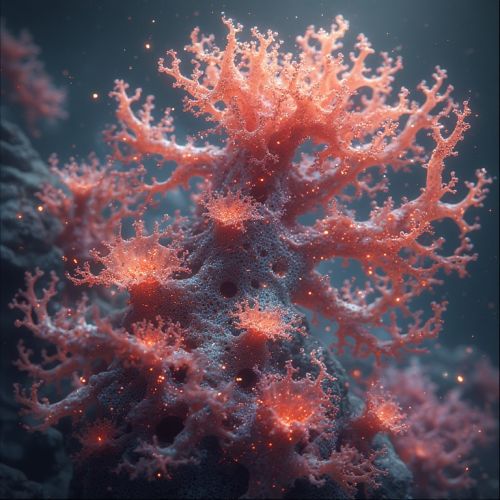
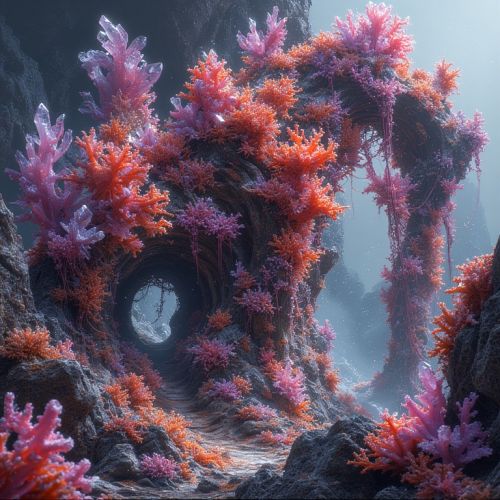
Ecological Appendix I - Eastern Coast: Aqualis NavigatorsA Chapter by HaleyBCoralspire (Algaea architectura)Classification: Bioluminescent macroalgae; semi-structural aquatic flora. Morphology: Dense, branching fronds reaching 1-3 meters in height, with flexible, calcified stems that form natural lattice-like “reefs.” Emits a gentle blue-green glow at night, increasing during full tidal phases. Habitat: Found anchoring floating farms, aquaculture terraces, and semi-submerged platforms within tidal estuaries and sheltered bays. Prefers nutrient-rich waters infused with crystal-filtered currents. Behavior & Function: Stabilizes floating structures by reducing wave impact and anchoring soil mats. Provides habitat and nursery grounds for small fish, amphibious fauna, and aquatic insects. Absorbs magical and mineral impurities, naturally filtering and rebalancing water chemistry. Fronds sway rhythmically with tidal currents, amplifying their luminescence during moonlit cycles.
Ecological Role: Acts as both barrier and foundation for floating ecosystems; its presence encourages coral-moss growth and supports a diverse aquatic food web. Cultural Significance: Managed by Aqualis Navigators as both a living infrastructure and an energy-absorbing organism. Frond fragments are harvested for ritual dyes, water purification, and navigation beacons. Notes: Unchecked growth can tangle mooring lines, destabilize floating gardens, or over-absorb vital minerals. Pruned regularly according to tidal and lunar charts.
-Tidewhisper (Crustacea resonans)Classification: Coastal resonant crustacean; medium-sized scavenger, ~20 cm across. Morphology: Tidewhisper has a semi-transparent, pearlescent carapace with resonant nodules along the claws and shell ridges, which hum faintly when currents are strong. Five pairs of legs allow both secure clinging to rocky surfaces and shallow swimming. Long, whisker-like sensory appendages are lined with micro-crystals, finely tuned to detect vibrations in water flow and subtle magical currents. Habitat: Found in tidal pools, rocky shorelines, and lagoon shallows where crystal-filtered waters ebb and flow. They prefer areas with active water movement, often clustering near Coralspire roots or along natural quartz veins. Behavior & Ecology: Tidewhisper's scuttle across tidal surfaces feeding on detritus and algae, maintaining cleanliness in their microhabitats. Their resonant nodules allow them to communicate through subtle vibrations, and their whiskers detect changes in current, salinity, or magical energy, prompting rapid migration before storms or resonance surges.
Ecological Role: Serves as a natural indicator of tidal health. Sudden absence signals ecological imbalance or disruption in energy currents. They support other species as both prey and symbiotic cleaners of algae and detritus. Cultural Significance: Highly valued by Aqualis Navigators, who harvest molted whiskers for precision resonance calibration in floating platform devices and energy conduits. Folklore regards Tidewhisper's as “messengers of the tide,” signaling changes in water and energy flow.
Notes: Exposure to unstable Bloom energy or overharvesting of whiskers can disrupt migration patterns and sensitivity. Breeding cycles are closely tied to full tidal-moon phases. 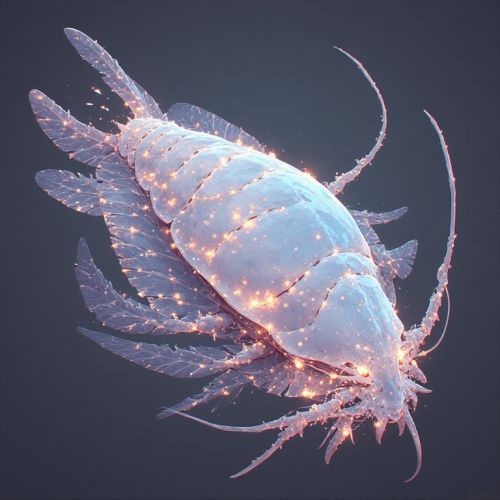 - Driftfin (Pteryx aetheria)Classification: Medium-sized coastal ray; wingspan approximately 2-3 meters. Morphology: Driftfin has broad, translucent wing-like fins with faint bioluminescent spots along their edges. These markings trace flow patterns in the water, aiding in navigation and allowing conspecifics to coordinate gliding movements. The body is streamlined, with a semi-transparent underbelly and flexible fin membranes that ripple in response to water currents. Habitat: Found gliding beneath floating farms, in shallow coastal lagoons, and along crystal-filtered tidal channels. Prefers areas with steady currents that allow long-distance gliding and energy-efficient movement. Behavior & Ecology: Driftfin's feed on plankton and small crustaceans while moving with currents. Their graceful gliding circulates nutrient-rich waters, redistributes microalgae, and supports the growth of Coralspire and other aquatic flora. Driftfin movements also serve as natural indicators of tidal flow and water quality, as changes in population behavior often signal current shifts or energy disturbances. Ecological Role: Acts as both a disperser of microalgae and a facilitator of water nutrient circulation. Their presence stabilizes coastal microhabitats, benefiting small fish, crustaceans, and semi-aquatic plants. Cultural Significance: Aqualis Navigators monitor Driftfin populations to assess water and energy health. In some cases, trained individuals are used to guide aquaculture nets or assist floating farm operations. Their bioluminescence and fluid movements also inspire festival displays and ritual dances along tidal platforms. Notes: Populations are sensitive to Bloom interference and structural disruptions in floating terraces. Observations are used as a proxy for aquatic ecosystem stability. 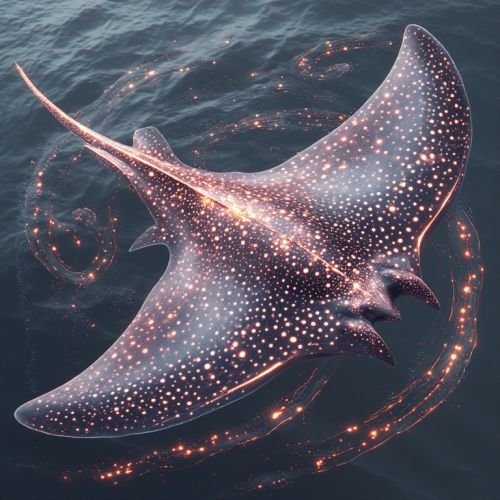 - Sailback (Testudo aeris)Classification: Large marine reptile; length approximately 2-3 meters. Morphology: Sailback's possess broad, fin-like dorsal shells covered in miniature symbiotic coral growths. These living corals provide camouflage, support microfauna, and subtly refract light across the shell surface. The reptile’s body is streamlined for efficient swimming, with flipper-like limbs enabling long-distance migration along coastal currents. Habitat: Found along shallow coastal waters, floating garden corridors, and reef edges. Prefers areas where currents facilitate dispersal of coral spores and small marine organisms. Juvenile flora and tiny fish often attach to the shell ridges, gaining shelter during transit. Behavior & Ecology: Migratory by nature, Sailback's traverse long coastal routes, carrying microhabitats atop their shells. Feeding consists primarily of algae and small invertebrates, while the shell’s coral colonies filter water and stabilize local reef systems. Their movements redistribute coral spores, aid in reef repair, and reduce localized algal overgrowth. Ecological Role: Acts as a keystone species for reef and floating garden health. By transporting juvenile flora and microfauna, Sailback's enhance biodiversity and maintain the balance of coastal ecosystems. Cultural Significance: Highly revered by Aqualis Navigators, who monitor migrations as indicators of aquatic ecosystem stability. Coral and shells are only harvested after natural shedding or detachment, ensuring minimal disruption to populations. Sailback's appear in ceremonial lore as “carriers of the reef’s breath.” Notes: Sensitive to energy distortions caused by Bloom proliferation; populations decline near highly altered or polluted currents. Observations are regularly recorded to track reef and floating garden health. 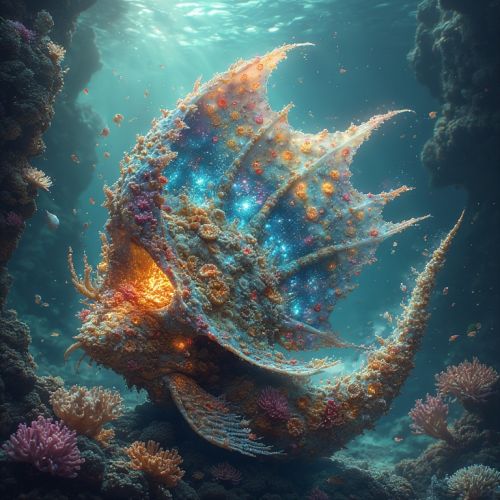 -Mirrorfin (Avium specularis)Classification: Small coastal bird; wingspan approximately 40 cm. Morphology: Mirrorfin's have iridescent, highly reflective feathers that catch both sunlight and moonlight, producing shimmering patterns across their bodies. Their lightweight frame and strong wing muscles allow precise maneuvering over coastal waters and tidal flows. Beaks are short and pointed, adapted for picking plankton and small fish from the surface. Habitat: Found along shallow coastal zones, floating aquaculture platforms, and elevated ledges near Coralspire clusters. Nests are built on platforms or sheltered structures to minimize predation and tidal disturbance. Behavior & Ecology: Mirrorfin's forage by following tidal currents, feeding primarily on small fish and plankton. Their flocking behavior creates coordinated aerial patterns, which assist in locating dense plankton swarms and avoiding predators. Birds often rest in synchronized groups on floating platforms, where their reflective feathers can amplify sunlight, deterring potential threats. Ecological Role: Functions as a natural pest controller and visual indicator of water quality. The presence and activity of Mirrorfin flocks are closely tied to plankton abundance and overall tidal health, indirectly benefiting Coralspire and other floating flora. Cultural Significance: Aqualis Navigators track Mirrorfin flock movements to inform tidal mapping, aquaculture planning, and seasonal scheduling. Their reflective plumage also inspires ritual designs and festival displays along coastal terraces. Notes: Flock migration can shift in response to Bloom interference or altered tidal currents. Monitoring these patterns provides early indicators of ecosystem imbalance.  -Bloomling (Actinia lumina)Classification: Semi-sentient coastal flora; attaches to shallow reefs and floating platforms. Morphology: Bloomling's are soft-bodied anemone-like organisms with translucent, flexible tentacles tipped with faint bioluminescence. Tentacle tips glow brighter in response to magical energy pulses, creating rippling patterns visible across water surfaces at night. Base structures secrete adhesive filaments that anchor the organism to floating docks, coral ridges, and reef surfaces. Habitat: Found along sheltered shallow reefs, tidal platforms, and aquaculture corridors. They prefer calm waters with moderate energy resonance, often clustering near Coralspire growths or crystal-filtered currents. Behavior & Ecology: Tentacles sway rhythmically with tides and magical pulses, capturing microscopic plankton while filtering waterborne magical residue. Bloomling's provide shelter and foraging grounds for juvenile Driftfin's and Tidewhisper's. Semi-sentient responsiveness allows them to retract during strong currents or disruptive Bloom surges. Ecological Role: Acts as both water purifier and microhabitat provider, stabilizing shallow ecosystems and supporting aquatic fauna diversity. Its filtering function helps maintain clean energy flow for adjacent Coralspire gardens and floating platforms. Cultural Significance: Managed by Aqualis Navigators to prevent overgrowth on docks and floating terraces. Integral to ceremonial water purification rites, with glowing tentacles forming natural patterns during rituals. Notes: Overexposure to Bloom energy or physical disturbance can inhibit growth and bioluminescence. Monitoring ensures stable ecosystem function and reliable participation in ritual activities. 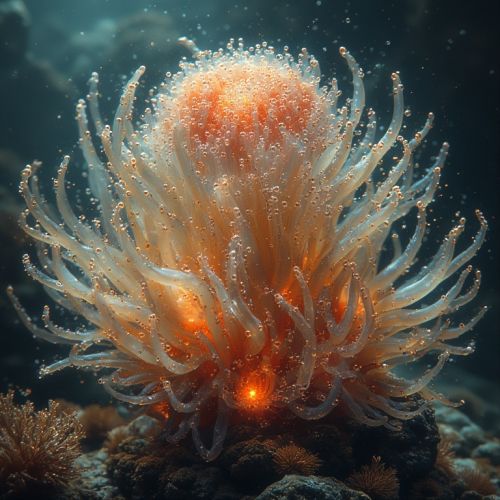 -Aqualis Navigators’ Energy Flora:Crystal Coral Vines (Vitis corallinia) Classification: Bioluminescent climbing and sprawling vine; integrates with both floating platforms and energy networks. Morphology: Thick, flexible tendrils with translucent leaves embedded with micro-crystals that store solar and magical energy. At night, the stored energy radiates as a soft, pulsating glow. Fine rootlets anchor the vine to platforms, docks, and aqueduct conduits, creating both structural stability and energy connectivity. Habitat: Found along floating gardens, aquaculture terraces, and energy conduit networks in shallow coastal zones. Thrives where both sunlight and ambient magical currents are present. Behavior & Ecology: During the day, the vines capture solar energy and absorb residual resonance from water conduits. At night, energy is slowly released through leaves and tendrils, illuminating surrounding platforms and supporting nocturnal pollinators such as Driftfin and Tidewhisper-associated microfauna. The vines grow in coordinated patterns to avoid shading key solar-harvesting flora and maintain conduit flow. Ecological Role: Provides structural integration for floating platforms, distributes energy across aquaculture terraces, and supports microhabitats for small aquatic and semi-aquatic species. Acts as both stabilizer and living energy regulator in managed aquatic systems. Cultural Significance: Aqualis Navigators prune and guide growth to optimize energy transfer and light display. Vines are incorporated into ceremonial nocturnal displays, festival lighting, and ritual aquaculture calibration. Notes: Unchecked growth can block water conduits or shade key Solarvine surfaces, reducing overall energy efficiency. Bloom exposure may accelerate erratic growth or disrupt stored energy release cycles.
- Tidal Lantern (Lichen luminae) Classification: Bioluminescent coastal lichen; attaches to pilings, reef edges, and submerged platforms. Morphology: Compact, branching lichen with translucent fronds that emit a soft, pulsing glow. Bioluminescence intensifies in response to tidal energy, creating rhythmic light patterns across water surfaces. Holds tightly to surfaces via specialized root-like holdfasts. Habitat: Found along shallow reef edges, tidal platforms, pilings of floating gardens, and areas influenced by crystal-filtered currents. Thrives where tidal movement and ambient magical resonance are regular. Behavior & Ecology: Tidal Lanterns synchronize glow cycles with tidal pulses, acting as natural beacons for nocturnal species such as Driftfin's, Tidewhisper's, and Mirrorfin flocks. They filter waterborne particulates and help stabilize small reef ecosystems. Growth patterns expand toward nutrient-rich currents, and colonies adjust bioluminescence intensity in response to energy fluctuations. Ecological Role: Functions as both illumination and ecological monitor. Light patterns indicate tidal flow, water quality, and local energy resonance, serving as a natural tool for Aqualis Navigators and floating farm caretakers. Supports microhabitats for juvenile fauna and small invertebrates. Cultural Significance: Utilized as natural lighting along floating gardens and tidal terraces. Glow timing is observed during festivals and rituals, with patterns interpreted as omens of seasonal or tidal shifts. Notes: Overgrowth or interference from Bloom energy can disrupt tidal glow synchronization and habitat stability. Regular monitoring ensures accurate ecological signaling and maintains both practical and ceremonial functions.
© 2025 HaleyB |
Stats
208 Views
Added on August 21, 2025 Last Updated on August 29, 2025 |

 prev chapter

 Share This
 Email
Email Facebook
 Twitter
 Read Request
 My Library
 Subscribe
 Flag Writing