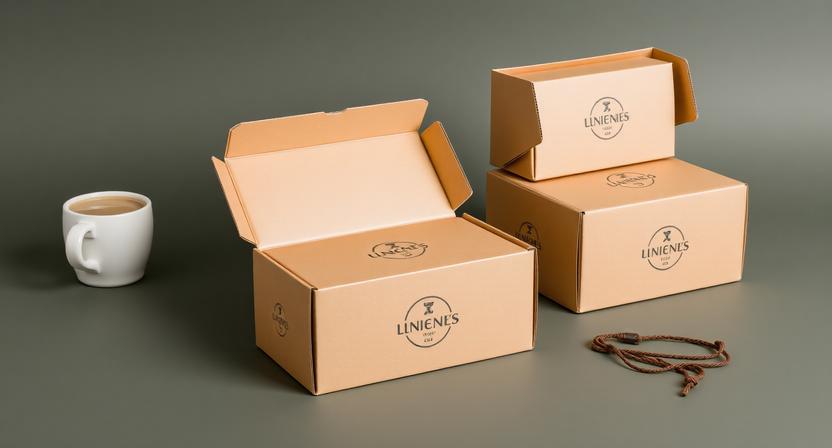
Die-Cut vs. Standard Cardboard Boxes: Which One Is Right for You?A Story by Kate When selecting packaging, one of the fundamental decisions is whether to choose a standard box or invest in die-cut custom shapes. When selecting packaging, one of the fundamental decisions is whether to choose a standard box or invest in die-cut custom shapes. Each option offers distinct advantages depending on product characteristics, branding goals, and budget considerations. Understanding the differences between die-cut packaging, custom shapes, and traditional box styles is essential for making an informed choice. What Are Standard Boxes?Standard boxes, also known as regular slotted containers (RSCs), are pre-designed box styles manufactured in fixed dimensions. They feature flaps that fold to form the top and bottom, with the length, width, and depth conforming to standard measurements. These boxes are readily available, cost-effective for low volumes, and suitable for a wide range of products. The primary limitation of standard box styles is their rigidity. If your product does not fit neatly into available dimensions, you must either use a larger box and add void fill or modify the product packaging. Standard boxes offer no opportunity for unique structural features or distinctive shapes. What Is Die-Cut Packaging?Die-cut packaging refers to boxes that are cut from flat sheets using custom steel rule dies. This process allows for virtually any shape, size, or structural configuration. Die-cut boxes can feature unique contours, window cutouts, handles, locking mechanisms, and specialized folds that standard boxes cannot accommodate. Custom shapes made possible by die-cutting include gable boxes, pillow packs, mailer boxes with tuck flaps, display-ready containers, and boxes with curved or angled edges. Die-cutting also enables precision features such as perforations, tear strips, and custom inserts that enhance functionality and user experience. Comparing Protection and Product FitFor products with irregular shapes, die-cut packaging offers superior protection. A custom-shaped box that conforms to the product's contours eliminates movement during transit, reducing the need for void fill and minimizing damage risk. Standard boxes, by contrast, force irregular products into rectangular constraints, often requiring extensive cushioning materials. For products with standard rectangular dimensions, standard box styles may provide adequate protection at lower cost. The decision hinges on whether the product's shape aligns with standard box geometry. Brand Differentiation Through Unique ShapesDie-cut packaging excels at creating visual distinction. A uniquely shaped box stands out on doorsteps and social media feeds, contributing to brand differentiation in ways that standard rectangular boxes cannot match. For luxury products, gift items, or brands seeking to make a strong visual statement, custom shapes justify the additional investment. Standard boxes, while less distinctive, can still achieve strong branding through high-quality printing and finishing. The choice depends on whether the structural shape itself is central to the brand identity and product presentation. Cost ConsiderationsStandard boxes benefit from economies of scale. Because they are produced in massive quantities, per-unit costs are low, and they are readily available with no setup fees. For small businesses or those testing new products, standard boxes offer a low-risk entry point. Die-cut packaging requires die tooling�"a one-time setup cost that can range from a few hundred to several thousand dollars depending on complexity. However, once the die is created, per-unit costs become competitive, particularly for medium to large order quantities. For established products or subscription services with consistent volume, the per-unit cost difference may be minimal relative to the branding and functional benefits. Making the Right ChoiceChoose standard box styles when:
Choose die-cut packaging when:
© 2026 KateAuthor's Note
|
Stats
13 Views
Added on March 23, 2026 Last Updated on March 23, 2026 |


 Share This
 Email
Email Facebook
 Twitter
 Read Request
 My Library
 Subscribe
 Flag Writing