She stands in the center of the rain.
She is a storm made of static and honey.
She walks barefoot across the driveway
as if the sharp stones are soft grass.
Her pockets are heavy with smooth river rocks
because she says they hold the weight of yesterday.
I watch her draw doors on the brick walls with chalk waiting for one of them to finally swing open.
There is a wild electricity in her kitchen.
She eats cereal at midnight in the dark and claims she can hear the electricity crawling like insects behind the wallpaper.
She is a clock with no hands ticking loudly but never telling the same time twice.
To love her is to stand on a high cliff and wonder if the wind is a hand or a shove.
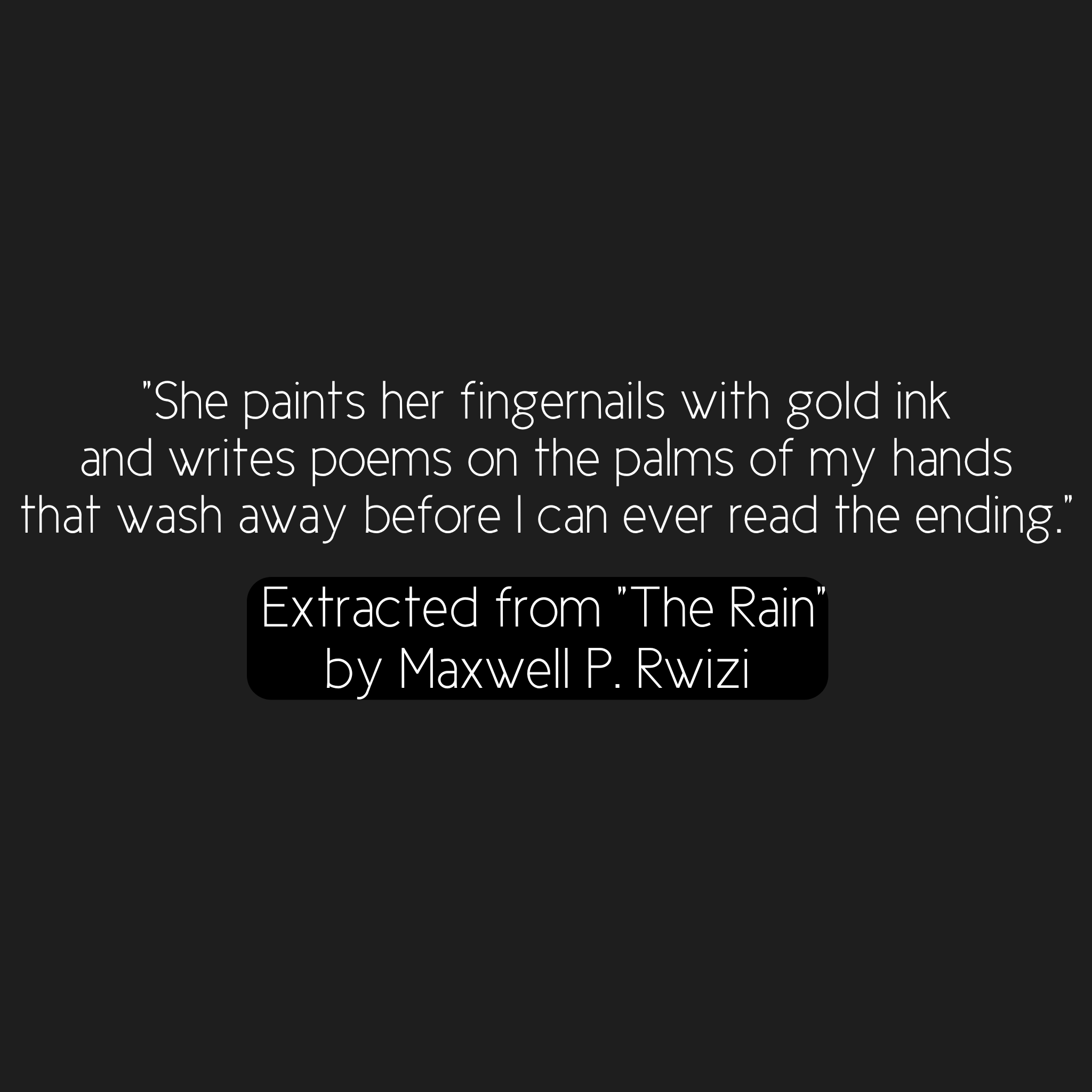
She paints her fingernails with gold ink
and writes poems on the palms of my hands
that wash away before I can ever read the ending.
She is a beautiful, tangled mess of kite string caught in the branches of a lightning tree.
I am dizzy from the spinning trapped in the orbit of her frantic gravity.
Everything about her is a warning written in a language I refuse to learn.
I find her under the light shaking the water from her hair like a wet dog.
She looks at me with eyes like unlit matches
and asks if I am ready to lose my way.
The air smells like ozone and wet earth.
I reach out to touch her wet sleeve as she stands in the center of the rain.
Start to finish, this is you talking about an unknown "she," who could be a child, and adult, or pretty much anything, because while for you the words call up a metal image that’s in your mind, for the reader? The words call up a metal image that’s in *YOUR* mind.
I’m certain that for you, the words, “wild electricity in her kitchen,” may be meaningful. To the reader? It could be a sexual reference or, a misunderstanding of what electricity is and does. No way to know.
That’s why, while we write from our chair, we must edit from that of the reader, knowing only what the words suggest to THEM, based on the reader’s life-experience, not our intent.
Based on your other posted work, you write well, but too often, because you have full context and intent guiding you, the words may call up a metal image that’s in *YOUR* mind, but not the reader’s.
Posted 2 Weeks Ago
1 of 1 people found this review constructive.
2 Weeks Ago
Thanks for the feedback. I get your point but I also think meaning isn’t something a writer can fu.. read moreThanks for the feedback. I get your point but I also think meaning isn’t something a writer can fully control. Readers will always interpret things differently based on their own perspective.
That said, I hear you on the need for clearer grounding in some places and I’ll think about that moving forward.
2 Weeks Ago
• I also think meaning isn’t something a writer can fully control.
Writers have b.. read more• I also think meaning isn’t something a writer can fully control.
Writers have been learning and refining the tricks of hooking and keeping the reader for centuries. So it makes sense to profit from that.
If you've not read it, sample Mary Oliver's, A Poetry Handbook on any bookseller site.
And for metrical handbook, if you've not seen it, the excerpt from Stephen Fry's, The Ode Less Traveled, is a brilliant analysis of the flow of language in poetry/
Start to finish, this is you talking about an unknown "she," who could be a child, and adult, or pretty much anything, because while for you the words call up a metal image that’s in your mind, for the reader? The words call up a metal image that’s in *YOUR* mind.
I’m certain that for you, the words, “wild electricity in her kitchen,” may be meaningful. To the reader? It could be a sexual reference or, a misunderstanding of what electricity is and does. No way to know.
That’s why, while we write from our chair, we must edit from that of the reader, knowing only what the words suggest to THEM, based on the reader’s life-experience, not our intent.
Based on your other posted work, you write well, but too often, because you have full context and intent guiding you, the words may call up a metal image that’s in *YOUR* mind, but not the reader’s.
Posted 2 Weeks Ago
1 of 1 people found this review constructive.
2 Weeks Ago
Thanks for the feedback. I get your point but I also think meaning isn’t something a writer can fu.. read moreThanks for the feedback. I get your point but I also think meaning isn’t something a writer can fully control. Readers will always interpret things differently based on their own perspective.
That said, I hear you on the need for clearer grounding in some places and I’ll think about that moving forward.
2 Weeks Ago
• I also think meaning isn’t something a writer can fully control.
Writers have b.. read more• I also think meaning isn’t something a writer can fully control.
Writers have been learning and refining the tricks of hooking and keeping the reader for centuries. So it makes sense to profit from that.
If you've not read it, sample Mary Oliver's, A Poetry Handbook on any bookseller site.
And for metrical handbook, if you've not seen it, the excerpt from Stephen Fry's, The Ode Less Traveled, is a brilliant analysis of the flow of language in poetry/


![[send message]](http://slow.writerscafe.org/images/mail.png)
![[befriend]](http://slow.writerscafe.org/images/friend.png)



 Share This
 Email
Email Facebook
 Twitter
 Read Request
 My Library
 Flag Writing