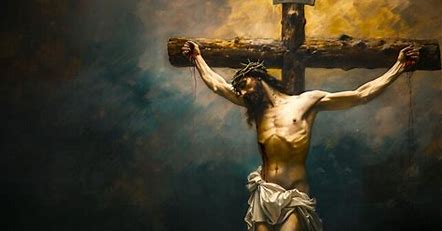
The World's Greatest Escape Artists Jesus, Superman, & Harry Houdini--Part Two: Escape Artists AreA Story by Marvin Thomas Cox-Flynn de Graham A philosophical look at the similarities between Jesus, Superman, and Harry Houdini ... The World’s Greatest Escape Artists
Jesus, Superman, & Harry Houdini
Written By Marvin Thomas Cox-Flynn de Graham Copyright © 2018 -- 2019 Marvin Thomas Cox DBA: Marvin Thomas Cox-Flynn de Graham All Rights Reserved
An Article of Speculative Theoretical Conjecture Delving Into The Realm Of Free Thinking
Harry Houdini Jesus Christ Superman
Author’s introductory note: This article is presented as an explorational study of speculative theoretical conjecture that seeks to delve into the depths of that realm known as Free Thinking, not that realm which tends to arrive only at standardized Atheism, for I do present myself to the world as An Intelligent Design, Free Thinking, Agnostic-Minded Atheist who does adamantly assert, most emphatically, that there is, absolutely must be, a Creator of all that is and will ever be -- An Extant Catalyst Reactant Ultimate Source Point Of Origin Of All Existence -- or else the Universe and all within it has somehow managed the magician's feat of pulling itself out of the hat of its own arse. However, as a Free Thinker, I believe it necessary to explore the very real possibility that not all we have been taught by Organized Religion is the truth we unquestioningly believe it to be. And so, Part two is as follows below:
Part Two: Escape Artists Are Astounding Showmen
If we are, in any way, familiar with the three personages mentioned above, then, we already possess the knowledge of a link that binds them together ancestrally, for all three are Jewish -- at least, in a manner of imagination-based-factually speaking. Am I stretching the truth, here? Not at all.
Superman Is Jewish: The Hebrew Roots Of America's Greatest Superhero: “Let's not forget that Superman was created by two Jewish kids from Cleveland, and despite his secular nature, the religious overtones can't be ignored!”
A History Of Superman-WSJ.com: “The Superman we all know, created by writer Jerry Siegel and artist Joe Shuster, first bounded upon the scene in 1938 with the publication of Action Comics #1. Right off the bat, we get several familiar aspects of the character: he's sent to Earth as an infant while his home planet collapses, his alter ego is a meek newspaper reporter named Clark Kent, and he becomes associated with fellow journalist Lois Lane. Superman is also billed as a champion of the oppressed. "I think of him, since it was two Jewish kids who created him, as the ultimate diaspora Jew," says Larry Tye, author of a history of Superman. "He came in from another planet. Looked at one way, his story was the Moses story: parents trying to save their first-born son, floating him out to outer space."
And, as for Harry Houdini?
Harry Houdini Biography: “Famed magician/entertainer Harry Houdini was born Erich Weisz on March 24, 1874, in Budapest, Hungary. One of seven children born to a Jewish rabbi and his wife, Erich moved with his family as a child to Appleton, Wisconsin, where he later claimed he was born.”3 His reputation needs very little elaboration: “Magician, actor, and stage personality Harry Houdini -- The Great Houdini -- was the greatest escape artist of all time. He often said, "No prison can hold me; no hand or leg irons or steel locks can shackle me. No ropes or chains can keep me from my freedom."
Ironically, if we were to assume that Houdini believed in magic and the supernatural we would be in for a big shock.
Ten Things You May Not Know About Harry Houdini: “As the world’s greatest trickster and illusionist, Houdini had little patience for anyone who claimed to be in possession of supernatural powers. Beginning in the 1920s, he embarked on a second career as a professional skeptic and debunker of psychics, mind readers, mediums and other “Spiritualists” who purported to be able to contact the deceased. Houdini campaigned tirelessly, often visiting séances in disguise to expose their ringleader as frauds. He also offered a $10,000 reward to any psychic who could present “physical phenomena” that could not be explained rationally (no one ever collected), and in 1926 he testified before Congress in support of a bill to outlaw the the practice of 'pretending to tell fortunes for reward or compensation.'”
What mischief might I be about, here? Nothing more than that of theoretically assembling three great escape artists together (figuratively speaking, that is) in a time 2,000 years past -- the life and times of the Jesus we see depicted and preached within the Gospels and Book of Acts. Is it only coincidence that one personage was a renowned investigative skeptic of the world of Spiritualism, while another (Superman portrayed by George Reeves in the 1950's TV series, The Adventures of Superman) represents a fictional news reporter/superhero operating under the alias Clark Kent? I think not, for there truly is a method of sanely cognizant logical reasoning to what some may errantly misinterpret as my foolishly meandering madness set loose upon page. If you will but humor me for a moment more, I shall begin to demonstrate my point ...
We have seen, just above, that (speculatively speaking, of course) that there is a valuable fact of similarity to be gleaned from the historical personages of Jesus and Harry Houdini in that respect in which they were both born as Jews. However, this may well be where all similarities come to an end when comparing these two famous men. Why do I choose to draw upon the relationship of such an assessment?
Had Houdini lived in the day and time of the Jesus we see depicted within the pages of the Gospels -- that is, if we could actually transport him back in time -- he would have been inclined to take note of any discrepancies in the Gospel accounts of the death, burial, and resurrection of Jesus. To a man like Houdini, a man brazenly death defiant in having allowed himself to be buried alive6 on several occasions during the course of his career, the prospect of dying would be no more than an act of putting one's life on the line for the sake of one more show, the chance for greater publicity and cheating death for the sake of fame and monetary gain. But, Harry hated Charlatans.
You see, Harry wanted to believe in the supernatural and the promises of spiritualists, after having lost his mother and missing her so. However, his keen sense for things amiss may well have caused him to take note of details that are easily overlooked by the average person.
Houdini was well aware that, in order to establish fame, notoriety, and credibility, death defying stunts must be carried out beneath the scrutiny of the public eye, in order for the consummation of any daring feat to be ascertained as authentically believable. Anything less would be to cause even the most daring of feats to become overshadowed by a barrage of skeptical challenges voiced as raised questions of doubt, making the feat suspect as to its untainted validity.
Having challenged local authorities on many occasions, daring them to test his skill as an escape artist8, it would seem logical to conclude that Houdini would have no problem with local Jewish authorities sealing and guarding the tomb of Jesus -- a Jesus who was alleged to have claimed that he would rise from the dead within three days of his death, after having publicly issued his own challenge to local religious authorities before the very populace over which they ruled. Hence, there would, in effect, be given a controlled setting aspect to the death and burial of Jesus, helping to insure that there would be no hanky-panky or religion based fraudulent activity at work in an attempt to deceive the masses. At least, this is what we would like to believe, is it not?
Joh 2:19 KJV -- Jesus answered and said unto them, Destroy this temple, and in three days I will raise it up.
Mat 27:62-66 KJV -- Now the next day, that followed the day of the preparation, the chief priests and Pharisees came together unto Pilate, Saying, Sir, we remember that that deceiver said, while he was yet alive, After three days I will rise again. Command therefore that the sepulchre be made sure until the third day, lest his disciples come by night, and steal him away, and say unto the people, He is risen from the dead: so the last error shall be worse than the first. Pilate said unto them, Ye have a watch: go your way, make it as sure as ye can. So they went, and made the sepulchre sure, sealing the stone, and setting a watch. (Underlining is mine)
Now, there is little point in quibbling about how long Jesus was alleged to have actually remained in the grave (a day & a half, three full days?), though many Scholarly, opinionated, explanations have been offered over the years. To my mind, the only question that truthfully matters is, was Jesus clinically dead, as in his heart stopped beating (respiration ceased) resulting in an absence of oxygen to his brain9 for a period of time well exceeding a good four to six minutes, thus at the very least, rendering him certifiably brain dead, with self digestive autolysis decomposition well underway in having immediately begun its natural process of bodily deterioration within the, cold, dead body of a deceased Jesus taken down from the Roman execution stake?
Some might speculate or surmise that Jesus was only unconscious, regaining consciousness at some point after his burial. Such a scenario is possible, but let us examine a simpler and more relevant detail, that of just how urgently Roman authorities, themselves -- occupying a nation fast becoming a hot-bed of nationalist religious fervor desperately seeking a messiah figure to lead the way to rebellion and, hence, freedom from Rome -- and not simply Jewish religious authorities, alone, (as the latent antisemitism sewn craftily within the Gospel(s) narratives would have us believe) wanted to put an end to the drama and conflict that Jesus was purported to be causing among the Jews, and within a Roman occupied Israel that was a literal powder keg in danger of losing its right of self governance.
Joh 11:48-50 KJV -- If we let him thus alone, all men will believe on him: and the Romans shall come and take away both our place and nation. And one of them, named Caiaphas, being the high priest that same year, said unto them, Ye know nothing at all, Nor consider that it is expedient for us, that one man should die for the people, and that the whole nation perish not. (Underlining is mine)
Thus, the Gospels assure us that a Roman soldier verified that Jesus was indeed dead, for one must be certified as dead before one can lay claim to having risen from among the dead. And so, below we witness a passage that is, perhaps, intended to serve, for all practical purposes, as the death certificate of Jesus.
Joh 19:33-34 KJV -- But when they came to Jesus, and saw that he was dead already, they brake not his legs: But one of the soldiers with a spear pierced his side, and forthwith came there out blood and water.
What might cause us to accept the assumption that Jesus was, in fact, dead? Because, we are led to believe that, in that day and time, allowing a prisoner to escape could easily mean replacing his life with your own, as is alleged in the Book of Acts, that is, if one is to believe this account as true and reliable.
Act 16:27 KJV -- And the keeper of the prison awaking out of his sleep, and seeing the prison doors open, he drew out his sword, and would have killed himself, supposing that the prisoners had been fled.
The above passage taken into account, do we dare make, yet, another assumption, draw another conclusion? Is it safe to say that there is one thing more of which we can be relatively certain: Before the tomb of Jesus was sealed by the guards who were specifically charged with the task of insuring the body of Jesus did not leave the tomb -- dead or alive -- do we doubt that his body was checked one last time for signs of life and none were found.? Because, had there been even the slightest hint of uncertainty's indication that Jesus was only unconscious and not, yet, dead (even after a spear had allegedly pierced his side) a swiftly wielded sword would have doubly insured that the execution of Jesus was carried out with extreme prejudice.
And being dead, of course, Jesus was properly attired in the garb of the dead, a touch that would have made Houdini proud, because such trappings as burial wrappings add to the excitement and drama of incredulity (theatrics) due to the fact that such hindrance makes escape (without assistance that is) more difficult for the skilled escape artist (see Houdini's photo above) -- and Jesus was said to have been attempting the ultimate escape, an escape from death itself.
Joh 11:44 KJV -- And he that was dead came forth, bound hand and foot with graveclothes: and his face was bound about with a napkin. Jesus saith unto them, Loose him, and let him go. (Underlining is mine)
Mat 27:59 KJV -- And when Joseph had taken the body, he wrapped it in a clean linen cloth, (Underlining is mine)
Mar 15:46 KJV -- And he bought fine linen, and took him down, and wrapped him in the linen, and laid him in a sepulchre which was hewn out of a rock, and rolled a stone unto the door of the sepulchre. (Underlining is mine)
Luk 23:53 KJV -- And he took it down, and wrapped it in linen, and laid it in a sepulchre that was hewn in stone, wherein never man before was laid. (Underlining is mine)
Joh 19:40 KJV -- Then took they the body of Jesus, and wound it in linen clothes with the spices, as the manner of the Jews is to bury. (Underlining is mine) Joh 20:6-7 KJV -- Then cometh Simon Peter following him, and went into the sepulchre, and seeth the linen clothes lie, And the napkin, that was about his head, not lying with the linen clothes, but wrapped together in a place by itself. (Underlining is mine)
In the passages above, we see that it was ancient Jewish custom of that era to wrap the dead in cloth as a part of the burial preparation. This wrapping (see, "wound it," in John 19:40 above) procedure helped to secure the body during the decomposition process, making it more difficult for small animals to rip, tear, and feed upon a loved one's remains, and, most importantly, served to keep the bones from being scattered after the skeletonization process was completed. The feet and hands of the dead were also tied with strips of cloth, and the face was covered with a secured napkin.
The History Of Jewish Burial Sites: “From the archaeological record, we know that the burial practices of the earliest Jews, the Israelites and the Judahites (who would unite into the people called yehudim, or the Jews), usually interred their dead in 'family caves' located outside the settlement. These 'family caves' were usually created by expanding naturally-occurring tunnels in the chalky foothills of the region ...”
What Were The Rituals Associated With Death & Burial In Jesus' Day?: “... Very poor people, who could not afford a rock-hewn tomb, or foreigners who had no land were buried within vertical shafts in designated fields. In the Gospels there is reference to the purchase of the potter’s field as a place to bury the poor and foreigners who died in Israel (Mat 27:7) ...” First Century Jewish Burial Practices: “... When a person breathed the last breath and the heart stopped beating, the eyes of the deceased were reverentially closed, the entire body was washed and anointed with oil, and the hands and feet were then wrapped in linen bands. The body, clothed in a favorite garment, was then wrapped with winding sheets. Spices of myrrh and aloes were placed in the folds of the garment to perfume the body. A napkin was then bound from the chin to the head. The family took the body on a bier to be buried within hours of death, not days. During the first century, many people were laid to rest in rock-hewn tombs, one of the most prominent features of the hill country of Galilee and Judea; others were buried in the ground … Burial in a rock-hewn tomb usually consisted of two separate and distinct burials. The first burial was the simple placement of the body in the tomb either in a niche (loculus, Latin for “a little place,” and in Hebrew, kokh, plural kokhim) -- shafts cut as deep as a body in the burial chamber -- or on an arcosolium -- a bench or shelf cut out of the wall of a tomb … The second burial occurred about a year later when family members reentered the tomb, carefully took the bones of the deceased (once the flesh had completely decomposed), and placed them in a specially prepared, separate container known as an ossuary (from Latin os, “a bone”). These chests were placed in small niches in the tomb for permanent burial. Gathering the bones following the primary burial was considered one of the important duties of a son and was viewed as a time of rejoicing. This practice ended by the middle or end of the third century AD ...”
Furthermore, it is difficult to ignore that a specific point is made of stating that Jesus was wrapped in linen cloth or clothing, while no mention is made, whatsoever, as to the material that was used to wrap and bind the dead body of Lazarus, from which the alleged risen Lazarus had to be loosed upon coming hip-hopping (no doubt mumbling) like a confused and deranged mummy from the tomb in obedience to Jesus' theatrical command of, "Lazarus come forth." Curiously, Mark is the only Gospel that designates the linen used to prepare the body of Jesus for burial as fine linen, signifying it as costly.
It would be easy to simply assume that since Jesus is said to have been buried with the rich at his death in alleged fulfillment of prophecy, that linen was probably very expensive, but was this the only possible reason that the body of Jesus, a man many believe is referred to as a priest in the book of Hebrews, was wrapped and bound in linen? Linen, even in those ancient days, is a versatile fabric that is produced in a variety of quality grades and cost ranges. In ancient Egypt the rich adorned themselves in the most expensive and extravagant linen attire, while, "the poor and slaves made do with coarse linen loincloths and little else."
Was the dead Lazarus wrapped and bound in linen? The text from John 11:44, above, offers us no insight as to the type of cloth Lazarus's body was buried in, but, instead, focuses our attention upon a risen Lazarus coming forth from the tomb, "bound hand and foot with graveclothes: and his face was bound about with a napkin."
In his book James The Brother of Jesus, Robert Eisenman suggests that the mention of linen is an intentional allusion and reference to the Priesthood, -- specifically the Rechabite Priesthood -- by those who actually penned the Gospels.
Jer 35:19 KJV -- Therefore thus saith the LORD of hosts, the God of Israel; Jonadab the son of Rechab shall not want a man to stand before me for ever. (Underlining is mine)
As an avid fan of Eisenman’s work, I support many of Eisenman's theories -- theories based upon powerful evidence revealed by, both, textual analysis and archaeological evidence -- and I agree wholeheartedly with the conclusively logical statement that Dr. Eisenman leaves as contemplative food for thought in the last and final line of his book James The Brother of Jesus: “Who and whatever James was, so was Jesus.” I highly recommend his book to anyone seeking truth in a studious in-depth read that contains not a single boring paragraph, but is filled with page after page of astounding new information on the historical James, including the very real possibility that Jesus had an identical twin brother signified within the Gospel accounts by the repetitive usage of the Aramaic word Thomas19 and the Greek word Didymus, both of which translate literally as twin.
Now, contrary to what most people are led to believe, names do not translate, but transliterate. This little known fact, and its misconception, is explained in further detail within my article If Names Translate … Pigs Can Fly
What Is The Difference between Translation & Transliteration?: “Translation is meaning of something in language other than the one in which it was said/written. Transliteration gives the word from a different language in letters that you can understand so as to be able to pronounce it.”
This important information should immediately alert our minds to the fact that, just maybe, Jesus is not really the name of the Jewish man worshiped by so many around the world, as the Greek Christ. Names never translate, but words, words like the Hebrew word tachrichim (Shroud), do translate.
My Jewish Learning: The Shroud: “The traditional clothing for burying the dead are tachrichim, simple white shrouds. Their use dates back to Rabbi Simeon ben Gamliel II, who, in the second century of the Common Era, asked to be buried in inexpensive linen garments … Shrouds are white and entirely hand-stitched. They are made without buttons, zippers, or fasteners. Tachrichim come in muslin or linen, fabrics that recall the garments of the ancient Hebrew priesthood ...” (Bold Lettering, Italics, & Underlining are mine)
Now, Common Era is a confusing terminology to some but, when referencing a time in history, it is identical to anno domini -- A.D. In other words, December 7, 1941 is the exact same day in history, whether one chooses to decorate it with C.E. or A.D. -- A.D. being the preferred terminology of Christians, while C.E. is preferred by Jews and Muslims. With this bit of learning behind us, we see, above, that Rabbi Simeon ben Gamliel II lived around 200 years after the time of Jesus. It was his burial instructions -- to be buried in inexpensive linen garments (confirming that in ancient times one could purchase expensive, fine, linen or inexpensive, lower quality, linen) -- that set the precedent which was to become a Jewish tradition that is observed to this very day.
The Great Houdini (transported back in time) would rapidly deduce that, prior to this request of Rabbi Simeon ben Gamliel II, burial in inexpensive (or expensive) linen garments was not, necessarily, a standard Jewish burial custom observed in the day and time of the Lazarus and Jesus we see depicted in the Gospels. Such a deduction leaves theoretical room for the very real possibility that linen cloth is not mentioned as the material that, literally, had poor Lazarus "bound hand and foot with graveclothes," because some other type of cloth was used, instead, possibly muslin (cotton). So, why such focus on linen cloth in the narrative of the death and burial of Jesus? Was linen emphasized as merely a part of the burial-with-the-rich-prophecy-fulfillment-theme, or is there a meaning to be gleaned that is hidden before our eyes in plain sight, one quite similar to that of "Thomas called Didymus" above -- and further elaborated in more detail below? Could it be that, in reality, Jesus (his brothers as well) was a member of the Priesthood, not the Levitical Priesthood, since the Gospels (if we are to believe the Gospels) indicate that Jesus was not a descendant of Aaron but of, the Rechabite Priesthood we saw instituted in Jeremiah 35:19 above, wherein this passage indicates clearly that, "Jonadab the son of Rechab shall not want a man to stand before me for ever.", hence the term Rechabite. Are we so certain that, historically, only Levites were permitted to serve in the Temple? According to the Jewish Encyclopedia, below, Rechabites were permitted to serve in the Temple at certain times of the year.
The Jewish Encyclopedia: Rechabites: "The appointed time for the service of the Rechabites in the Temple was the 7th of Ab (Ta'an. iv. 5)."
____________
Author's Note: This article is continued in The World’s Greatest Escape Artists: Jesus, Superman, & Harry Houdini: Part Three: A Pinch Of Babylonian Absorption's Assimilation
(Written February 20th, 2018 -- June 30th, 2019)
© 2025 Marvin Thomas Cox-Flynn de GrahamAuthor's Note
|
Stats
662 Views
1 Review Added on August 23, 2025 Last Updated on August 23, 2025 Author
Marvin Thomas Cox-Flynn de GrahamSmalltown, TXAbout“Hello! Welcome to my profile page. As a Creative Writer, I pen a variety of material that ranges from piss poor attempts at Poetry, to morbidly Dark Fiction, to investigative, in depth, re.. more.. |




![[send message]](http://slow.writerscafe.org/images/mail.png)
![[befriend]](http://slow.writerscafe.org/images/friend.png)


 Share This
 Email
Email Facebook
 Twitter
 Read Request
 My Library
 Flag Writing